RASWDC to Develop Tactics, Doctrine and Operating Procedures
The U.S. Navy has established a new Robotics and Autonomous Systems Warfighting Development Center (RASWDC) to develop the tactics, techniques and procedures needed to integrate unmanned systems into naval operations.
Based at Joint Expeditionary Base Little Creek–Fort Story in Virginia, the center will coordinate expertise from across the Navy and draw on contributions from organizations and institutions beyond the traditional defense sector.
Rear Adm. Melvin Smith, who commands RASWDC, said the center would connect existing efforts and turn them into a more coherent operational enterprise. Rather than replacing expertise already embedded throughout the fleet, the organization will link those initiatives and ensure that lessons learned in one area are rapidly shared across the service.
Focus on Operational Integration
RASWDC is developing a phased implementation plan addressing its future command structure, mission responsibilities and resource requirements.
The center will also oversee the operational employment of robotic and autonomous systems. Its responsibilities are expected to include coordinating testing, training and experimentation while ensuring that sailors and operators remain directly involved in shaping how the systems are used.
The initiative is designed to prevent unmanned capabilities from developing in isolated programs or individual units. Instead, the Navy wants to establish common operating concepts that can be applied across the fleet.
Acquisition Efforts to Move in Parallel
The center’s creation coincides with the establishment of a Direct Reporting Portfolio Manager for Robotic and Autonomous Systems, or DRPM RAS.
The two organizations are intended to work closely together. Operational feedback, training results and testing data generated by RASWDC will help guide acquisition decisions and accelerate the fielding of new capabilities across the Navy and Marine Corps.
This arrangement is intended to create a direct link between the development of unmanned systems and their practical use in the fleet.
From Individual Platforms to Composite Mission Sets
Chief of Naval Operations Adm. Daryl Caudle has advocated the creation of a dedicated warfighting and development center for robotic and autonomous systems, modeled on the Navy’s existing organizations for communities such as aviation, surface warfare and mine warfare.
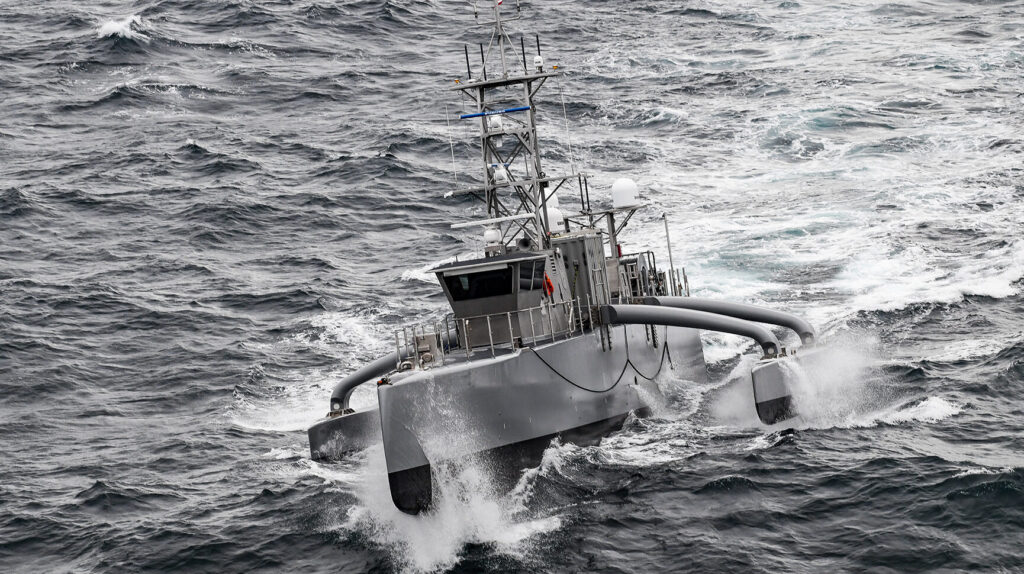
The Navy’s objective is to move beyond the use of unmanned systems as stand-alone tools operated by individual units. Instead, autonomous platforms are expected to become part of integrated mission packages combining multiple systems and capabilities.
Such formations could include unmanned surface vessels, underwater vehicles, aerial drones and traditionally manned ships or aircraft operating together under a coordinated concept of operations.
Supporting the Navy’s “Hedge Force” Strategy
The new center will also support the Navy’s broader “hedge force” approach, which seeks to combine unmanned systems with conventional manned platforms.
The strategy is intended to give combatant commanders a wider range of options, allowing them to tailor force packages to specific missions, threat environments and levels of risk. Unmanned systems could provide additional sensing, communications, surveillance, logistics and strike capacity while reducing the exposure of personnel.
Establishing a New Model for Fleet Management
The Navy must still determine how robotic and autonomous systems will be incorporated into major force-management decisions.
Those decisions include the global positioning of units, strategic dispersal, force laydown and the integration of unmanned capabilities into joint operations. Because no established model currently exists for managing RAS forces at this level, the new center will help define the necessary command relationships and planning processes.
By connecting operational experimentation, doctrine development, training and acquisition, RASWDC is intended to shorten the path from technological development to fleet employment—and ensure that unmanned capabilities are ready for high-end maritime combat.