Gecko Robotics will deploy its inspection robots and AI-powered software at Anduril facilities as the company prepares to build its new Arsenal-2 shipyard in Baltimore County, Maryland. The site is intended to manufacture submarine components, beginning with parts for Virginia-class submarines.
Gecko will use its technology for non-destructive testing—methods that assess materials without damaging them—and create a “digital thread” of data about each component. The information is intended to support maintenance planning.
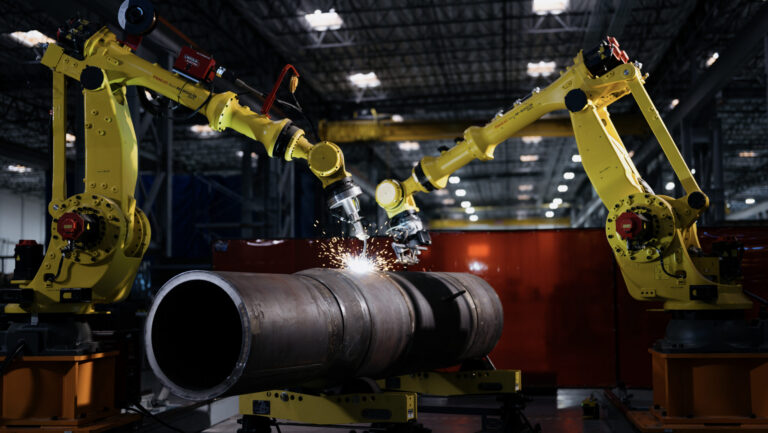
Scanning welds and recording the parts’ actual condition
Gecko’s systems can inspect components after they are manufactured, including areas beneath the surface of welds. This gives manufacturers a digital baseline of a part’s as-built condition that can be compared with its design and technical specifications, said Troy Demmer, the company’s co-founder and president.
The resulting records could help track quality throughout production and identify potential issues earlier.
Arsenal-2 is part of a $6.6 billion investment
Anduril and the White House announced that the Maryland facility is part of a $6.6 billion investment: $3.7 billion is expected to come from private capital, with up to $2.9 billion from the U.S. Navy.
Permitting for the shipyard is expected to begin immediately, with construction to follow once the required approvals are obtained. Anduril expects the facility to begin initial operations in 2030. Production is planned to expand from basic submarine parts to more complex vessel sections, including the bow.
California factory tests processes ahead of expansion
Alongside the Maryland project, Anduril will manufacture submarine parts at a roughly 160,000-square-foot facility in Orange County, California. Gecko’s technology will be used there as well.
Anduril says it has already embedded Gecko’s non-destructive testing technology into production workflows at its California protofactory and is integrating it with the ArsenalOS software platform. The stated goals are to reduce inspection wait times, give inspectors better tools and establish quality processes that can be brought to Arsenal-2 from the outset.
Industry faces pressure to deliver submarines
The initiative comes as industry struggles to meet the Navy’s goal of delivering two Virginia-class submarines each year. The shipbuilding plan released in May identified investment in the submarine industrial base as critical to reaching that target.
Gecko has previously worked with the Navy. In March, the service awarded the company a five-year contract worth up to $71 million to use hull-inspection robots and artificial intelligence to identify potential repair needs on ships, including destroyers in the U.S. Pacific Fleet.