




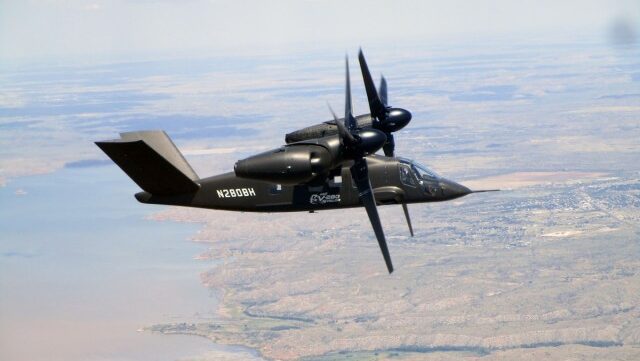
Uncertainty over federal funding could delay the US Army’s first low-rate initial production (LRIP) contract for the MV-75 Cheyenne II helicopter. The delay could increase Bell Textron’s expected losses to as much as $150 million, company executives said today.
“With the start of the fiscal year in a continuing resolution, we’d expect a possible push in the timing of the LRIP award. Previously, we were thinking Q4 into Q1 of next year,” Chief Financial Officer David Rosenberg told investors during an earnings call.
Potential losses could reach $150 million
A delay would worsen the financial impact Bell Textron already expects from the program. In the previous quarter, the company estimated that funding delays could cost between $60 million and $110 million. If the LRIP award is pushed back further, the figure could rise to between $110 million and $150 million, Rosenberg said.
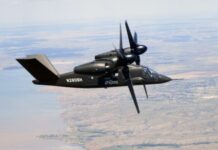
Bell was selected as the prime contractor for the MV-75 Cheyenne II in late 2022. Developed under the Army’s Future Long Range Assault Aircraft (FLRAA) program, the tiltrotor is expected to gradually replace the service’s UH-60 Black Hawk fleet beginning in the 2030s.
Army sought $350 million in reprogrammed funds
Funding concerns arose after the Army exhausted nearly all of its available fiscal 2026 funding for the MV-75 in July, according to Textron’s quarterly filing. Bell continued work on the program while cutting spending to manage the shortfall.
In July, the Army requested that $350 million be reprogrammed to support Textron’s work building and testing eight prototype helicopters. Congress approved the request in the third quarter, Textron CEO Lisa Atherton said.
About $300 million was committed to the program through contract modifications, covering costs already incurred by Bell and its suppliers. The remaining funds will be obligated as supplier invoices arrive.
“The $350 million was the request of the estimate of what the government expected that we would need throughout the third quarter,” Atherton told investors. “The government was able to quickly put on contract modifications the $300 million to cover the actuals that we and our suppliers had accrued.”
Company has yet to recover earlier losses
Bell Textron recorded a financial hit on the MV-75 in the second quarter of fiscal 2026 after funding delays increased the program’s expected costs, Rosenberg said.
Although Congress approved the Army’s reprogramming request, Textron has not yet been able to recover the earlier loss. The government must officially add the funding to the contracts before the company can reassess its previous charges, Rosenberg said.
Budget uncertainty could continue to affect the program into 2027 as the government operates under a continuing resolution while lawmakers work to approve a full-year defense spending bill. The proposed fiscal 2027 budget includes about $2.3 billion for the MV-75, but the funding still requires congressional approval.
Bell continues preparations for flight testing
Bell continues work on the aircraft ahead of flight testing next year. The company has completed three wings, received its first nacelles, and built the first fuselage. Gearboxes have advanced to testing.
Atherton said the company expects to join the first fuselage with its wing assembly in the fourth quarter.