







Uncrewed combat aircraft are designed to operate alongside crewed fighters
The spread of long-range air-defense missiles, capable radars and loitering munitions has made the modern battlespace increasingly dangerous for crewed fighter aircraft. Against that backdrop, General Atomics Aeronautical Systems (GA-ASI) argues that air forces need uncrewed systems that can be produced at scale and operate alongside piloted aircraft.
The company says crewed fighters have become too expensive for many countries to acquire in sufficient numbers, including nations with large defense budgets. One proposed answer is to use simpler, mass-producible uncrewed combat aircraft to disperse and suppress enemy air defenses and force opposing aircraft to divide their attention.
A modular family built for different missions
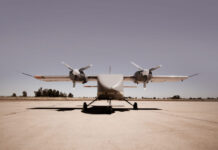
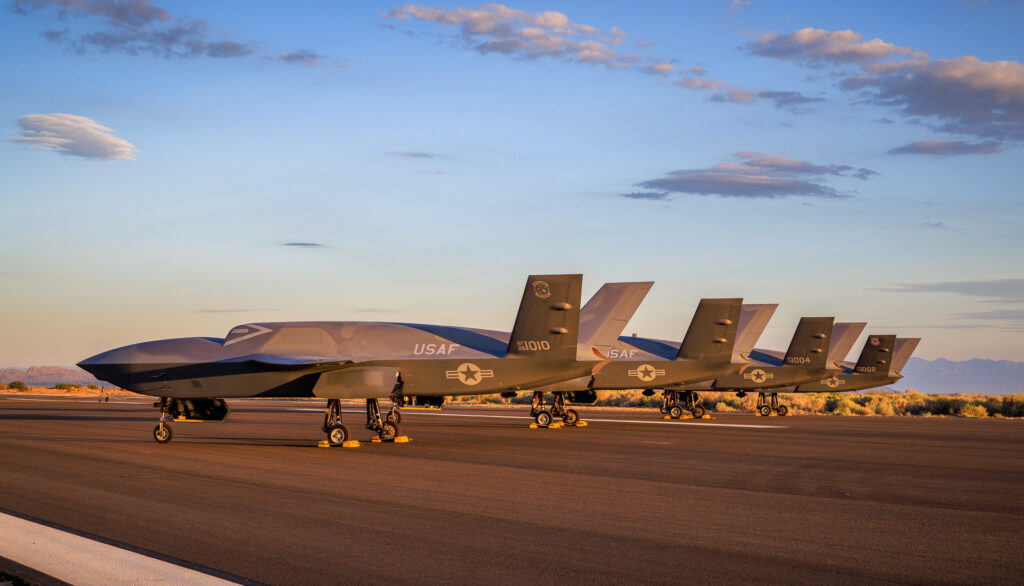
GA-ASI developed the Gambit family for this role: a series of uncrewed combat aircraft intended to operate alongside crewed fighters. Rather than relying on a single multirole platform, the family includes variants tailored to distinct missions.
The company says about 70% of key components are shared across the variants, including landing gear, baseline avionics and core airframe structures. That commonality, it says, could simplify production and maintenance while enabling aircraft to be adapted more quickly for specific roles.
The Gambit family includes:
- Gambit 1: long-endurance intelligence, surveillance and reconnaissance;
- Gambit 2: air-to-air combat;
- Gambit 3: adversary air training;
- Gambit 4: low-observable combat reconnaissance;
- Gambit 5: carrier-based operations;
- Gambit 6: air-to-ground missions.
According to GA-ASI, Gambit 6 was developed for European nations facing advanced military threats on the eastern flank. The aircraft is optimized for electronic warfare, suppression of enemy air defenses and deep precision strikes in contested environments.
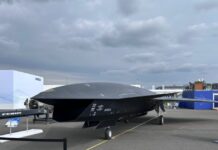
Each Gambit aircraft features an internal weapons bay designed to reduce its radar signature and accommodate electronic warfare systems, guided munitions, sensors and autonomy software.
FQ-42 anchors the U.S. production effort
GA-ASI says the U.S. Air Force recently awarded it an initial production contract for the FQ-42 Vengeance Collaborative Combat Aircraft, a derivative of Gambit 2. The company describes the award as a step toward serial production of the aircraft.
GA-ASI says its position in the field reflects nearly two decades of development, including independent research and work with the U.S. Air Force. It also says it has more than five million square feet of operational manufacturing facilities and is prepared to scale production once contracts are awarded.
European integration and production plans
For European customers, GA-ASI is presenting Gambit as a platform that could accommodate national systems and involve local industry. Its German affiliate, General Atomics AeroTec Systems GmbH, could support assembly, integration and testing in Germany alongside European partners.
The company says its European offering would build on the FQ-42, with aircraft assembled in Germany in cooperation with European industry. GA-ASI expects Gambit 6 airframes to become available for international procurement from 2027, with European mission-specific versions potentially deliverable from 2029.
Those production plans and timelines remain company projections. The Gambit proposal is intended to combine large-scale production of uncrewed aircraft with local integration of sensors, mission systems and autonomy software.