








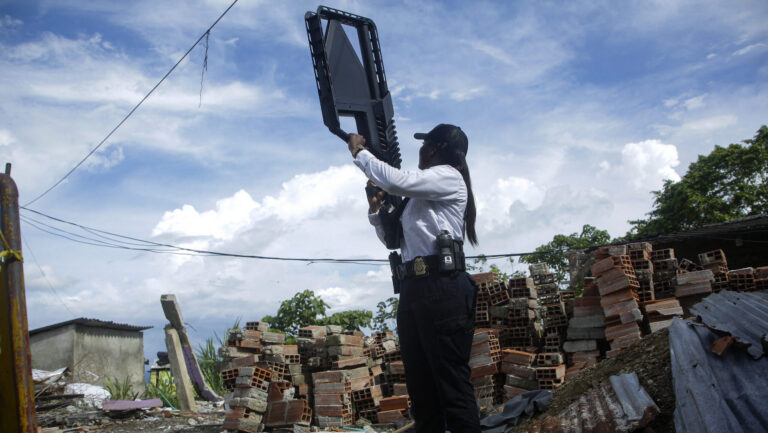
The skies above the jungles and military garrisons of Colombia have transformed into an unpredictable and lethal battlespace. Once seen primarily on distant conventional battlefields, the deployment of weaponized commercial drones has become a grim, daily reality in South America, where insurgent groups and drug cartels are launching targeted aerial strikes against state security forces.
Raining Shrapnel on Garrisons and Riverine Patrols
The tempo and lethality of drone operations have surged dramatically in recent weeks. A military installation in Santa Rosa del Sur was rocked by explosions after unmanned systems dropped ordnance inside the base perimeter, killing three soldiers. Only days earlier, a riverine marine vessel operating on the Guapi River was ambushed in an identical airborne strike, leaving one marine dead and several severely wounded.
The campaign has also targeted civilian aviation infrastructure, damaging a radar installation in Valle del Cauca, and culminated over the weekend in a coordinated assault on a battalion headquarters in La Jagua de Ibirico, which claimed another soldier’s life and wounded at least twelve others.
From Spotting Patrols to Coordinated Fiber-Optic Strikes
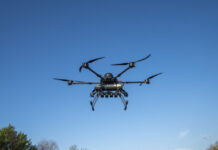
The operational shift represents a profound tactical escalation. While low-cost consumer drones were initially used to track troop movements and safeguard illicit trafficking routes, armed networks have now graduated to multi-drone coordinated saturation strikes.
Furthermore, operators are increasingly deploying fiber-optic guided platforms that remain impervious to standard radio frequency jamming. Recent weapon seizures, such as munitions caches belonging to the Clan del Golfo containing dozens of customized aerial-drop grenades, confirm that organized crime syndicates are pouring extensive resources into developing indigenous aerial arsenals.
A 100-Day Crucible: The Heavy Toll of the Iron-Fist Offensive
This aerial barrage has flared alongside a heavy-handed, nationwide state offensive targeting historic rebel factions such as the ELN and dissident FARC networks, as well as powerful transnational cartels. The insurgent retaliation has been relentless: during the first 100 days of the heightened government campaign, at least 93 distinct drone-related attacks were recorded across the country.
Of the security personnel killed during this period, nearly half fell victim to drone-dropped munitions. The disproportionate casualty rate lays bare the perilous vulnerability of frontline units stationed in remote rural outposts without integrated counter-unmanned aerial systems (c-UAS).
The Scramble for Countermeasures: Jamming the Airwaves vs. Dismantling the Supply Chain
Defense planners now face an urgent race to adapt. While ambitious strategies to deploy a comprehensive defense perimeter spanning fixed, vehicular, and man-portable interception technologies have been proposed, tangible deployment has lagged severely behind the evolving threat. On the ground, troops have largely been left to rely on tactical jamming rifles to disable incoming threats on an ad-hoc basis.
Yet military analysts and defense experts caution that interceptors and electronic warfare solve only half the crisis. Neutralizing drones mid-air does little to halt the underlying ecosystem. To dismantle the capability permanently, security agencies must prioritize intelligence gathering to uncover who is financing, engineering, and piloting these platforms. With weaponized commercial drones already appearing in criminal clashes across Mexico and Brazil, Latin America stands at the threshold of a widespread, continent-wide proliferation of unmanned warfare.