








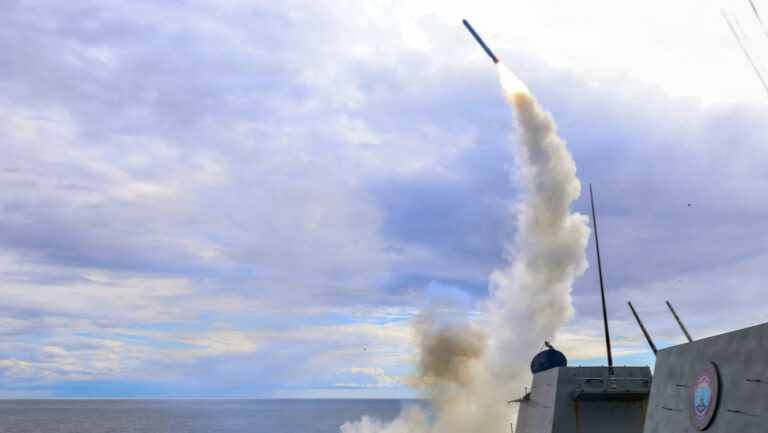
Raytheon has selected US startup Ursa Major and the American arm of Italian company Avio as partners in producing solid rocket motors for the US Navy’s Tomahawk cruise missiles. The arrangement is intended to add another source of supply as the Pentagon works to expand munitions production.
The companies’ multiyear partnership was announced without specific timelines or a disclosed contract value. Raytheon, part of RTX and the manufacturer of the Tomahawk, will rely on the two firms to help increase the availability of the missile’s rocket motors.
“Tomahawk is a critical capability for the warfighter, and meeting growing demand requires more capacity and a stronger, more resilient supply chain,” Ursa Major President Jason Meredith said. He described the partnership with Avio USA as a way to establish additional reliable sources for Raytheon and the Navy.
A second source for a critical component
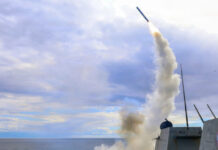
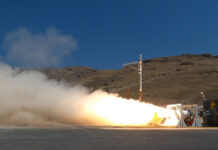
The solid rocket motor powers the Tomahawk during the initial stage of flight before being jettisoned. A turbofan engine then carries the missile toward its target. The weapon can fly at low altitude to evade radar and strike with precision.
Avio USA CEO James Syring said the company’s selection alongside Ursa Major marked a significant step for its planned production facility in southern Virginia.
Both companies are relatively new to the US market. Founded in 2015, Ursa Major has become a Pentagon supplier and won contracts for weapons systems, including missiles. Avio, a longstanding European manufacturer, opened its US office in 2022 and has since secured contracts related to American missile production.
Demand climbs as inventories face pressure
Solid rocket motors power a wide range of missiles. Demand has grown in recent years amid the war in Ukraine and conflicts in the Middle East, creating opportunities for new suppliers. The need for additional capacity has increased as the Trump administration seeks to substantially expand production of key munitions.
In August, the Navy awarded Raytheon a $22.9 billion multiyear contract to increase Tomahawk production, with a target of 1,000 missiles per year. Heavy use of the weapon in the war against Iran has raised Pentagon concerns about declining stockpiles. On Tuesday, Acting Navy Secretary Hung Cao told the Senate that the Navy had resorted to using expired missiles in combat.
Expansion plans hinge on funding
The production buildup still depends on securing funding. The Trump administration based its fiscal 2027 budget proposal on a $1.1 trillion base budget and anticipated an additional $350 billion through a reconciliation bill.
Top congressional Republicans have rejected the proposed reconciliation package. Outgoing House Armed Services Committee Chairman Mike Rogers has floated a scaled-down $100 billion alternative. Meanwhile, Senate appropriators have unveiled their own budget proposal, incorporating reconciliation priorities and funding for programs such as Tomahawk.