









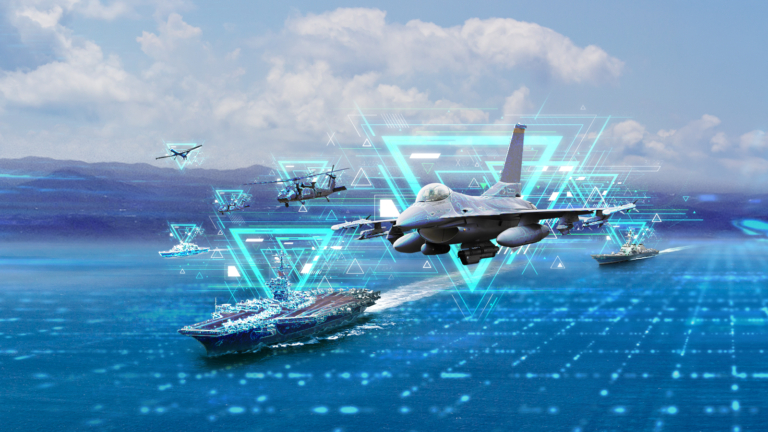
In a contemporary battlespace crowded with autonomous drones and fast-moving missiles, identifying who belongs to whom has become a defining tactical challenge. Identification Friend or Foe (IFF) systems—the critical electronics that prevent catastrophic friendly-fire incidents—are undergoing a major technological overhaul to operate effectively in heavily contested and electronically jammed environments.
Moving Beyond Radar: The Cryptographic Question-and-Answer
While radar sensors detect airborne or surface contacts, they cannot distinguish an ally from a hostile intruder. IFF bridges this operational gap using encrypted radio waveforms in a continuous challenge-and-response protocol: an interrogator transmits an authenticated signal, and a transponder on the friendly vehicle replies with a cryptographically verified signature.
As modern combat expands across multidomain command networks linking air, ground, maritime, space, and cyber assets, rapid target verification forms the foundation of real-time command and control. At hypersonic engagement speeds, confirming identity in milliseconds is essential to deploying interceptors without endangering coalition assets.
The Software Pivot: Agility Without Platform Redesign
The rapid rise of unmanned aerial vehicles has placed unprecedented stress on existing communication channels, threatening to clog standard military broadcast bands. To address this friction, next-generation combat identification is shifting away from rigid hardware setups toward software-defined, modular architectures.
By deploying open-system configurations, armed forces can introduce new cryptographic algorithms and capability upgrades via routine software patches rather than grounding combat fleets for physical retrofits. Simultaneously, combining interrogators and transponders into integrated, single-box units drastically curbs space, weight, and power demands aboard frontline tactical fighters.
Electronic Warfare: Defeating Jamming and Safeguarding Coalition Interoperability
The primary front line for IFF lies in electronic warfare defense. Hostile actors continuously attempt to blind transponders through electronic jamming or penetrate defenses via signal spoofing. Modern combat protocols, anchored by the NATO-standard Mode 5 waveform, have incorporated advanced anti-jam techniques and cyber-resilient encryption verified against live radio-frequency jamming attacks.
Achieving universal standardization remains the final frontier. Fielding synchronized equipment across dozens of partner nations and diverse military branches is futile if joint operating concepts are misaligned. In high-intensity conflicts where seconds dictate outcomes, seamless electronic identification across allied fleets serves as the ultimate safeguard against chaos in the skies.