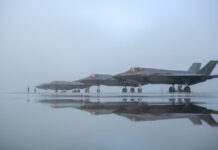


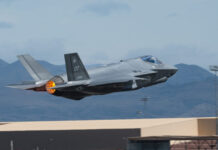




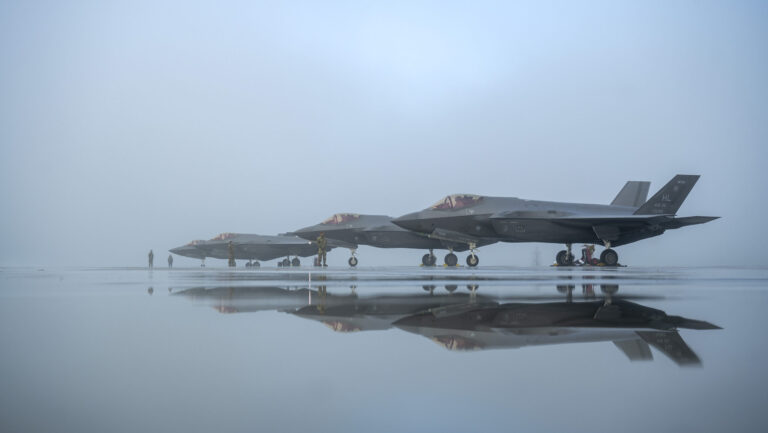
In an era defined by heightened geopolitical uncertainty and the rapid evolution of global threats, the United States Air Force has outlined an ambitious strategy to secure air superiority for the coming decades. According to a rigorous analysis recently submitted to American lawmakers, the institution estimates it will require a fleet of 1,509 combat-ready fighter jets by 2035 to manage what planners define as a „moderate risk” operational profile.
The Strategic Objective: Redefining Operational Risk
This figure is far more than a mere statistical projection; it serves as the cornerstone of the defense strategy for the near future. The analysis, covering fiscal year 2026, marks a paradigm shift in how the required fleet capacity is calculated. While a „low risk” profile would necessitate an impressive inventory of 1,723 combat-ready aircraft, military leadership has pivoted toward the more pragmatic target of 1,509 airframes, acknowledging that a moderate level of risk governs realistic military planning.
Military officials emphasize that these projections are designed to provide the transparency required to build confidence within Congress and the public regarding the adopted strategic direction, highlighting the necessity of a long-term vision that extends beyond the service’s own isolated resources.
The Budgetary Barrier and Industrial Reality
Beyond the figures in the reports, the success of this strategy collides with the harsh realities of the funding process on Capitol Hill. Historically, the Air Force has struggled to balance competing priorities—ranging from the modernization of the nuclear arsenal to severe budgetary constraints. Military officials bluntly warn that without sufficient Total Obligation Authority (TOA), achieving these objectives remains a monumental challenge.
Furthermore, the fleet’s capacity is critically dependent on industrial throughput. Setbacks in the modernization of fifth-generation platforms and production struggles for new aircraft have created lead times that place significant pressure on meeting established targets. Currently, negotiations for multi-year procurement contracts are underway, which could provide the industry with predictable demand signals, freeing it from the volatility of annual appropriation processes.
The Methodological Dispute: Redefining Combat Capacity
An insightful and provocative aspect of the new strategy concerns how combat aircraft are counted. The Air Force contends that the metric preferred by Congress—the Primary Mission Aircraft Inventory (PMAI)—fails to accurately reflect reality in a theater of operations. Instead, officials are proposing the use of the Combat Coded Total Aircraft Inventory (CC TAI), which includes backup and attrition reserve aircraft, arguing that these are, in fact, essential resources in wartime.
This shift in methodology, motivated in part by lessons learned in recent conflicts, is intended to provide a more „honest” look at actual combat capability. As discussions with lawmakers continue, the Air Force is simultaneously exploring alternatives for recapitalizing the fleet, including the possibility of purchasing new F-16 units to replace aging airframes, demonstrating a flexible approach in an ever-evolving strategic landscape.