





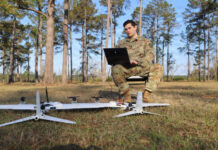


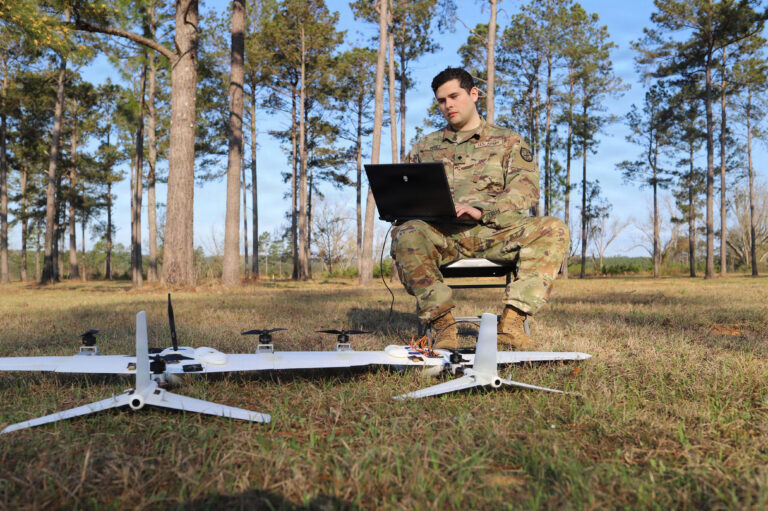
The U.S. Army is experimenting with small drones that can carry equipment for jamming and other mission-specific “cyber effects” as it determines the standard equipment for the 11th Cyber Battalion.
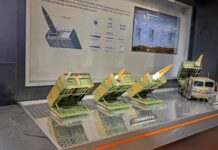
Col. David Bergmann, the Army’s project manager for cyber warfare, said the service is testing its Radiofrequency Delivery Effects Platform (RDEP) on drones. The system combines government-developed and commercial off-the-shelf payloads to deliver non-kinetic effects at the tactical edge.
Delivering “digital bullets” on the battlefield
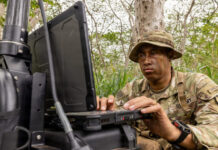
RDEP combines hardware and software, allowing operators to load exploits onto cards and use them to disrupt or gain access to adversary systems. Potential capabilities include jamming and accessing Wi-Fi networks.
The Army is also examining how RDEP and other payloads could support real-time spectrum monitoring and tailored cyber effects, while limiting unintended interference with friendly systems.
Battalion equipment remains under evaluation
The experiments are part of a broader effort to determine the right mix of equipment, capabilities and platforms for the 11th Cyber Battalion and the planned 12th Cyber Battalion. The 11th was established in 2022, building on the Army’s 915th Cyber Warfare Battalion, which was formed in 2019.
The 11th’s Expeditionary Cyber Teams can be tailored to support ground formations upon request. The Army plans to establish the 12th Battalion in the coming months, using the 11th as a model and expanding the service’s capacity to conduct these operations.
The 11th Cyber Battalion does not yet have a formal acquisition program for its standard equipment. The Army is continuing to test different configurations before deciding which systems will enter production.
From manpacks to drone-mounted payloads
The Army’s experiments also use systems already acquired through established programs, including the Terrestrial Layer System Manpack—a backpack-based system that can detect and jam signals—as well as RDEP.
The service is assessing dismounted systems, platform-based equipment and drone-mounted payloads. It still needs to determine which vehicles the battalions will use, what each Expeditionary Cyber Team will be expected to do, and how many systems of each type they will need.
Bergmann said the goal is to give commanders the flexibility to select and employ the capabilities required for a mission.
Field experience will help shape the decision
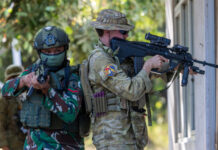
Over the past year, teams from the 11th Cyber Battalion have deployed on a rotating basis to support operations along the U.S. southern border. Their experience has helped the Army assess requirements for ground-based and man-portable systems, as well as the drones and payloads teams may need.
The Army has not yet decided which equipment will move into production next year. Prototypes are still being tested across several configurations, and feedback from deployed teams will help shape the final choices.