Senate and House defense subcommittee leaders propose significant shifts in military spending.
Leaders of the Senate and House Appropriations defense subcommittees have submitted detailed funding tables to Secretary of Defense Pete Hegseth, outlining their preferred allocation of funds within the fiscal year 2025 continuing resolution (CR). These proposals, revealed in documents obtained by Breaking Defense, include increases for certain aircraft programs and counter-UAS capabilities, while simultaneously implementing significant cuts to other initiatives. While presented in a format similar to traditional appropriations bills, their legal binding status remains uncertain, given their detachment from the passed CR.
Army: Mixed Bag of Increases and Cuts
The proposed Army budget includes a $240 million increase for MQ-1C Gray Eagle drones and $60 million for an additional UH-60 Black Hawk helicopter. Counter-UAS funding receives a substantial boost, rising from $117 million to $302 million, with increased flexibility granted by replacing a line item for Coyote launchers with a more general allocation.
However, the proposals also show cuts. Funding for the Armored Multi-Purpose Vehicle program is reduced from $515 million to $381 million, while reductions also affect various UAS initiatives, including a „future UAS family” and small drones. Overall munitions funding is lowered from $6.2 billion to just under $6 billion, with specific reductions targeting the Indirect Fire Protection Capability Increment 2, long-range hypersonic weapons, and the Lower Tier Air and Missile Defense Sensor. The Javelin program also experiences a substantial $102 million cut.
Navy and Marine Corps: Destroyer Boost, Frigate Cut
The Navy and Marine Corps face significant shifts, with the CR’s shipbuilding provisions already mandating certain changes. A notable $1.5 billion increase funds a third Arleigh Burke-class destroyer, offset by a $1 billion cut to the Constellation-class frigate program. The proposals also include additions for ship-to-shore connectors and reductions for a medium landing ship.
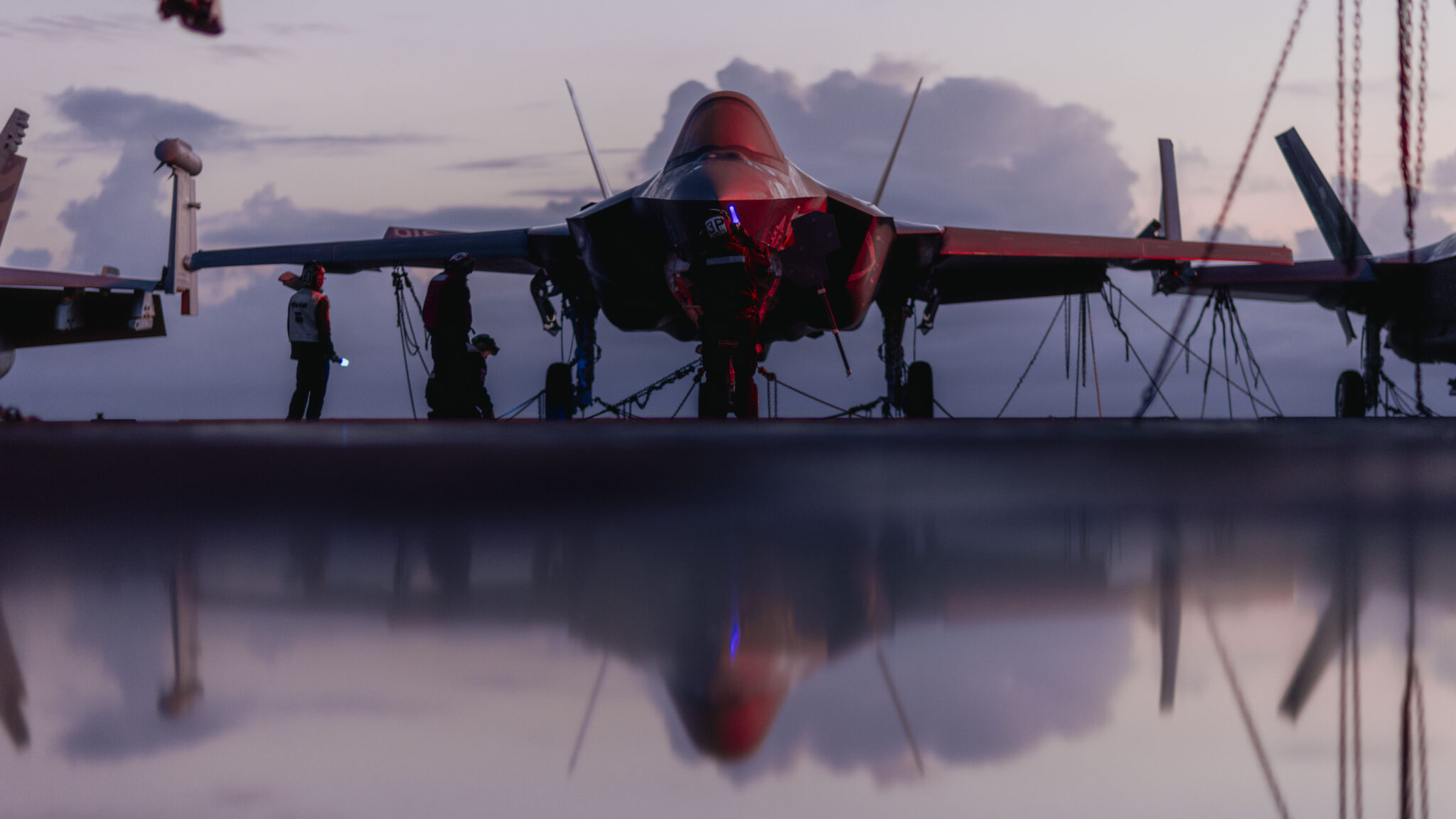
F-35 procurement sees a net increase, with four additional F-35Cs funded ($524 million increase), despite cuts to F-35B and F-35C programs due to concerns over engineering and support costs. Other increases include funding for an additional CH-53K helicopter and additional KC-130Js. However, the MQ-25 tanker drone program suffers a drastic reduction, with procurement funds slashed from $501 million to $50 million due to funding deemed „ahead of need.” Several key munitions accounts also receive funding reductions.
Air Force: Aircraft Increases, R&D Cuts
The Air Force experiences a modest increase in aircraft procurement, with two additional F-35A jets and increases for C-130Js and HH-60W helicopters. However, the proposals include cuts to the KC-46 program due to delays and unjustified costs, and a near-$78 million reduction to the B-21 Raider program due to a „classified adjustment.” Munitions procurement also sees widespread reductions. Significantly, several major research and development programs face substantial cuts, including Next Generation Air Dominance, Collaborative Combat Aircraft, the VC-25B (Air Force One), and the Survivable Airborne Operations Center.
Space Force: Reduced Funding Across Multiple Programs
Space Force procurement experiences a more than $300 million reduction, with the largest portion – a $246 million cut – affecting classified „special space activities.” Further cuts affect national security space launch, FAB-T terminals, and several research and development programs, including Next-Generation Overhead Persistent Infrared (OPIR), Resilient Missile Warning and Missile Tracking, Evolved Strategic Satcom, and Protected Tactical Service. Despite these reductions, a $40 million increase is proposed for commercial satellite services for tactical surveillance.
Uncertainty Regarding Implementation
Budget analyst Todd Harrison of the American Enterprise Institute suggests that the proposals, while significant in previous administrations, may not hold the same weight under the current administration’s approach to executive power. The legally binding nature of the proposals remains unclear due to their separation from the approved CR. The proposals indicate clear congressional priorities, but their actual implementation remains subject to the Defense Department’s decisions.