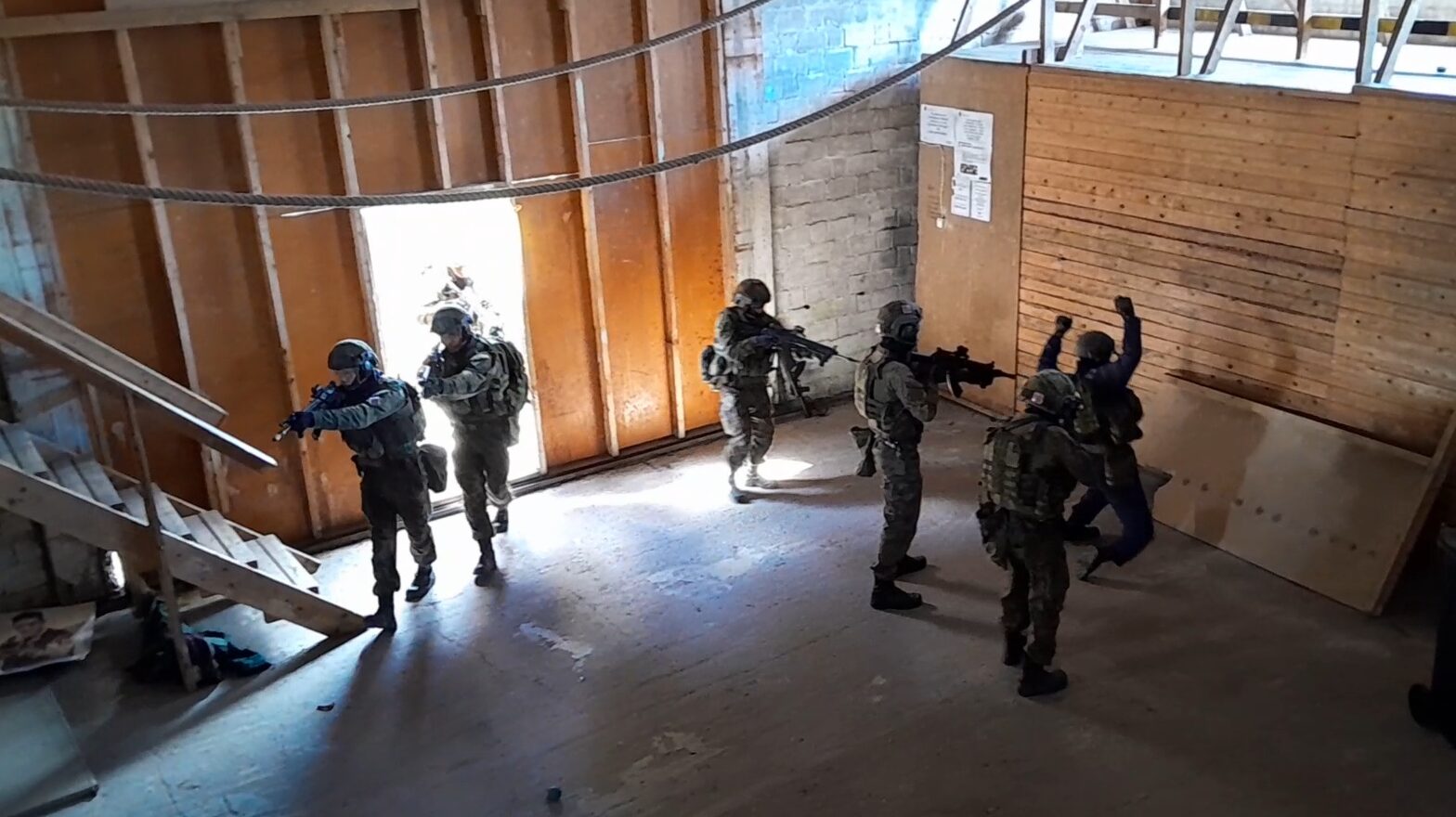
A light metallic rattle comes from one end of the warehouse as a grenade bounces on the concrete floor after it was thrown inside through an open doorway. A loud bang is followed by camouflaged troops pouring into the first room, ready with rifles. An enemy combatant is swiftly taken into custody as soldiers split off to perform various tasks. The warehouse is divided into multiple rooms, with a central hallway running down its length. A machine gunner provides cover at the hallway’s start, engaging in sporadic exchanges of fire with the armed opposition at the far end.
Riflemen systematically clear the rooms along the hallway while cautiously advancing toward the gunmen at the back of the warehouse. Eventually, they reach the final, larger room at the end of the hallway. Despite neutralizing multiple gunmen, they are vigilant. A grenade is rolled into this room too, but it fails to detonate. The soldiers enter nonetheless, finding their enemies down and discovering holes in the wall and ground. Guard positions are taken, and a rope is deployed for soldiers to descend into the underground pursuit of their targets.
Colonel Matti Honko oversees the exercise, expressing some satisfaction with the performance. He mentions the slight slow pace of the clearance and wryly comments on the non-exploding grenade incident. The troops, mostly conscripts in early training, acknowledge areas for improvement but display a stoic attitude towards defending their city.
Finland’s Guard Jaeger Regiment, led by Honko, focuses on urban combat training for the defense of Helsinki from potential invasions. The military’s readiness was heightened by Russia’s actions in Crimea and further solidified by Finland’s recent NATO membership, prompting a shift in defense strategy to adapt to modern hybrid warfare situations.
The Finnish defense strategy emphasizes a whole-of-society approach, rooted in the national character and history of preparedness. Universal male conscription, supported by voluntary female fighters, forms a strong reserve force that fosters national cohesion. The country maintains capabilities to enter a state of readiness if needed, with extensive preparations for various scenarios.
Membership in NATO has enhanced deterrence against Russia, but Finnish officials remain committed to self-reliance in defense. The nation’s preparedness and unified approach to national security demonstrate a resilient stance against potential threats.
Should a conflict arise, Finland stands ready to defend its territory with a well-prepared military and a populace accustomed to the idea of collective defense. The soldiers trained at bases like Santahamina play a crucial role in safeguarding the nation’s sovereignty and security, reflecting the country’s longstanding commitment to national defense.