General Atomics is set to begin flight tests of its first prototype for the U.S. Air Force’s autonomous combat drone program as early as mid-2025, according to the head of its aeronautics division in a recent interview with Breaking Defense.
In April, General Atomics—a veteran in drone technology—teamed up with defense tech startup Anduril to win contracts for the initial batch of prototypes under the Collaborative Combat Aircraft (CCA) program, outpacing industry giants Lockheed Martin, Northrop Grumman, and Boeing.
The Air Force has not yet confirmed whether both companies will move into the production phase for the program’s first increment or if it will select just one. General Atomics is focused on making this decision straightforward by rapidly advancing its design to demonstrate that it is ready for mass production. David Alexander, president of General Atomics Aeronautical Systems, stated, “We’re not just designing another stunt. We’re designing something you can go into full-rate production on.”
At the Royal International Air Tattoo last weekend, Alexander emphasized his company’s commitment to outperforming all competitors, including Anduril and the other established firms vying for the contract.
Construction of components for the initial CCA prototype has already begun, and the first unit is projected to be completed next year. Should General Atomics be chosen for full-rate production, it is already equipped with the necessary facilities and capital infrastructure, thanks to the pending cessation of production for the Army’s MQ-1C Gray Eagle and Air Force’s MQ-9A Reaper, which will be reduced to just two aircraft per month by next year. Alexander noted that their existing infrastructure could support production rates exceeding their previous peak of about 8.5 aircraft per month in 2019.
„We have this huge production gap. We have to be aggressive here — we have jobs on the line to fill that production line back up,” he remarked.
Currently, General Atomics is under contract for a „small number” of CCAs designated for development and testing, although Air Force leaders have indicated that they could procure more than 1,000 drones throughout the program’s duration, presenting a highly lucrative opportunity—particularly as the service evaluates the future of its next-generation fighter jet program.
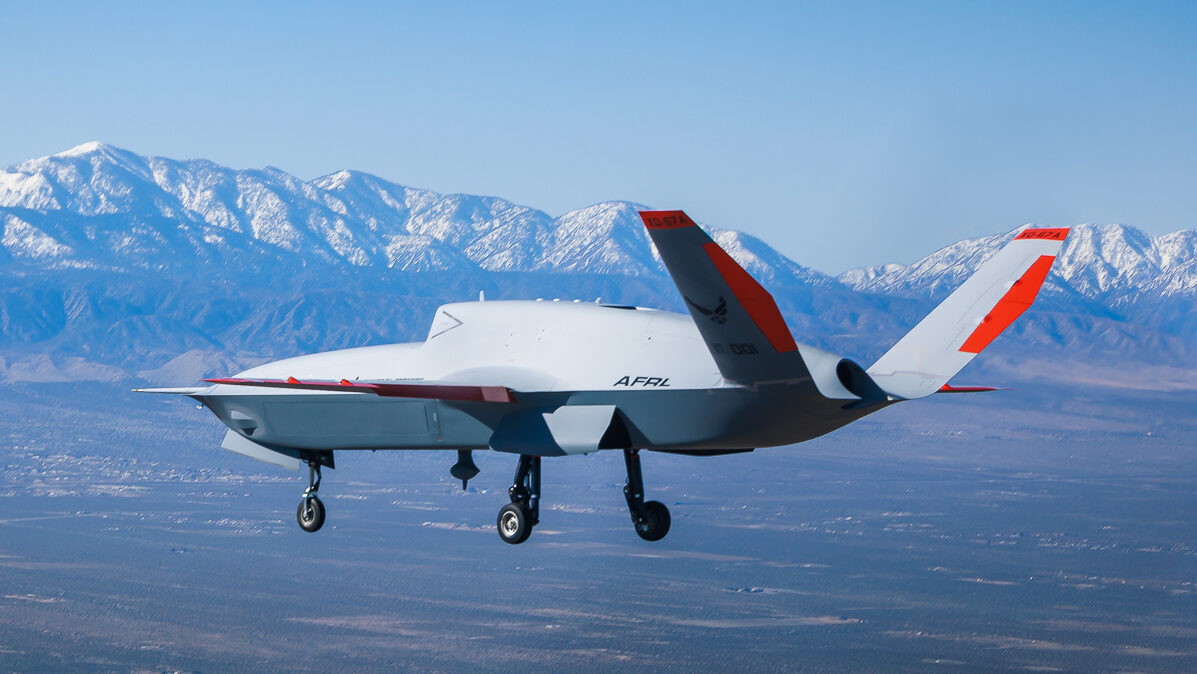
General Atomics has stated that its CCA design draws from the Gambit family of drones and the XQ-67A Off Board Sensing Station (OBSS) demonstrator, which first flew in February. However, Alexander highlighted that the CCA’s design is distinctively tailored for air-to-air combat missions, which necessitate faster speeds and different flight dynamics compared to the surveillance-focused OBSS platform.
He refrained from commenting on the potential engine choices for the CCA variant or the other defense firms collaborating on the sensors and mission systems integrated into the aircraft.
In terms of future developments, while production of the initial CCA prototypes has just commenced, other companies are already looking ahead to the program’s second increment. The Air Force has not divulged specifics about how the next CCA batch will differ from the first, but planning efforts are underway, with “initial activities” anticipated to begin later this year.
Alexander asserted, “We’re going to be in it, and we’re going to be in it big,” reinforcing General Atomics’ commitment to the program.
Both Boeing and Lockheed Martin also aim to re-enter the CCA competition for the second increment, despite setbacks in the first round. Lockheed Martin’s aeronautics unit president, Greg Ulmer, remarked, “We’re interested… We’re doing a lot of design development experimentation with CCA.”
Boeing’s ongoing work on the Navy’s MQ-25 tanker drone and Australia’s MQ-28 Ghost Bat is providing valuable insights that could be applied to future CCA increments. Boeing Space and Security CEO Ted Colbert emphasized their intention to remain competitive, stating, “We’re going to invest, we’re going to keep competing, and the sweet spot of intersection of the requirements for the customer and our capability will happen.”