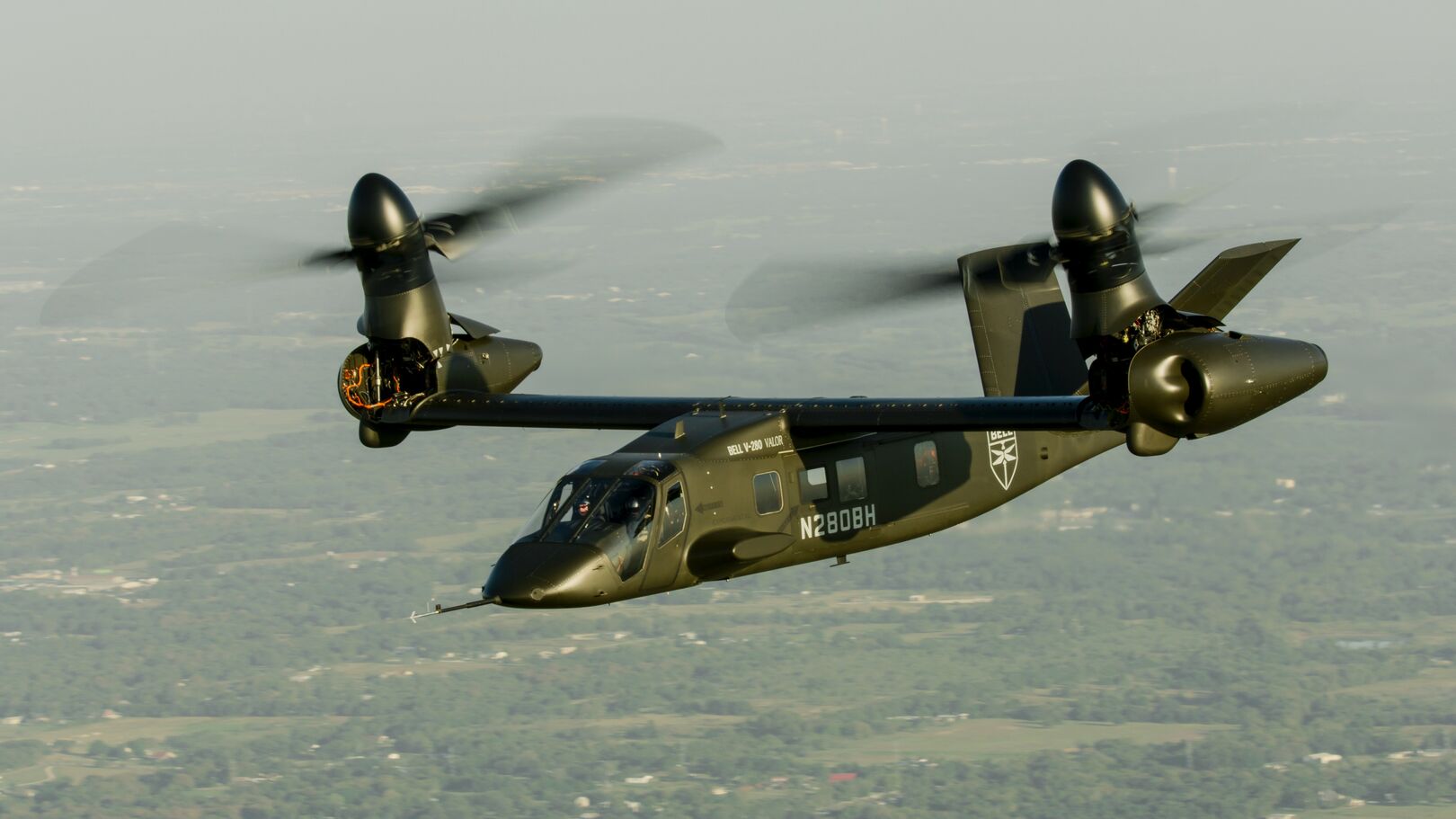
FARNBOROUGH 2024 — Bell is preparing to disengage from its partnership with Spirit AeroSystems as the fuselage provider for the Future Long-Range Assault Aircraft (FLRAA) upon the completion of Boeing’s acquisition of Spirit. This transition, as reported by Breaking Defense, will necessitate Bell to either seek a new manufacturer for the composite-skinned aluminum fuselage or manage production in-house, effectively removing Spirit from the supply chain for hundreds of tiltrotor aircraft. Aviation Week was the first to report on Bell’s plans, which have since been confirmed by a reliable source.
“Spirit has had a successful ten-year partnership with Bell on this program and we will continue to work with them to deliver on our joint commitments,” said Joe Buccino, a spokesman for Spirit AeroSystems.
A spokesperson from Bell refrained from commenting on supplier relationships, and Boeing also declined to provide a statement.
Earlier this month, Boeing finalized an $8.3 billion deal to reacquire Spirit AeroSystems, a move that will allow Boeing to gain access to critical defense projects from its major competitors, including Bell’s V-280 tiltrotor under the FLRAA program, Northrop Grumman’s B-21, and Lockheed Martin’s CH-53K.
During a briefing at the Farnborough Airshow this week, Senator Jerry Moran (R-Kan.) expressed his desire to ensure that Spirit’s aerospace operations remain in Kansas, where the company is headquartered. Moran had previously voiced concerns regarding the proposed acquisition before it was officially announced.
“I particularly want to make certain that we do not do anything in this acquisition that diminishes the capability of meeting our defense needs nationwide, or globally, by any kind of pause, any kind of disruption in the supply chain,” he remarked. “I want to make sure that companies engaged in defense work with Spirit have a place to continue that work, either with Spirit in the future or within Kansas.”
In 2022, Bell won the FLRAA contract, a deal that Army officials projected at up to $1.3 billion, with the potential to escalate to around $70 billion if additional contract options and export opportunities are realized.