The Air Force is embarking on the formation of a new Integrated Capabilities Office (ICO), with initial efforts likely to focus on a study examining strategies to counter adversary attempts at establishing „long-range kill chains” targeting U.S. forces. This information comes from Tim Grayson, special assistant to Secretary Frank Kendall, who discussed the initiative at the Mitchell Institute.
Grayson noted that the proposed study is in its preliminary stages and aims to explore methods to disrupt an adversary’s command and control systems, offensive capabilities, and operations designed for long-range strikes. He indicated that this study could lead to the formation of a new informal group, akin to the existing Joint Long-Range Kill Chain Organization (JLO), which collaborates across military services and Defense Department entities to devise a comprehensive strategy for enhancing U.S. military capabilities in striking adversaries deep within their territory.
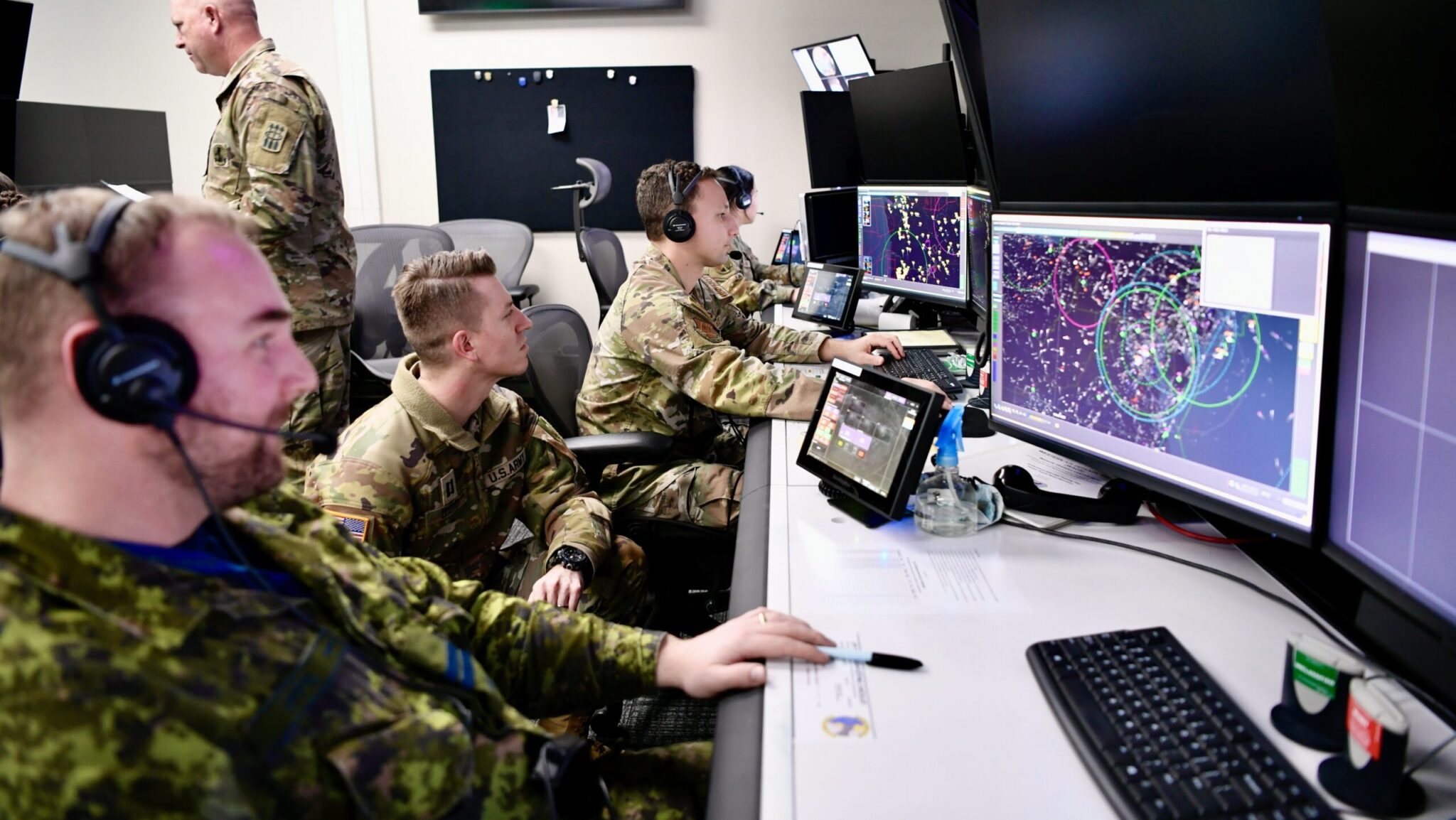
According to Grayson, addressing the challenge of enemy long-range kill chains is a complex „system-of-systems problem.” He emphasized that the Air Force must combine various components, such as electronic warfare (EW) and cyber capabilities, to thwart adversaries’ attempts to establish these kill chains. Notably, a senior official from Indo-Pacific Command previously identified dismantling China’s kill chain as a top priority, highlighting the urgency of this issue.
Grayson clarified that there is no plan to create a formal office dedicated solely to countering kill chains. He argued that the intricate nature of these threats cannot be adequately addressed through traditional Pentagon frameworks, such as formal Joint Program Offices. Instead, collaborative approaches that bring diverse stakeholders together, including technologists, intelligence officers, operators, and acquisition specialists, are better suited for developing innovative solutions.
“It really is a one team, one fight kind of model,” Grayson stated.
As the lead on translating Secretary Kendall’s seven „operational imperatives” into actionable Air Force initiatives, Grayson stated that the concepts underpinning groups like JLO and the potential establishment of a „JCLO” align with how the Air Force is operationalizing these imperatives. The collaboration cultivated through the operational imperatives process has successfully connected operators with capability developers.
Grayson highlighted the grassroots nature of the JLO, emphasizing that its creation stemmed from the initiative of dedicated individuals rather than a formal order from above. The group has gained recognition for its effectiveness, but efforts are being made to maintain its informal structure while allowing it to benefit from some degree of support.
Regarding the broader operational imperatives, Grayson mentioned that after receiving the Pentagon’s fiscal year 2024 appropriations from Congress, ongoing studies continue with promising outcomes for the fiscal year 2026 budget, which has recently been completed. He expressed confidence that progress is being made in the Air Force’s efforts to excel in the “great power competition” with China, and to a lesser extent, Russia.
The ICO will continue advancing the operational imperatives, although it will function within a more formal structure that lacks direct budgetary power or authority to enforce solutions. Grayson described the ICO as a unique entity that will wield both influence and limitations: “At the end of the day, it’s going to have both incredible power and no power at all. The influence of ICO will derive from its insights and position rather than from formal authorities.”