Aging Trainer Jet’s Performance Shortfalls Spur Search for Modern Alternative
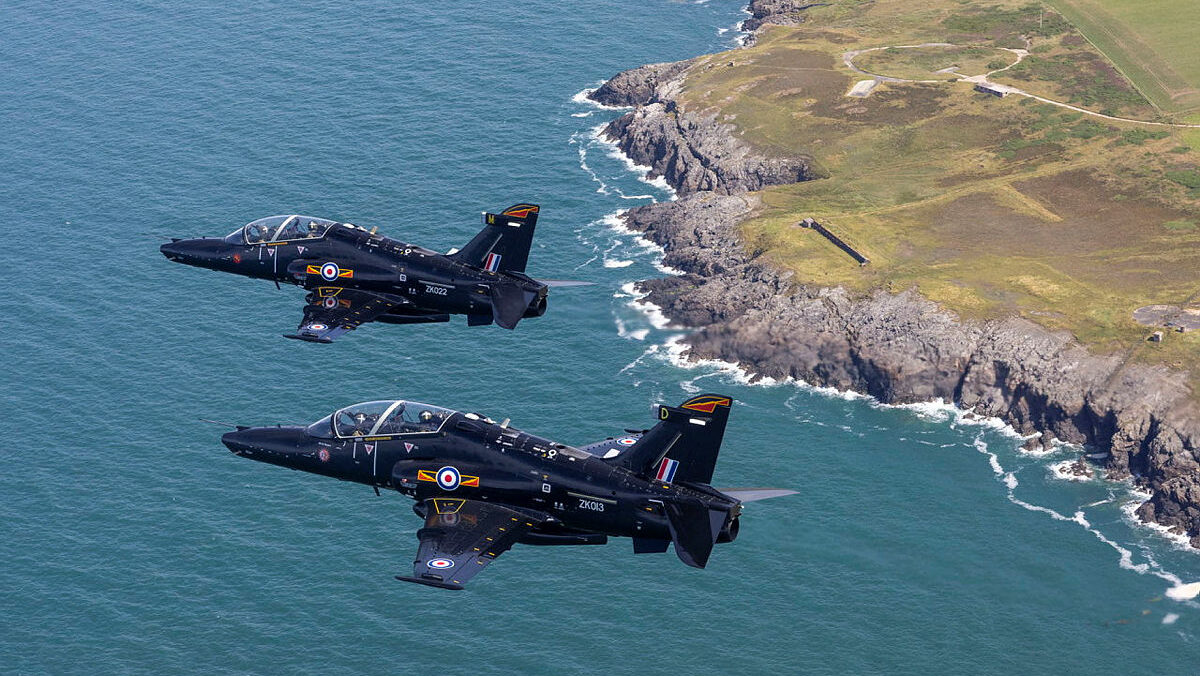
LONDON – The UK Ministry of Defence (MoD) is actively evaluating alternatives to its Hawk T2 advanced jet trainer program, acknowledging that the current platform’s performance and projected lifespan fall short of expectations. This decision follows a comprehensive review highlighting the challenges and costs associated with extending the Hawk T2’s operational life beyond its planned 2040 out-of-service date (OSD).
Performance Deficiencies and Rising Costs:
The MoD’s assessment revealed that significant further investment would be needed to maintain the Hawk T2 until 2040. This, coupled with persistent technical problems related to engines and support systems, has led the Ministry to explore alternative options. Air Chief Marshal Richard Knighton, UK Chief of the Air Staff, bluntly stated that the current Hawk T2 fleet delivers only about half the expected training capability, underscoring the urgent need for a replacement.
A Multi-Faceted Approach to Training:
The planned replacement is part of a wider RAF capability investigation aligned with the UK’s forthcoming strategic defence review. This review includes consideration of a training system integrating live flying exercises with advanced simulation and networked virtual training. This holistic approach aims to deliver a more effective and cost-efficient training solution.
Contenders Emerge in the Race for Replacement:
Several international aircraft manufacturers are vying for the contract, including potential contenders such as Italy’s M-346, Korea’s T-50, Turkey’s Hurjet, and the US Air Force’s T-7A Red Hawk. UK-based Aeralis, known for its modular aircraft designs, is also a strong candidate, promoting its Common Core Fuselage (CCF) as a key component of a potential future Hawk replacement.
Geopolitical Factors and Risk Assessment:
While recent geopolitical tensions might raise concerns about procuring US-made aircraft, analyst Douglas Barrie of the International Institute for Strategic Studies suggests this is unlikely to significantly influence the decision for a trainer jet. However, given the UK’s experience with the Hawk T2’s technical issues, the MoD may prioritize a lower-risk option. The focus is likely to be on selecting an aircraft with a highly capable cockpit capable of simulating the F-35 and the upcoming Tempest fighter jets.
Conclusion:
The search for a Hawk T2 replacement is a high priority for the UK, driven by the need to provide effective training for pilots of advanced fighter jets. The MoD’s decision will not only shape the UK’s future pilot training capabilities but also signal a broader shift in the country’s approach to defense procurement. The selection process will likely favor a modern, reliable aircraft offering maximum training effectiveness and minimal risk, setting the stage for a significant investment in the UK’s defense capabilities.