Earlier this week, an Israeli Sa’ar 6 corvette successfully intercepted an unmanned aerial threat approaching Israeli economic waters, according to the Israeli Defense Forces (IDF), which shared a video of the interception online.
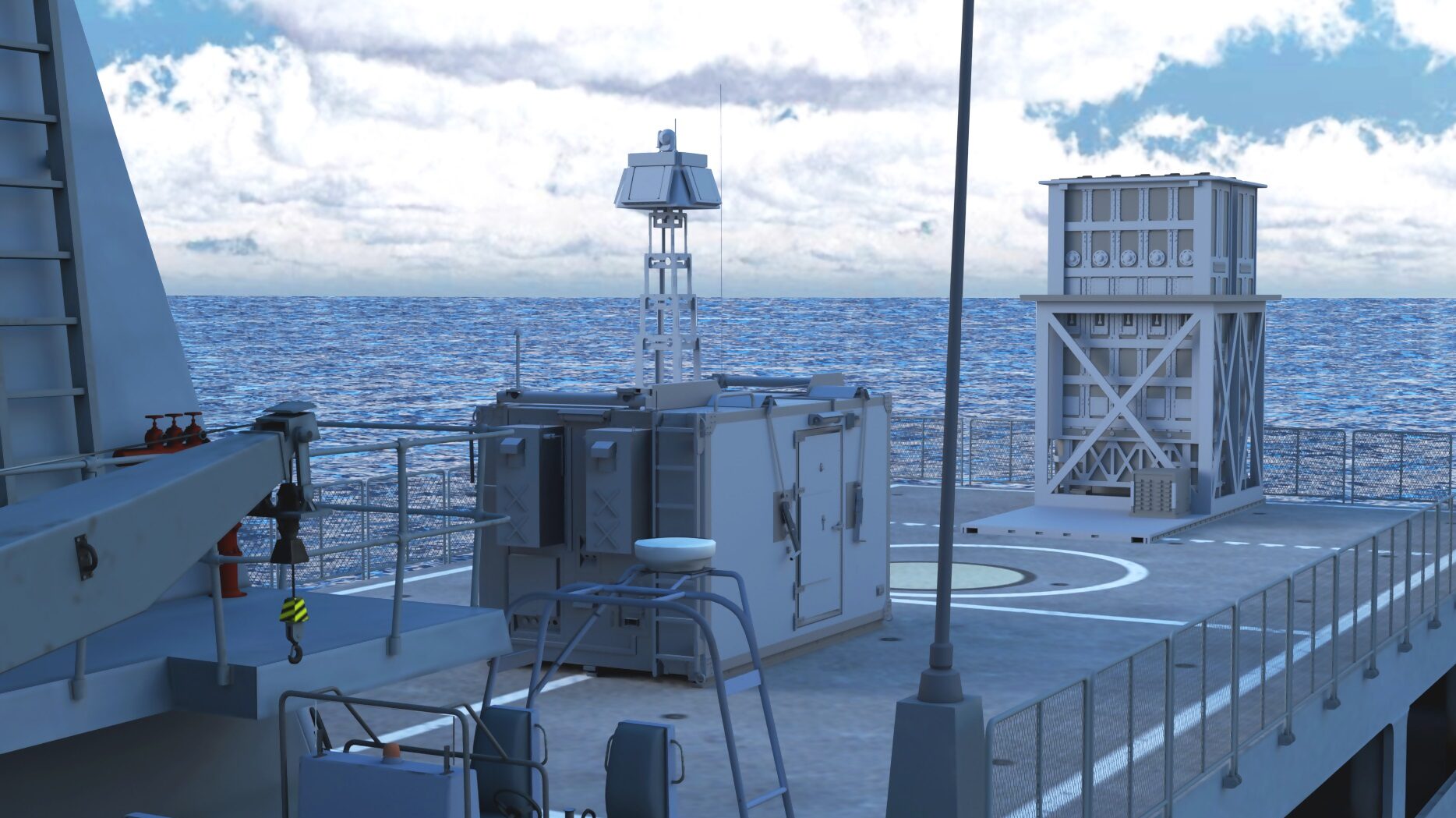
While the IDF did not specify the exact system used to neutralize the drone, a spokesperson for Israeli defense company Rafael informed Breaking Defense that it was the company’s maritime air defense platform, known as C-Dome.
C-Dome systems have been installed on Sa’ar 6 corvettes, Israel’s most advanced naval vessels, since their commissioning in December 2020. Ran Tavor, vice president of naval warfare systems at Rafael, mentioned that they have performed admirably, including in recent operations related to Gaza, prompting the company to explore potential sales to other “tier one” navies. “We now see a growing demand for rapid deployment of such systems worldwide,” Tavor told Breaking Defense in a recent interview. The C-Dome is the maritime version of Israel’s renowned Iron Dome air defense system, which serves as the first layer of Israel’s land-based defenses. The second tier is David’s Sling, designed for medium-range threats, while the Arrow system handles ballistic missiles and exo-atmospheric challenges.
For the Israeli corvettes, the C-Dome was integrated during the ships’ production in Germany. Rafael envisions a fully self-contained platform that includes interceptors, launchers, and combat management systems delivered together, similar to installations on some of Israel’s older Sa’ar 5 corvettes. When integrated with the ship, the system can utilize the ship’s radar or operate with a third-party radar system, which Tavor referred to as a “turnkey” solution.
“We recognized long ago, back in 2017, the need for a naval version of Iron Dome, testing a prototype that adapted the land version for deployment on ships,” Tavor stated.
C-Dome has been deployed during a new era of unmanned combat, where less-equipped factions, such as the Houthi rebels in Yemen, can launch relatively inexpensive drones at costly naval vessels. Notably, an operational C-Dome executed its first combat interception in April, neutralizing an unmanned aerial vehicle over the Red Sea, as reported by the IDF at the time.
“We are confronting asymmetric warfare where the threats are low-cost and come in large volumes,” Tavor explained to Breaking Defense. He characterized a maritime battlefield where navies currently rely on expensive interceptors that can cost millions of dollars each, a situation that could lead to financial strain if used frequently.
“The C-Dome operates at an attractive price point, with its interceptors and entire system being relatively affordable, as it was designed to counter low-cost mortars and similar threats,” he said.
In collaboration with the Israeli Ministry of Defense’s Directorate of Defense Research and Development, Tavor noted that the C-Dome was tested across various maritime threat scenarios. “The operational scope of this system is quite extensive. We anticipated both current and future threats we are now facing,” he commented.
In addition to addressing „low and slow” drone threats, Tavor mentioned that C-Dome has also proven effective against more sophisticated threats. “It did catch us by surprise, but it is reassuring to see our predictions come true,” he remarked, although he did not provide specific details. “We must confront various types of threats, considering the timeline from detection to interception.”
While Rafael did not disclose potential international customers for the C-Dome system, previous reports indicate that Australia may be among those interested.
Tavor highlighted that the company is in discussions with navies and shipyards about integrating C-Dome into different design phases for new ships. “C-Dome requires a small footprint and does not necessitate a complex infrastructure; we just need to plan ahead,” he concluded.