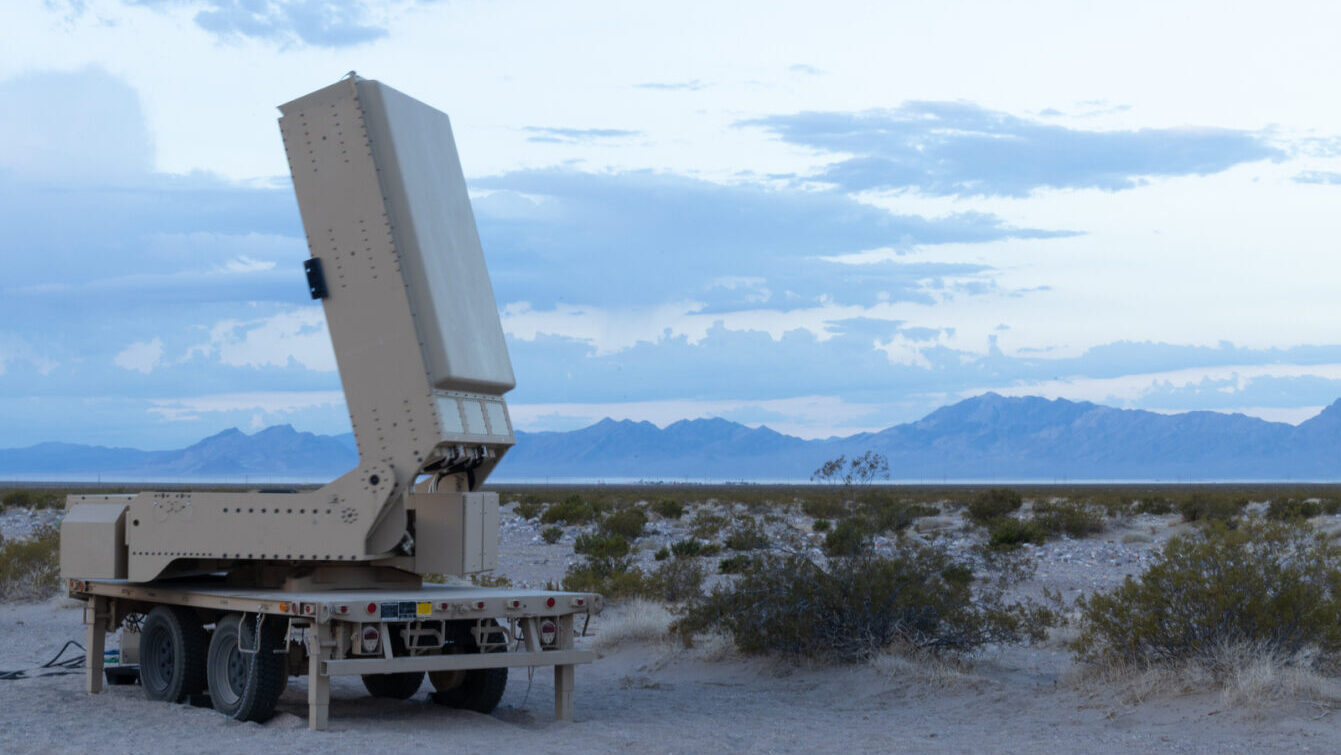
The U.S. Army is still on track to send prototypes of high-power microwave systems to the Middle East for testing against drone swarms, although the timeline has been extended slightly longer than initially expected, according to a three-star general.
After Epirus delivered its fourth and final Indirect Fire Protection Capability-High-Power Microwave (IFPC-HPM) prototype earlier this year, Army personnel began testing this new class of weaponry. During this testing phase, the Army recognized the need to make adjustments to the kill chain, as stated by Lt. Gen. Robert Rasch, Director of the Rapid Capabilities and Critical Technologies Office (RCCTO).
“The system performed exceptionally well, but we had some additional work to do regarding suitability,” Rasch told Breaking Defense. “It wasn’t the weapon system itself, but rather how it integrates into the broader kill chain. We’ve added capabilities to the system to facilitate easier implementation for soldiers.”
While he did not specify the exact changes, Rasch indicated that the new counter-drone weapon has received enhanced “sensing capabilities,” allowing operators to be “absolutely confident” they are directing energy precisely where needed at the right moment. Following these modifications, soldiers will undergo additional training on how to effectively use the weapon before it is deployed abroad for further testing.
If all goes according to plan, the first IFPC-HPM prototype could arrive in the Middle East within six to nine months. Although Rasch did not reveal the specific location, Chief of Staff Gen. Randy George’s office previously informed Breaking Defense that the selection has been made for the U.S. Central Command area.
“We need to navigate through various procedures—not bureaucratic ones, but all the necessary safety releases and directed energy weapons protocols to actually deploy a system like this,” Rasch added.
The rise of drones and other aerial threats has spurred a military race to swiftly develop and deploy new countermeasures, with a major focus on reducing the cost-per-shot for neutralizing these threats. Directed energy systems—such as high-energy lasers and high-power microwaves—offer a promising opportunity to achieve this goal, with General George utilizing soldiers in the CENTCOM region to test these systems against real-world challenges, including dust conditions.
When the IFPC-HPM eventually makes its debut in the Middle East, it will join a variety of high-energy laser systems already deployed in the region, including 50-kilowatt laser prototypes mounted on Stryker vehicles.