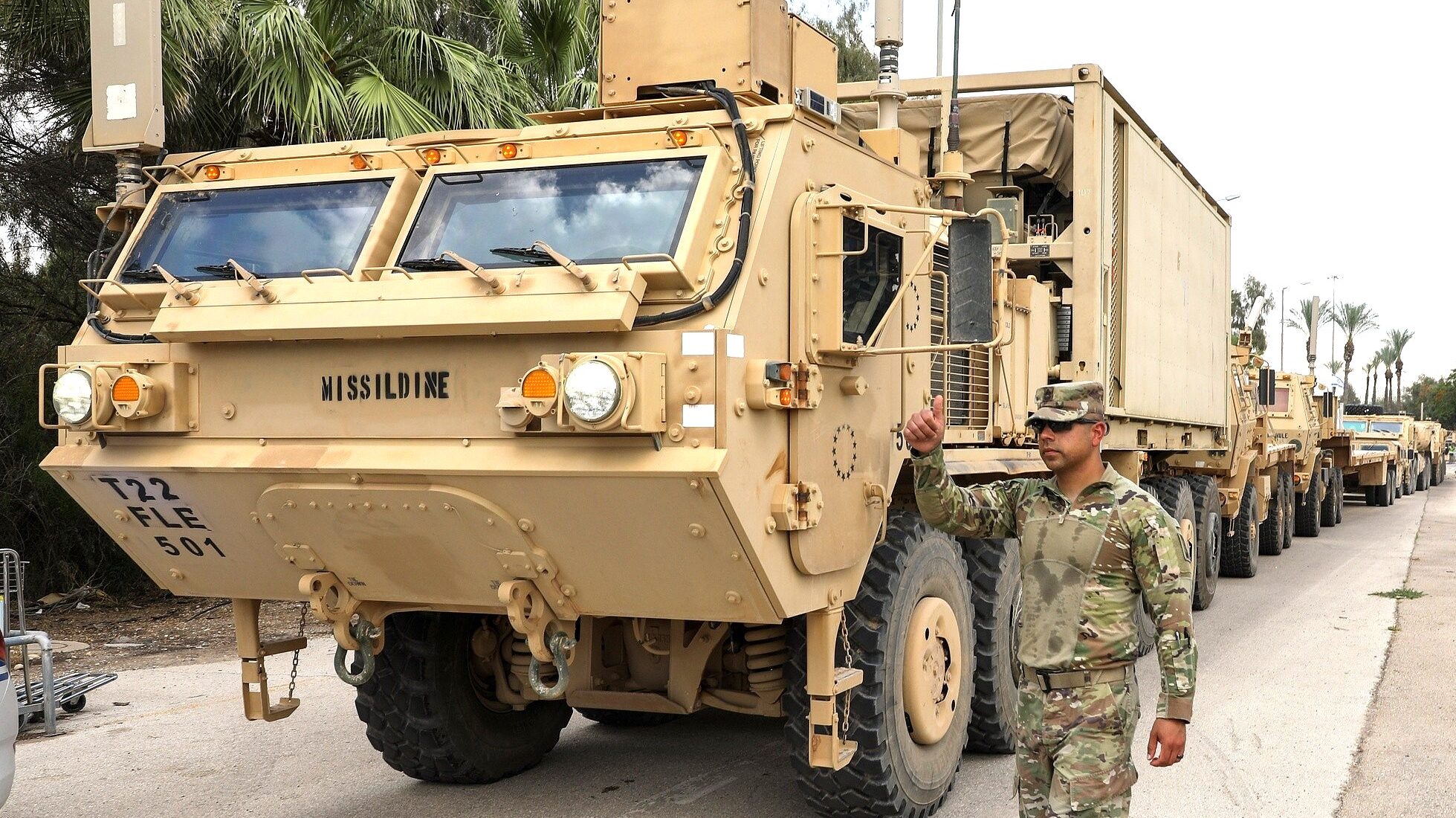
Although the U.S. Army envisions an uncrewed future for part of its ground fleet, integrating autonomous systems into its formations has proven to be a challenge that spans software, communication, and mobility.
The positive news is that the Army recognizes that if it aims to realize the potential of its combat robot ambitions, it must implement changes. Speaking at the 16th Annual Ground Vehicle Systems Engineering & Technology Symposium (GVSETS) in Novi, Michigan, officials expressed their openness to ideas that could facilitate this evolution.
From a software perspective, Col. Ken Bernier, project manager for Future Battle Platforms at the Program Executive Office for Ground Combat Systems (PEO GCS), emphasized the need for the Army to make decisions earlier to ensure the long-term viability of any program or platform they deliver. “It’s probably not hard to think about it as we iterate with more and more robots. The one common thread may be the software that keeps them all working together,” he noted.
Leland “Kent” Shea, Product Manager for Robotics & Autonomous Systems at PEO CS&CSS, stressed that the improvement of algorithms must be an ongoing endeavor: “I don’t think software improvement processes ever stop. It is very different to sustain than other things.”
One critical issue that requires updated software is mobility—particularly, obstacle detection and avoidance. Ensuring that the uncrewed fleet can operate at speeds comparable to manned platforms in challenging terrains is also a concern, as the current uncrewed ground vehicles (UGVs) could slow down convoys, putting them in danger. Breaking Defense recently outlined several of these issues in a two-part series focused on the Army’s Robotic Combat Vehicle program.
“We want our soldiers to be able to deploy uncrewed capabilities—whether ground, air, or whatever—in an autonomous manner,” stated Robert Monto, Director of Advanced Concepts and Critical Technologies at the U.S. Army Rapid Capabilities and Critical Technologies Office (RCCTO).
Another challenge lies in ensuring that these systems can access networks and communicate safely without interference from adversaries. To safeguard these platforms from cyber threats, the Army intends to strengthen its collaboration with the industry. Col. Bernier highlighted, “If I learned anything about cybersecurity or program management, it is not if [a cyberattack happens], it is when [it will happen] and how you respond to it.” He acknowledged that cyberattacks are inevitable, and the Army will have to depend on industry to provide suitable solutions.
The ongoing incorporation of new capabilities throughout the lifecycle of unmanned ground platforms presents another concern, as the Army must be prepared to face both current and future threats. In this context, the Modular Open Systems Approach (MOSA) has become increasingly relevant.
Beyond facilitating timely updates and modernization processes, a modular approach can also enhance maintenance plans for components and technologies sourced from various vendors. “If we strategize and maintain competition as part of our long-term programs, that [MOSA] will only benefit us and allow us to leverage software that provides a reasonable balance,” Shea remarked.
Moreover, no discussion about the challenges of a military procurement program would be complete without addressing how bureaucratic obstacles in acquisition and development can hinder the implementation of new technologies. This is not a surprise to the industry. Warren Sponsler, Chief Operating Officer of the National Advanced Mobility Consortium (NAMC), stated, “Based on numerous hard lessons learned, the DoD, by its nature, is very risk-averse,” mentioning that “it has instituted various processes to help mitigate those risks.”
Jim McManus, the chair of GVSETS, added that “it is frustrating for some commercial companies that don’t participate in the defense market because the contracting mechanisms are extremely rigorous.”
The Department of Defense (DoD), along with its services and agencies, has been increasing the use of Other Transaction Authority (OTA) agreements to expedite contracting processes and procure commercial solutions from non-traditional defense suppliers. McManus asserts that integrating commercial technologies into uncrewed vehicles will be vital for the Army’s ability to enhance capabilities on both current and future vehicles.
Since OTAs are non-standard procurement methods, they are generally not bound by the federal laws and regulations governing traditional defense acquisitions. Nonetheless, there remains room for improvement in this process.
From Sponsler’s perspective, small businesses and commercial suppliers can help reduce these barriers by collaborating with other defense companies: “They don’t have to start from scratch going through the entire bidding process for a contract,” he noted.