At the recent US Strategic Command (STRATCOM) Symposium, Congressman John Garamondi (D-CA) suggested that the US should cancel the development of the Sentinel intercontinental ballistic missile—a stance he has long supported. More intriguingly, he challenged the military to return nuclear bombers to alert status, especially in light of the serious nuclear threats highlighted by STRATCOM.
While there may be disagreements regarding the Sentinel program, there is broad consensus on the urgent need to restore nuclear-capable bombers to alert status.
Currently, Russia possesses a tactical nuclear arsenal ten times larger than the US, while China is poised to become a nuclear equal to the US by 2035. Additionally, North Korea is ramping up its nuclear capabilities, with dictator Kim Jung-Un stating that the country will see “exponential” growth in its arsenal in the coming years.
The growing alliance between China and Russia, along with North Korea’s rapprochement with Russia, has raised concerns. NATO Secretary General Jens Stoltenberg suggested in June that Russia might soon provide North Korea—and potentially China—with the technical aid and fissile material needed for nuclear warheads in exchange for support in its conflict with Ukraine.
Recognizing this escalating threat, President Joe Biden signed new strategic guidelines in March, directing the US to prepare for coordinated nuclear threats from these adversaries.
The long-term implications of this tightening alliance portend a coalition with a nuclear arsenal vastly superior to that of the United States, creating a scenario where all three rivals could exert coercive pressure on US policy. In the event of US military intervention, such as a response to a Chinese invasion of Taiwan, there is a high likelihood that Beijing would leverage nuclear threats to deter US involvement while North Korea and Russia look for opportunities to exploit the situation.
Adding to the concern, the US maintains up to 1,550 operationally deployed strategic nuclear weapons, but can only rely on 400 intercontinental ballistic missiles (ICBMs) and a portion of the Ohio-class submarine fleet to be on alert status at any given time.
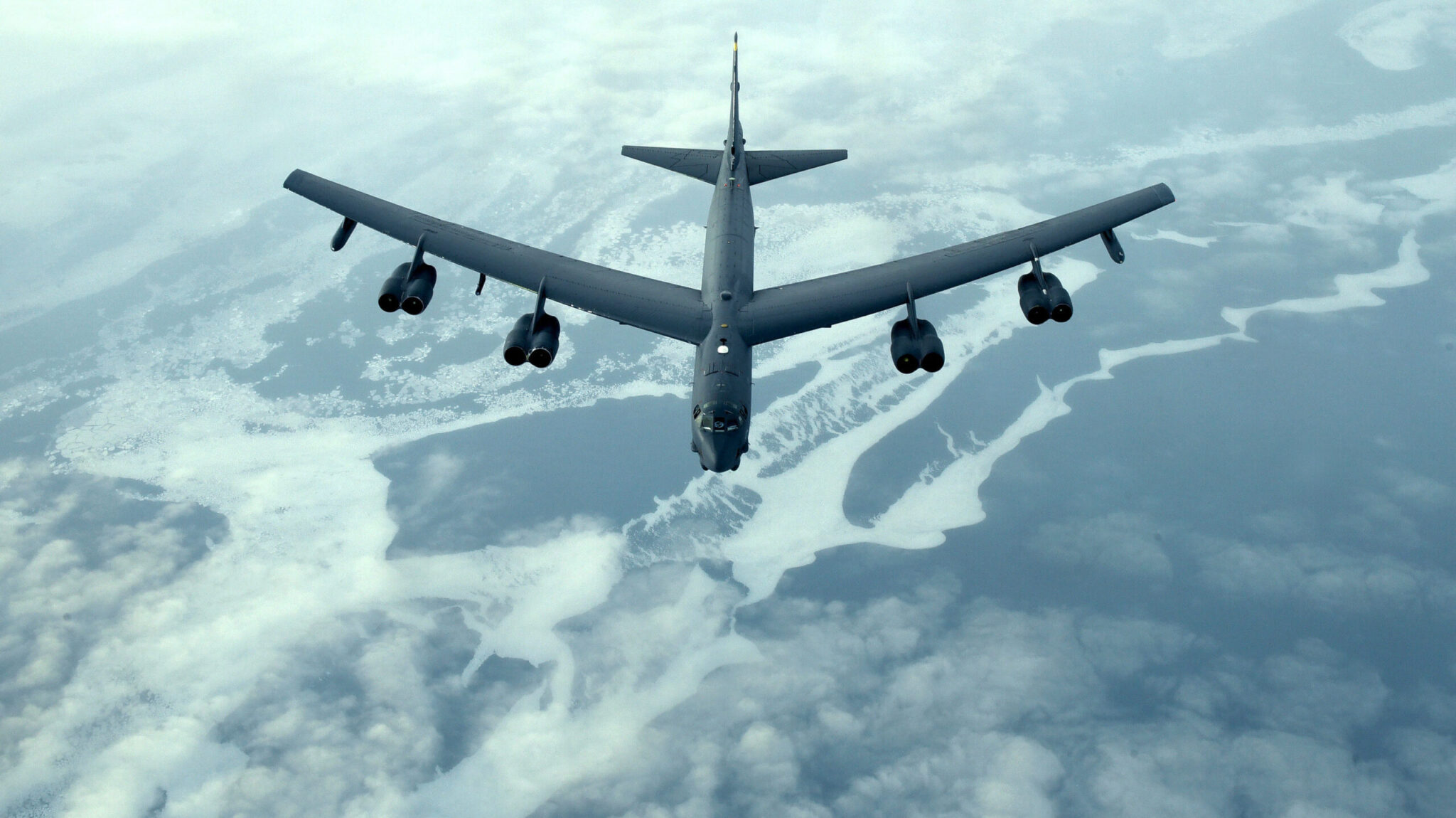
At present, the nation’s nuclear bombers are not on „alert status,” meaning B-52 and B-2 bombers are not prepped for a rapid response. In a crisis situation, it would take days or even longer for the Air Force to return the bomber fleet to alert. This leaves the 46 nuclear-capable B-52s and 19 B-2 bombers vulnerable to conventional or nuclear strikes.
Restoring the bombers to alert status—even for a subset of them—is vital to ensure their survival and signal to China and Russia that the US takes nuclear deterrence seriously.
This challenge is not new. In 2021, former US Strategic Command Commander Adm. Charles Richard testified that he would advocate for the bombers’ return to alert status should the nation lose the ICBM force.
Following this, Lt. Gen. James Dawkins, then the Air Force’s Deputy Chief of Staff for Strategic Deterrence and Nuclear Integration, noted that returning even a few bombers to alert is unfeasible long-term due to resource constraints: “You’re going to need more aviators, Security Forces personnel, more maintainers… more bombers… infrastructure improvements at the alert facilities, and you’re going to need more tankers.” These needs have intensified; the current number of nuclear-capable bombers is the lowest in history and lacks the crew force required for effective training and maintenance. This shortage also applies to security personnel to protect the aircraft, maintenance crews to repair them, and tanker aircraft for mid-air refueling.
How can these issues be addressed? In the long run, the US must invest in several hundred new bombers, necessitating a focus on long-range strike capabilities—arguably the Air Force’s most critical mission. However, developing such systems takes substantial time, leaving the near-term risks unaddressed.
In the short term, the solution lies in significantly increasing the number of trained bomber crews, enhancing security forces, and training the requisite maintenance and support staff. Similar efforts must be applied to the tanker fleet that supports bomber operations.
Addressing these challenges will be costly. Prioritizing nuclear capabilities will likely require reallocating funds from other defense needs, and possibly from non-defense sectors as well. Given the Air Force’s current recruitment challenges and the timelines involved for training aircrews, immediate action is necessary.
Yet, these challenges can be surmounted with political will—a critical component since a robust nuclear deterrent is essential for maintaining America’s safety and prosperity.
When President George H. W. Bush removed the bomber force from alert on September 27, 1991, it had stood ready for 12,414 days straight. Today, even a week on alert might be too ambitious for a bomber force that is a fraction of its 1991 size. Unfortunately, the current bomber force is a mere shadow of its former self.
This situation does not have to persist. With the right attention and focus, the US can ensure that a vital component of its strategic deterrent remains capable and ready.
Dr. Adam Lowther is the Vice President of Research at the National Institute for Deterrence Studies. He spent over two decades in uniform and as a civil servant in both the Air Force and Army, focusing on nuclear issues. He is also the host of the NucleCast podcast.
Lt. Col. Derek Williams is a U.S. Air Force B-52 Weapons System Officer and a graduate of the Sandia National Laboratories Weapons Intern program.
The views expressed here are those of the authors and do not reflect the official guidance or positions of the United States Government, the Department of Defense, the United States Air Force, the United States Space Force, or U.S. Strategic Command.