Chasing Opportunities After Losses and Program Cancellations
Following the cancellation of an Army helicopter program and a setback in another competition, Lockheed Martin is now focusing on securing a major European contract for its cutting-edge military rotor technology. The company plans to collaborate with European firms to manufacture the aircraft locally if they succeed in the upcoming competition.
Partnering for Future Production in Europe
Frank Crisafulli, Sikorsky’s Director of International Business Development, revealed the company’s strategy during a briefing at the Paris Air Show. “That’s the way the business model will be set up. We’re looking for partners to do that,” he said, emphasizing the importance of local collaboration for potential European programs.
Debut of the S-97 Raider and Europe’s Growing Role
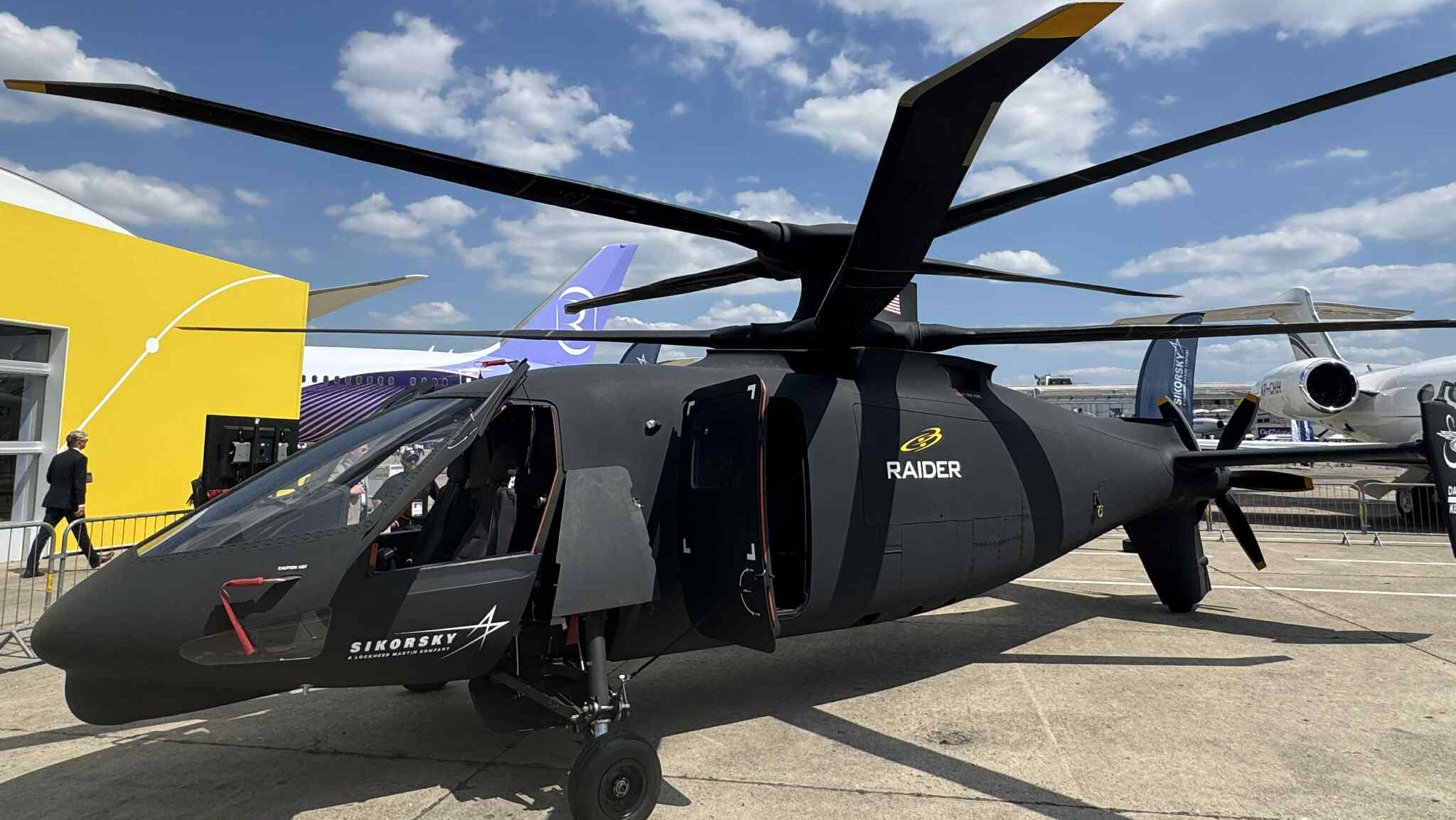
The Paris Air Show marked the first appearance of the S-97 Raider, an innovative helicopter design adapted by Lockheed for the now-canceled Army FARA program. With the FARA project no longer active, Europe has become the key potential market for Lockheed’s next-generation helicopter technology, called X2. This opportunity is particularly significant following Lockheed’s 2022 loss to Bell Textron for the Army’s Future Long Range Assault Aircraft (FLRAA) program.
The Strategic Importance of the Next-Generation Rotorcraft
Rich Benton, Sikorsky’s CEO, highlighted the importance of the Next Generation Rotorcraft Capability (NGRC) program, initiated by NATO in 2020. “The largest procurement out there is really NGRC,” he said, noting that the program aims to replace hundreds of medium-lift helicopters across Europe starting in the late 2030s. Benton pointed out that modernizing Europe’s helicopter fleet is the top priority for Lockheed over the next decade.
Investments and Technology Demonstration
Lockheed has invested over a billion dollars in developing the X2 technology, which features coaxial, counter-rotating rotors and a pusher propeller. The company was selected last year, alongside Airbus and Leonardo, for the latest phase of the NGRC program. Lockheed plans to work closely with European suppliers to support the project.
** engines and the Future of the Helicopter**
A key component of next-generation helicopters is the engine. The US Army’s recent cancellation of the T901 engine, developed by GE Aerospace, has created uncertainty. Although Congress could potentially revive the program, GE is pushing to accelerate its development. The T901 could be a candidate for NGRC, but Lockheed is open to other options.
Flexible Approaches to Powerplant Selection
When asked whether Lockheed’s bid for NGRC would be limited to the T901 engine, Rich Benton stated, “We’re not limited to that.” He stressed the importance of choosing an engine capable of realizing the aircraft’s full capabilities, whether sourced from the US or Europe.
Seeking the Most Efficient and Modern Powerplants
Bill Fell, Sikorsky’s test pilot, emphasized that the engine’s efficiency and modernity are critical to the helicopter’s range and performance. “How fast you go depends on horsepower relative to drag, but how far you go depends on how modern and efficient the engine is,” he said, highlighting the logistics involved in engine choice. Lockheed aims to select the most advanced and efficient powerplant for its future rotorcraft.