Scaling Up Amidst Global Export Opportunities
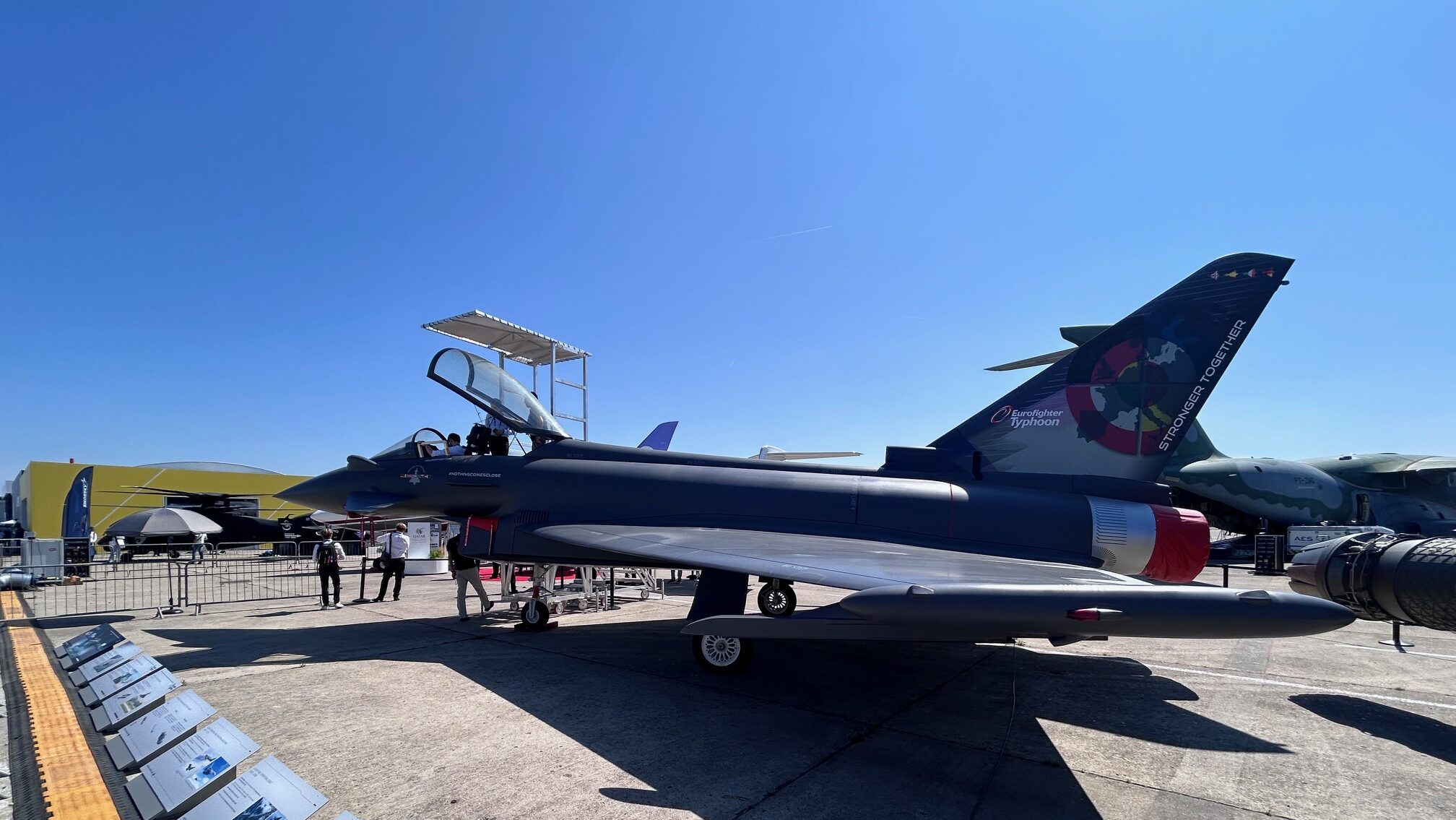
The four-nation Eurofighter consortium—consisting of Germany, Italy, Spain, and the UK—is set to significantly ramp up production of the Typhoon fourth-generation fighter jet, aiming for a rate of 30 aircraft per year starting in 2028. This ambitious increase represents more than double the current output and hinges on securing new export orders from markets worldwide, including Europe, the Middle East, and beyond.
Production Growth Driven by New Orders and Technology Innovation
Eurofighter CEO Jorge Tamarit Degenhardt announced at the Paris Air Show, “We are already eyeing a production rate of 30 once new export orders start kicking in.” Currently, the consortium produces around 14 jets annually, with plans to reach 20 units per year within three years. “We need to do this quickly,” Degenhardt stressed, emphasizing the importance of adopting cutting-edge manufacturing technologies and strengthening supply chains comprising 400 critical suppliers to sustain the increased output.
Expanding Long-Term Market Reach
Beyond the existing order of 729 jets, the consortium’s key export targets include Austria, Poland, Turkey, and Saudi Arabia. Degenhardt highlighted that jets delivered now could remain operational into the 2060s, underscoring the importance of future capabilities enhancements.
Potential Deals in Europe and Beyond
In Austria, a procurement plan expected next year could revive the country’s efforts to replace aging Eurofighters, possibly involving additional Typhoons. Poland, meanwhile, is considering acquiring 32 jets to bolster its air superiority, competing with Boeing’s F-15EX; a decision date remains pending.
Turkey may see the aircraft as a replacement for their fleet, with the UK proposing to supply up to 40 fighters to Ankara. Saudi Arabia continues to evaluate options; BAE Systems is collaborating with the UK government on a formal requirement for additional aircraft, building upon the 72 Eurofighters already operated by Riyadh since 2007.
Preparing for Long-Term Relevance: The Upgrades Challenge
Maintaining the aircraft’s operational relevance over decades requires a midlife upgrade, which is still in early planning stages. Degenhardt acknowledged that the current hardware architecture is approaching technical limits, especially regarding computing capacity. However, funding for these upgrades has yet to be secured, and the consortium does not anticipate new orders from the UK, which instead focuses on expanding its F-35 fleet.
The UK’s Moving Toward F-35 Operations
While the UK’s recent Strategic Defence Review indicated a shift toward increased F-35 procurement, Degenhardt noted that this does not negatively impact the Eurofighter program; rather, it is expected to generate knock-on effects that could benefit the Typhoon’s long-term viability, even though no new orders are currently anticipated from the UK government.
Conclusion
With a strategic plan to increase production and expand sales internationally, the Eurofighter consortium is positioning the Typhoon as a key player in European and global airpower for the coming decades. However, making the leap from current production levels to 30 aircraft annually will require securing new export deals and investing in future upgrades to keep the platform technically relevant and operationally effective.