The Air Force is set to showcase full-scale models of two autonomous combat drones next week during its flagship conference, as announced by the service’s top official on Tuesday.
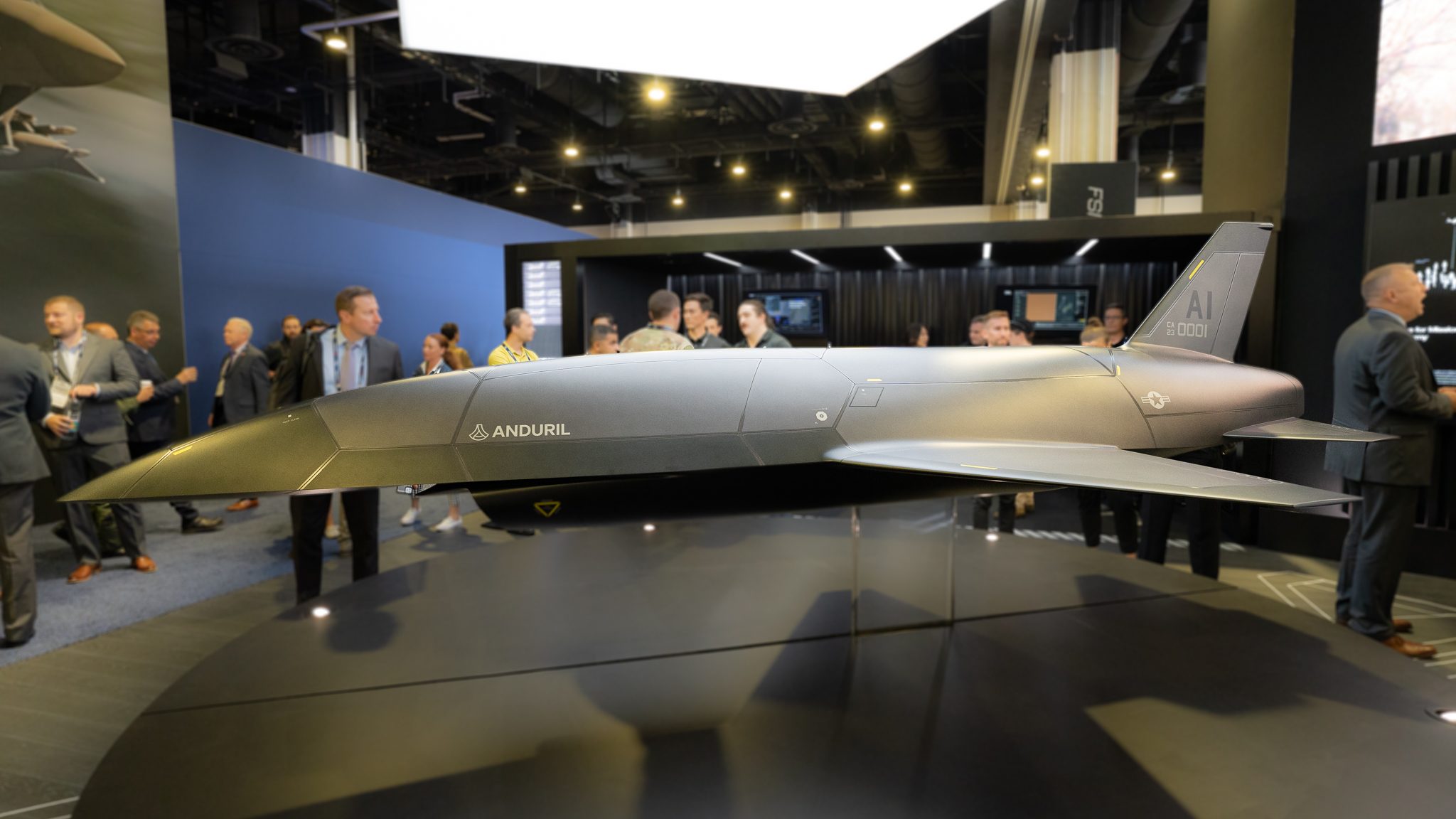
“If you come to the Air Force Association meeting next week, you’ll see two full-scale models of the aircraft that we’re building: the first increment of uncrewed collaborative combat aircraft,” stated Air Force Secretary Frank Kendall at the Aerospace Summit today. “These will be loyal wingmen, and they will be controlled by a crewed fighter, likely an F-35 or potentially the NGAD [Next Generation Air Dominance] fighter once we define what NGAD entails.”
General Atomics, a legacy drone manufacturer, and defense startup Anduril recently secured contracts to develop uncrewed wingmen as part of the Air Force’s Collaborative Combat Aircraft program, outperforming competitors such as Northrop Grumman, Boeing, and Lockheed Martin in April.
Both companies confirmed Kendall’s announcement regarding the full-scale models of their collaborative combat aircraft (CCA) at the trade show.
Additionally, sources familiar with the event’s plans revealed to Breaking Defense that General Atomics will present an actual XQ-67 aircraft at its booth. This model, part of the Gambit family of aircraft, has been identified as the basis for General Atomics’ CCA offering. The XQ-67 conducted its inaugural flight in February as part of the Air Force’s Off-Board Sensing Station program, which aims to validate technologies related to drone wingmen.
Anduril is promoting its Fury drone for the CCA program.
Under their contracts, General Atomics and Anduril will develop prototype CCAs, expected to take flight next year. The Air Force is scheduled to decide in 2026 whether to proceed with production of the drones developed by either or both companies—or potentially buy CCAs from firms that were previously excluded from the program.
The Air Force has indicated that it could acquire up to a thousand CCAs throughout the program, with plans to purchase multiple drone variants from various manufacturers to fulfill different mission requirements. Secretary Kendall noted that the service intends to invest “several billion dollars” in CCAs over the next five years, emphasizing the „enormous opportunities” the Air Force foresees in leveraging autonomy and artificial intelligence. This includes advancements associated with machine learning, data analytics, pattern recognition, and generative AI.
“Whether it’s to enhance efficiency in generating documents or to aid us with automated decision-making, planning, and execution, we need to integrate and adapt these technologies to our needs swiftly, if possible,” Kendall remarked.