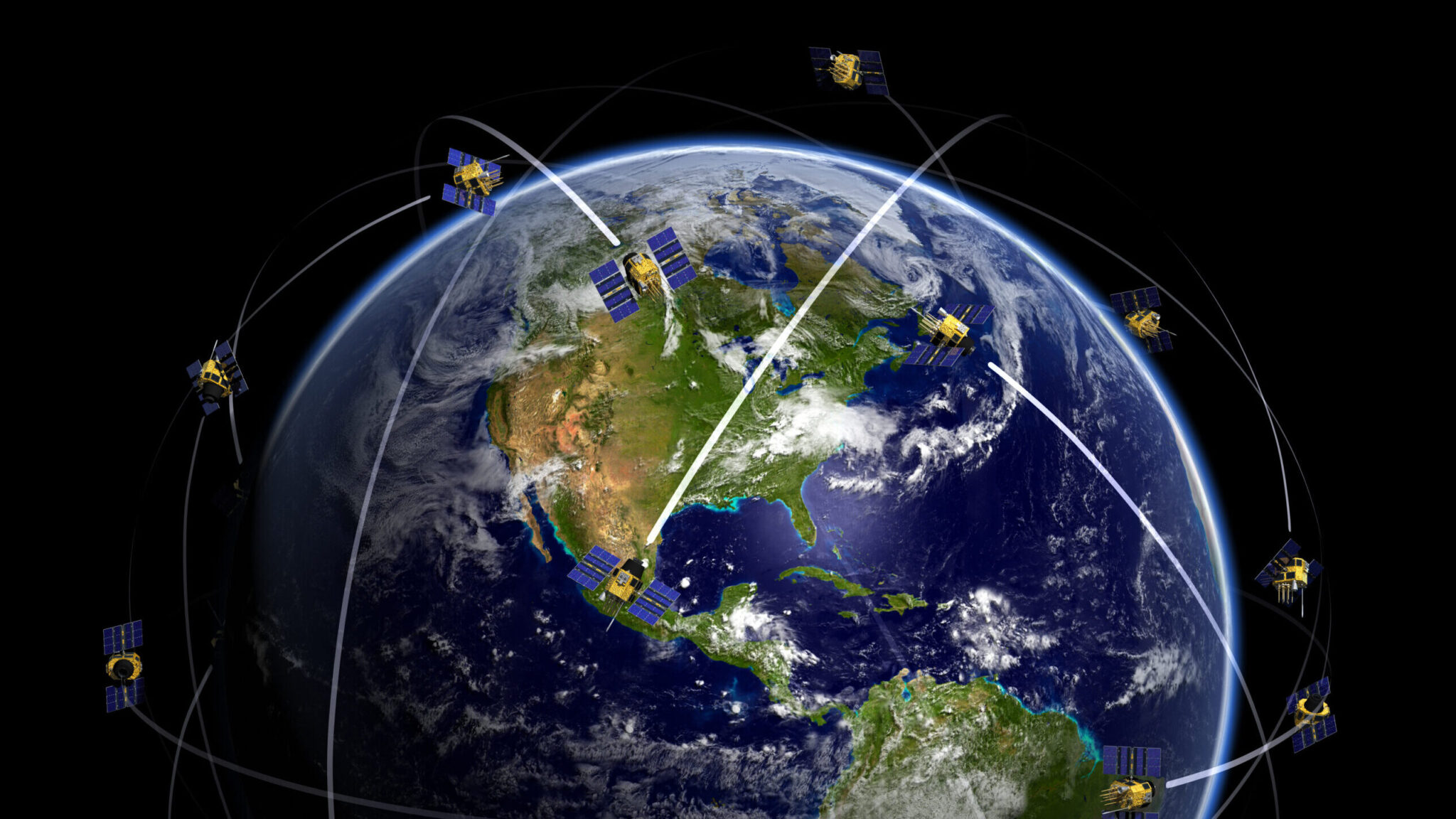
The Space Force has announced the selection of four companies to initiate its Resilient Global Positioning System (R-GPS), aimed at providing backup for GPS satellite signals, which are often susceptible to jamming during crises and conflicts. Space Systems Command (SSC) revealed this information today.
The chosen companies—Astranis, Axient, L3 Harris, and Sierra Space—will each be awarded contracts to develop design concepts for the first of three planned Lite Evolving Augmented Proliferation (LEAP) initiatives that form the R-GPS program.
“R-GPS provides resilience to military and civilian GPS user communities by enhancing the GPS constellation with proliferated small satellites that transmit a core set of widely-utilized GPS signals,” stated the SSC press release.
Each LEAP segment will consist of eight small, cost-effective satellites with progressively enhanced capabilities, with the first set of LEAP satellites expected to launch in 2028, according to SSC.
The contracts were awarded through the Space Enterprise Consortium (SpEC) via Other Transaction Authority, though the press release did not specify their total value or the exact signals that would be broadcast.
Currently, the 31 GPS satellites transmit various signals primarily in the L1 frequency band (1575.42 MHz) and L2 band (1227.60 MHz), including the encrypted, jam-resistant M-Code designated for military use. Newer versions of the satellites also transmit in the L5 band (1176.45 MHz), which is primarily intended for aviation safety.
“Following this initial phase, a subset of the awardees will progress to a Final Design Review and develop payload prototypes. One or more vendors will then be selected to construct the first satellite vehicles,” the SSC release noted.
The R-GPS initiative is part of Air Force Secretary Frank Kendall’s “quick start” initiative aimed at accelerating acquisitions by bypassing obstacles in the traditional budget process. For the quick start effort, Congress allocated $100 million in the 2024 National Defense Authorization Act, reduced from Kendall’s original proposal of $300 million.
“Thanks to the Quick-Start authority approved by Congress, we were able to field and award contracts for these low-cost satellites in less than six months,” said Kendall in the SSC press release.