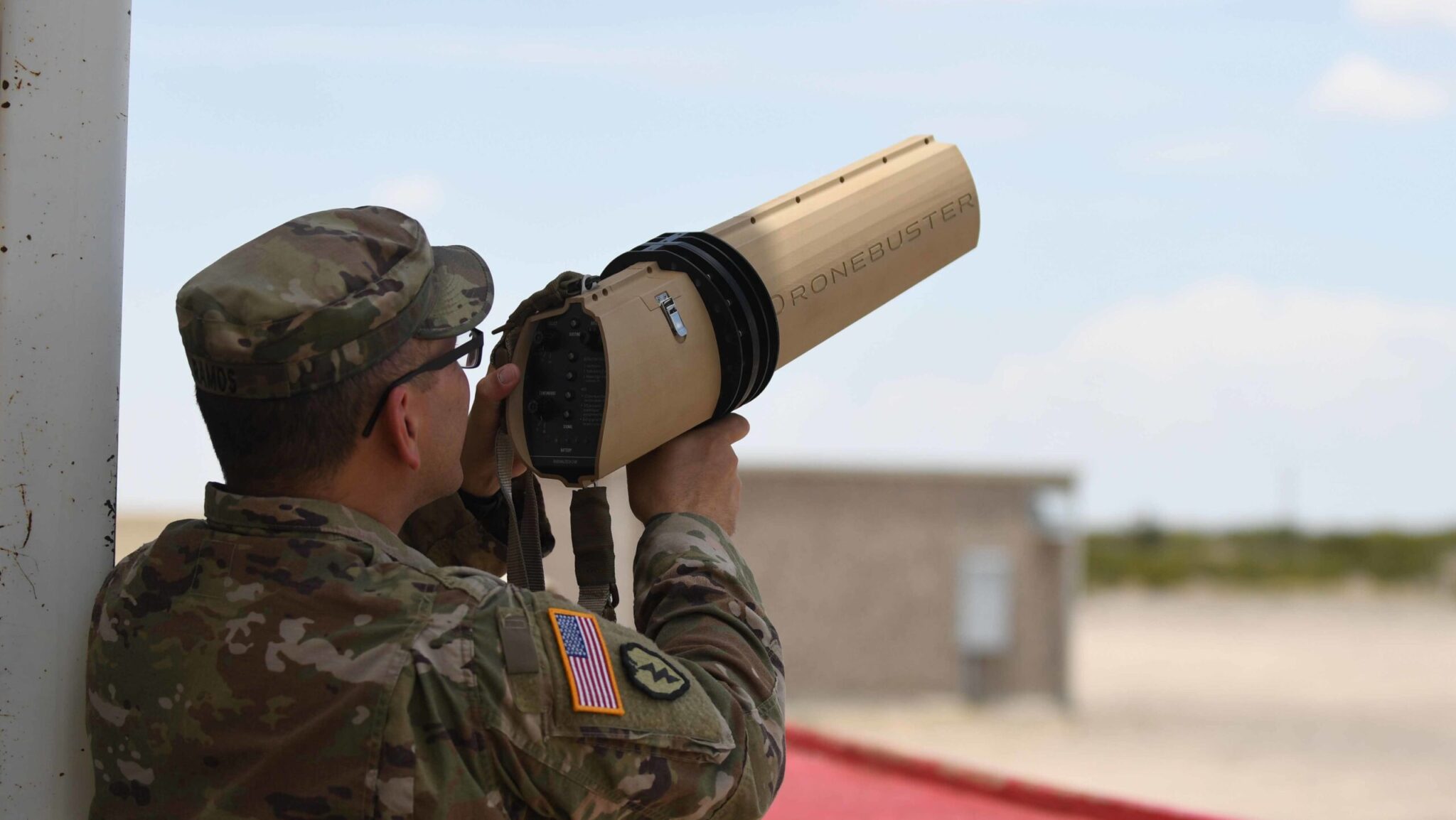
The Pentagon has officially initiated a second Replicator initiative aimed at addressing the challenge of countering small drones at U.S. military installations worldwide. Defense Secretary Lloyd Austin announced this new effort in a memo dated September 27, assigning Deputy Defense Secretary Kathleen Hicks the responsibility of creating a plan for Replicator 2. The goal is to secure funding for this initiative in the upcoming fiscal year 2026 budget and to provide “meaningfully improved” counter-drone capabilities within 24 months of receiving congressional funding.
In his memo, Austin expressed confidence that the Replicator initiative would complement and enhance the significant work already being done by the Department of Defense (DoD) regarding counter small unmanned aerial systems (C-sUAS). He emphasized that Replicator 2 aims to tackle various challenges, including production capacity, technology innovation, policies, open system architecture, system integration, and force structure.
The Pentagon will have a brief timeframe of three months to kickstart the Replicator 2 initiative. However, it remains uncertain whether the future administration will prioritize funding for the project in the FY26 budget or continue the Replicator effort at all.
The first Replicator initiative, launched in August 2023, sought to deploy thousands of cost-effective, attritable unmanned systems across multiple domains over a two-year period. So far, it has led to the procurement or selection of two batches of small drones, encompassing both aerial and maritime systems. The Pentagon intends to meet the fielding goal for the first Replicator initiative by next summer.
Recognizing the lessons learned from Ukraine, where commercially-made drones have been utilized effectively against adversaries, the Pentagon has identified the proliferation of small drones—both from hobbyists and hostile actors—as a complex challenge for securing military bases. In response to a series of drone incursions at Langley Air Force Base in Virginia last December, the Senate Armed Services Committee convened a classified briefing to address these issues.
Hicks will collaborate with Adm. Christopher Grady, Vice Chairman of the Joint Chiefs of Staff, along with service heads and combatant commanders through the Innovation Steering Group to formulate the Replicator 2 plan.
The Defense Innovation Unit will take the lead on this effort, coordinating with the Undersecretary of Defense for Acquisition and Sustainment, who is designated as the department’s principal staff assistant for C-sUAS.
Austin specified in his memo that the military services are primarily responsible for developing, producing, and fielding the capabilities related to the Replicator 2 initiative. The project will also leverage the work of the Counter Uncrewed Systems Warfighter Senior Integration Group, collaborating closely with other ongoing endeavors.
In an interview with Breaking Defense, Army Undersecretary Gabe Camarillo reaffirmed his service’s commitment to the Replicator 2 initiative, assessing both existing systems and potential new developments. “All of the services will be looking at participating in Replicator as a way to ensure that we can break down barriers in terms of policy, address production and manufacturing challenges, and cohesively invest R&D [research and development] funding to secure the next generation capabilities we can produce and field at scale,” he stated.
Camarillo did not disclose specific systems the Army might propose for Replicator 2 funding, indicating that the project would explore a combination of existing technologies and innovations, with a focus on the defense of fixed sites both within the continental United States and abroad.