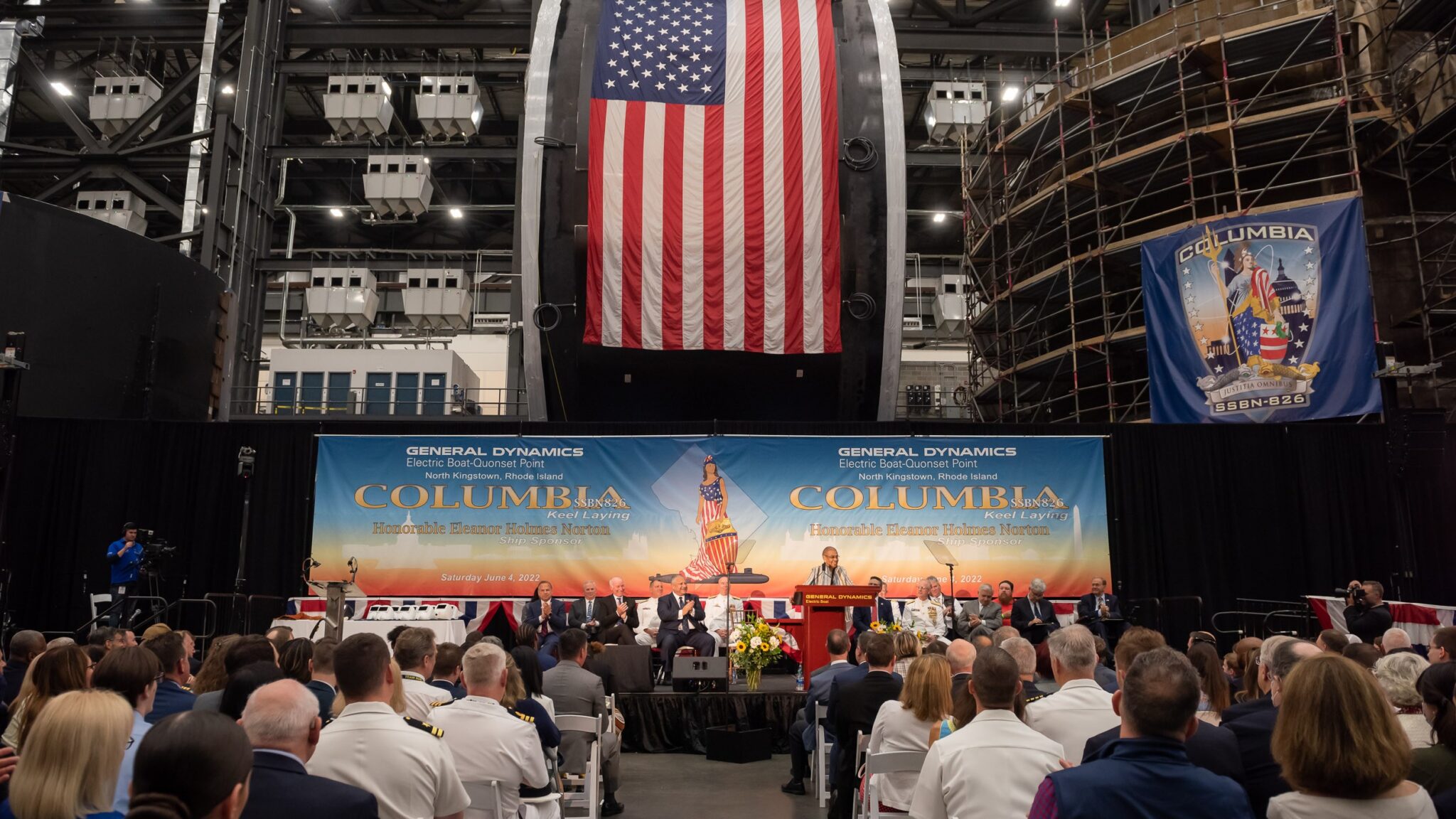
A new independent audit by the Government Accountability Office (GAO) highlights significant challenges the Navy faces in managing the Columbia-class submarine program, with cost overruns reported to be “six times higher than” estimates from the prime contractor and “five times more than” the Navy’s own projections. This alarming trend raises concerns that the government may be liable for hundreds of millions of dollars in additional construction expenses for the lead submarine, according to a report released today.
The Columbia-class program, which is the Navy’s top acquisition priority and a critical component of the Pentagon’s nuclear triad, has been under scrutiny by the GAO for the past seven years. Their latest report is a result of a mandate from the 2018 defense policy bill, which requires an assessment of the program’s adherence to cost and schedule targets, as well as an evaluation of the effectiveness of both the Navy and its shipbuilders in meeting these objectives.
GAO’s analysis reveals that from January 2022 to May 2023, the construction efforts for the lead submarine have consistently failed to meet cost and schedule performance targets. The report noted, “Through early 2024, those trends had not improved, and future risks will likely add to current cost and schedule growth.” The report highlighted that the shipbuilder must undertake urgent and substantial actions to resolve the issues affecting construction performance. However, GAO has previously indicated that problems such as delays in materials and detailed design products have persisted for an extended period.
While the GAO acknowledged the billions of dollars the Navy has allocated to its suppliers since 2018 to bolster the industrial base, the auditors expressed concerns about the effectiveness of these investments. They found that the Navy has not ensured that the funds are being used to meet construction goals or that outsourced work meets quality standards.
Enhancing the submarine industrial base has been a key focus of the Navy’s annual budget requests since the establishment of the AUKUS security pact in 2021. Recently, the Navy awarded a $950 million contract to Texas-based BlueForge Alliance for continued support in this area. As of December 2023, the GAO noted that the Columbia-class program had provided funds to 193 suppliers. While Congress can track funding through the annual appropriations process, the specific allocation and utilization of these funds remain unclear to the public, prompting calls for greater transparency from lawmakers such as Rep. Joe Courtney, D-Conn., who noted that even Congress receives only a “basic pie chart” representing broad spending categories.
As part of its audit process, GAO includes feedback from the Defense Department regarding its criticisms and recommendations. In this report, the GAO recommended that the Navy instruct General Dynamics Electric Boat, the prime contractor, to revise its cost estimates and identify what information is needed to assess the effectiveness of its investments in supporting the Columbia-class program.
In a response on behalf of the Defense Department, Gary Ashworth, a senior civilian overseeing Pentagon acquisitions, indicated that the department concurs with all of GAO’s recommendations.