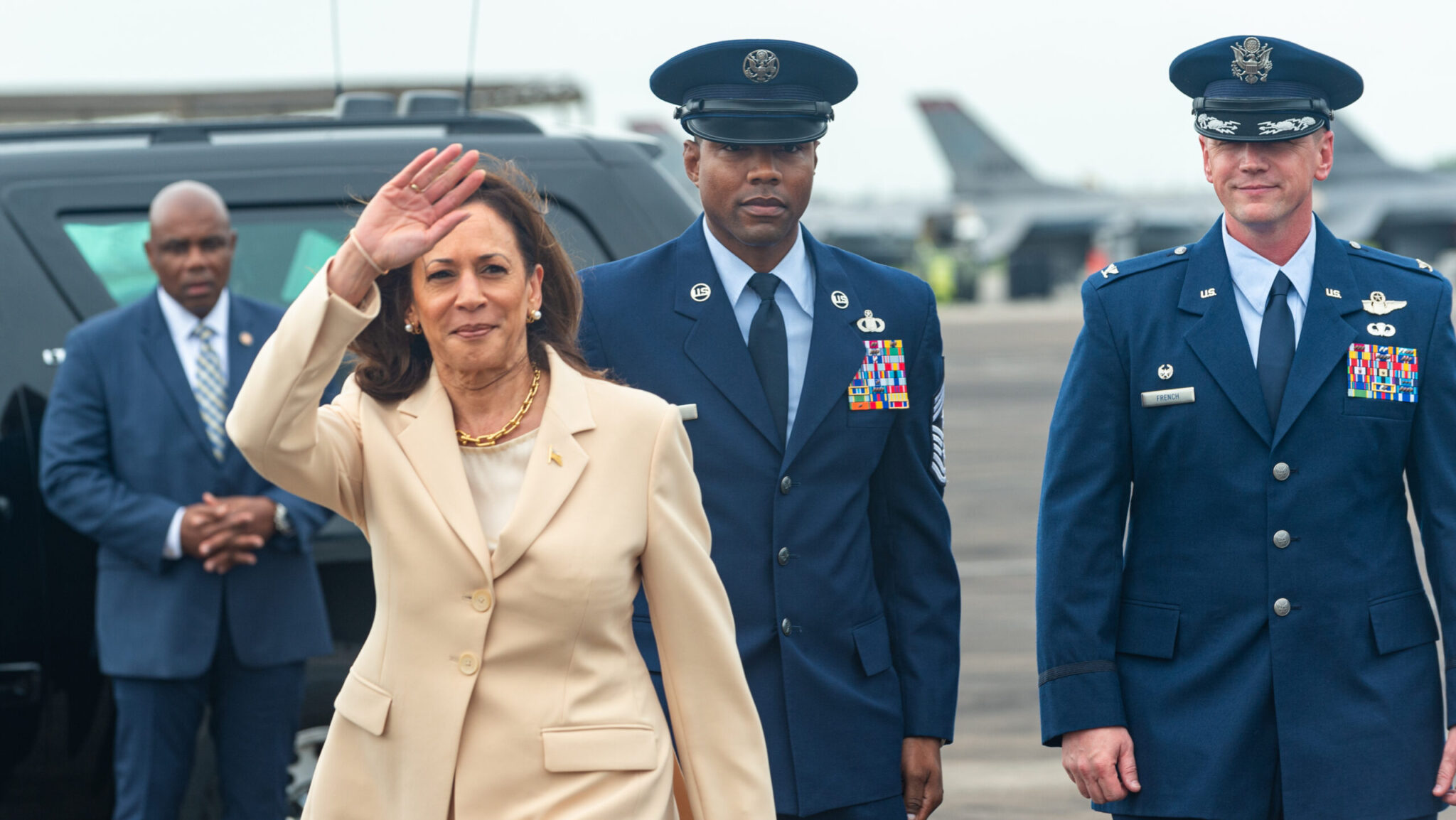
While the Defense Department and the Intelligence Community have long recognized China as America’s foremost geopolitical challenge, Democratic presidential nominee Kamala Harris has pointed to a different enemy, stating that Iran represents the most pressing adversary in the current global landscape. During a recent „60 Minutes” interview, she emphasized, “I think there’s an obvious one in mind, which is Iran,” highlighting the nation’s role in attacks against Israel and her commitment to preventing Iran from becoming a nuclear power.
Harris’s comments followed her refusal to engage in hypothetical scenarios regarding U.S. responses to Iran’s nuclear ambitions. When asked about China’s role, she articulated the importance of winning the “competition for the 21st century” against the Pacific power, reinforcing a focus on protecting American economic interests. Regarding a potential Chinese invasion of Taiwan, she similarly did not provide a hypothetical response, reiterating the administration’s support for Taiwan’s self-defense while adhering to the one China policy.
This stance from Harris contrasts sharply with the broader assessments from the Pentagon and Intelligence Community, which consistently rank China as the primary geopolitical challenge, driving initiatives such as the U.S. military’s ongoing “pivot to the Pacific.” According to the Biden administration’s National Defense Strategy, China is dubbed America’s “pacing challenge,” while Russia is characterized as a more immediate threat. In this context, Iran is typically classified alongside other regional threats rather than being regarded as the foremost adversary.
The Intelligence Community’s 2024 Worldwide Threat Assessment echoes this perspective, stating that China possesses the capability to directly compete with the U.S. on a global scale, while Iran is noted primarily for threatening U.S. interests in the Middle East.
Analyst Becca Wasser suggested that Harris’s remarks should not be interpreted as a signal of a potential shift in U.S. priorities but rather as an acknowledgment of the immediate challenges posed by Iran. She remarked, “Maybe that answer doesn’t comport with what the current National Defense Strategy says, but there is the reality of acknowledging the ways in which Iran has complicated U.S. efforts to focus elsewhere.”
Harris’s comments come at a time of heightened conflict in the Middle East, particularly with Iran-backed groups, such as Hamas and Hezbollah, engaging in hostilities against Israel. With millions of civilians affected, the situation risks escalating into a larger regional conflict involving U.S. forces.
Wasser noted that while she may not prioritize Iran as the top adversary herself, she believes Harris’s assessment has merit given the current threat environment. “If you look at the current threat landscape, Iran stands out as one of the most relevant adversaries causing problems for the United States,” she stated. She further clarified the distinction between the long-term challenge posed by China and the immediate issues presented by Iran.
Wasser also speculated that Harris may have objected to the framing of the term “adversary” in the original question, as the Biden administration aims to characterize U.S.-China relations primarily as strategic competition. “It is a U.S.-China strategic competition; war with China is not inevitable,” she highlighted, noting the administration’s commitment to avoiding such a conflict at all costs.