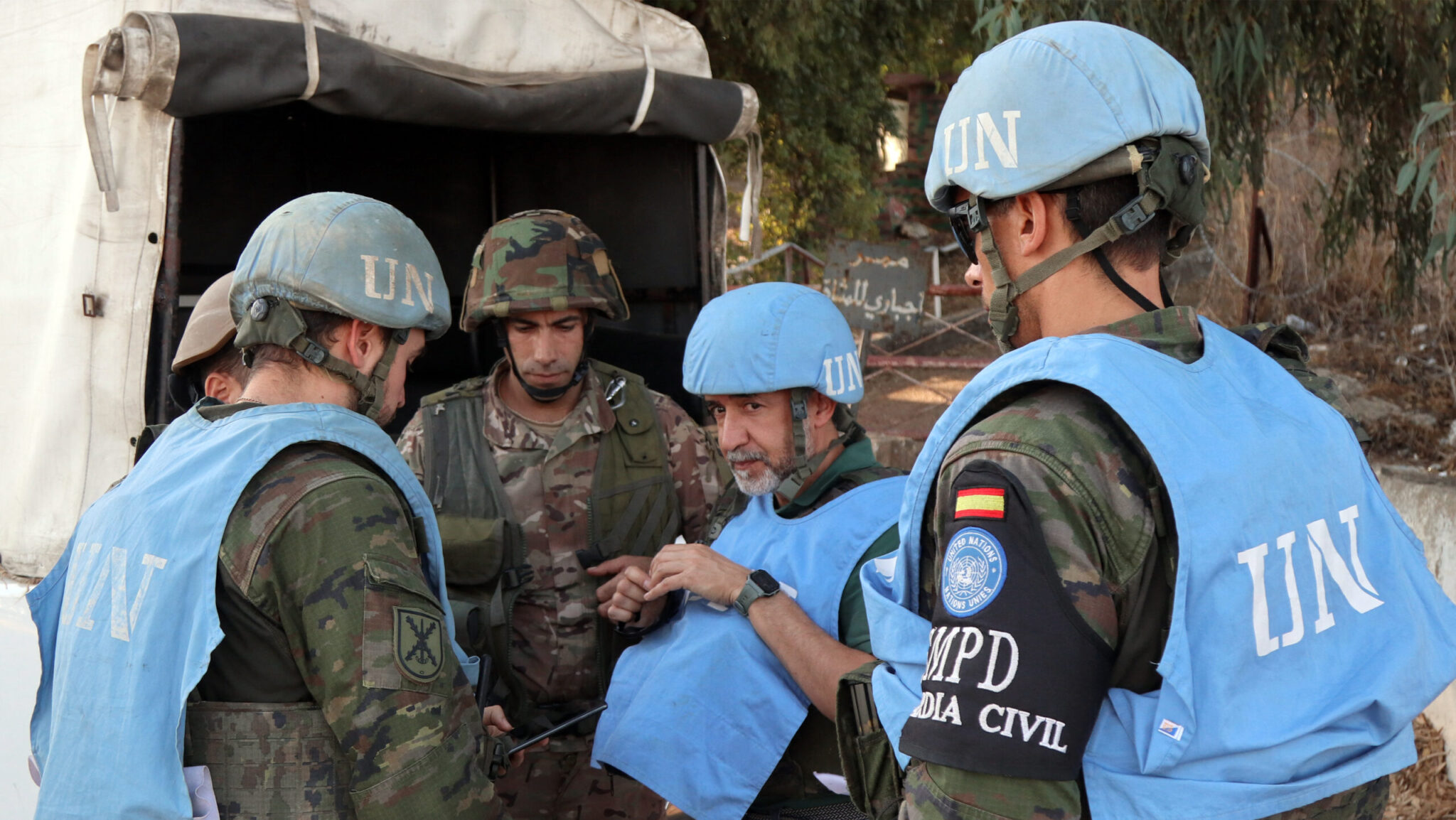
The United Nations peacekeepers have raised alarm today following targeted strikes by Israeli forces against their personnel and facilities, with at least two incidents classified by the UN as “deliberate.”
In a statement issued by the United Nations Interim Forces in Lebanon (UNIFIL), it was reported that “this morning, two peacekeepers were injured after an IDF Merkava tank fired at an observation tower at UNIFIL’s headquarters in Naqoura, directly impacting it and causing the peacekeepers to fall.” Thankfully, their injuries were not serious, and they remain hospitalized.
The statement further noted that on Wednesday, IDF soldiers “deliberately fired at and disabled the position’s perimeter-monitoring cameras.” They also targeted UNP 1-32A in Ras Naqoura, where regular discussions had occurred prior to the outbreak of conflict, resulting in damage to lighting and a relay station.
UNIFIL emphasized that such actions not only breach international humanitarian law but also violate Security Council resolution 1701, which all parties had agreed upon in 2006. The organization is currently seeking clarification from Israeli forces, who have yet to publicly respond to these allegations.
These incidents risk intensifying the already volatile conflict involving Israel and the Iran-supported Lebanese militant group Hezbollah, and further complicate the already contentious peacekeeping operations of UNIFIL. This mission consists of international troops from 49 nations, including an Irish contingent involved in a tense standoff with Israeli forces over the past weekend.
In late September, Israeli forces requested UNIFIL to vacate certain positions in southern Lebanon, which UNIFIL declined to do.
Ryan Bohl, a senior Middle East and North Africa analyst at the RANE Network, provided insights to Breaking Defense, suggesting two potential explanations for the IDF’s actions. Despite UNIFIL labeling two incidents as deliberate, Bohl speculated it is possible that “IDF troops on the ground mistook a UNIFIL post for Hezbollah and opened fire.” Alternatively, there is a possibility that some IDF commanders may be looking to pressure UNIFIL to withdraw, in order to expand the IDF’s operational territory in southern Lebanon.
Retired Lebanese Brigadier General Andre Bou Maachar concurred with the latter explanation, suggesting today’s attack might have been intended to leverage UNIFIL countries into withdrawing their troops, thereby imposing a different security arrangement in the region. Bou Maachar added that these incidents demonstrate the entwinement of UNIFIL and the Lebanese Armed Forces (LAF) in the ongoing conflict, hinting that further attacks may occur.
Following today’s incident, Bohl predicted that UNIFIL would likely reevaluate their positions in southern Lebanon; however, without a comprehensive mandate for withdrawal, some forces will probably remain. He also anticipated that Israel would face mounting pressure to coordinate military efforts with UNIFIL to prevent additional occurrences.
In light of two uninterrupted decades in southern Lebanon, both experts expressed skepticism regarding UNIFIL’s ability to mitigate military actions between Israel and Hezbollah, despite being designated as peacekeepers. “UNIFIL is equally unlikely to halt Israeli military operations,” Bohl added, while noting that UN forces could potentially slow or influence such actions, as Israel has little desire to face the diplomatic fallout from targeting UN personnel.
Bou Maachar observed that recent attacks underscore Israel’s disregard for achieving its military and political objectives, along with its lack of respect for international and humanitarian law. He noted that Israel has countered international criticisms regarding civilian casualties from its operations in Gaza and Lebanon by asserting that it targets militants hiding among civilians.
Resolution 1701, referenced in the UNIFIL statement, pertains to the agreement that concluded the one-month-long conflict between Israel and Lebanon in July 2006, significantly increasing UNIFIL’s troop presence along the border to a maximum of 15,000.
Earlier this August, UNIFIL’s mandate was renewed for the first time, amidst ongoing clashes in the south—an area where the peacekeeping mission has struggled to maintain stability.
As of August, approximately 10,000 troops are deployed there, as UNIFIL’s deputy spokesperson Kandice Ardiel remarked to Breaking Defense. “From 2006 until October 2023, under resolution 1701, there was no major conflict in the south. There were occasional incidents, but they were generally de-escalated quickly. The current situation is markedly worse than anything experienced since 2006,” Ardiel stated in an August interview.
Per their mandate, UNIFIL retains the right to self-defense, which they have not yet invoked.
Chapter 6 of the UN Charter stipulates that “in addition to the use of force beyond self-defense, and without prejudice to the primary responsibility of the Government of Lebanon, UNIFIL may under certain circumstances and conditions resort to the proportionate and gradual use of force to ensure that its area of operations is not utilized for hostile activities.”