Army acquisition officials are actively collaborating with the Office of the Secretary of Defense (OSD) to accelerate the development of artificial intelligence (AI) programs. During the annual Professional Services Council (PSC) conference, it was revealed that the Army has proposed creating a specialized variant of the existing Software Acquisition Pathway (SWP) aimed specifically at AI initiatives. However, this proposition has received a lukewarm response from OSD officials.
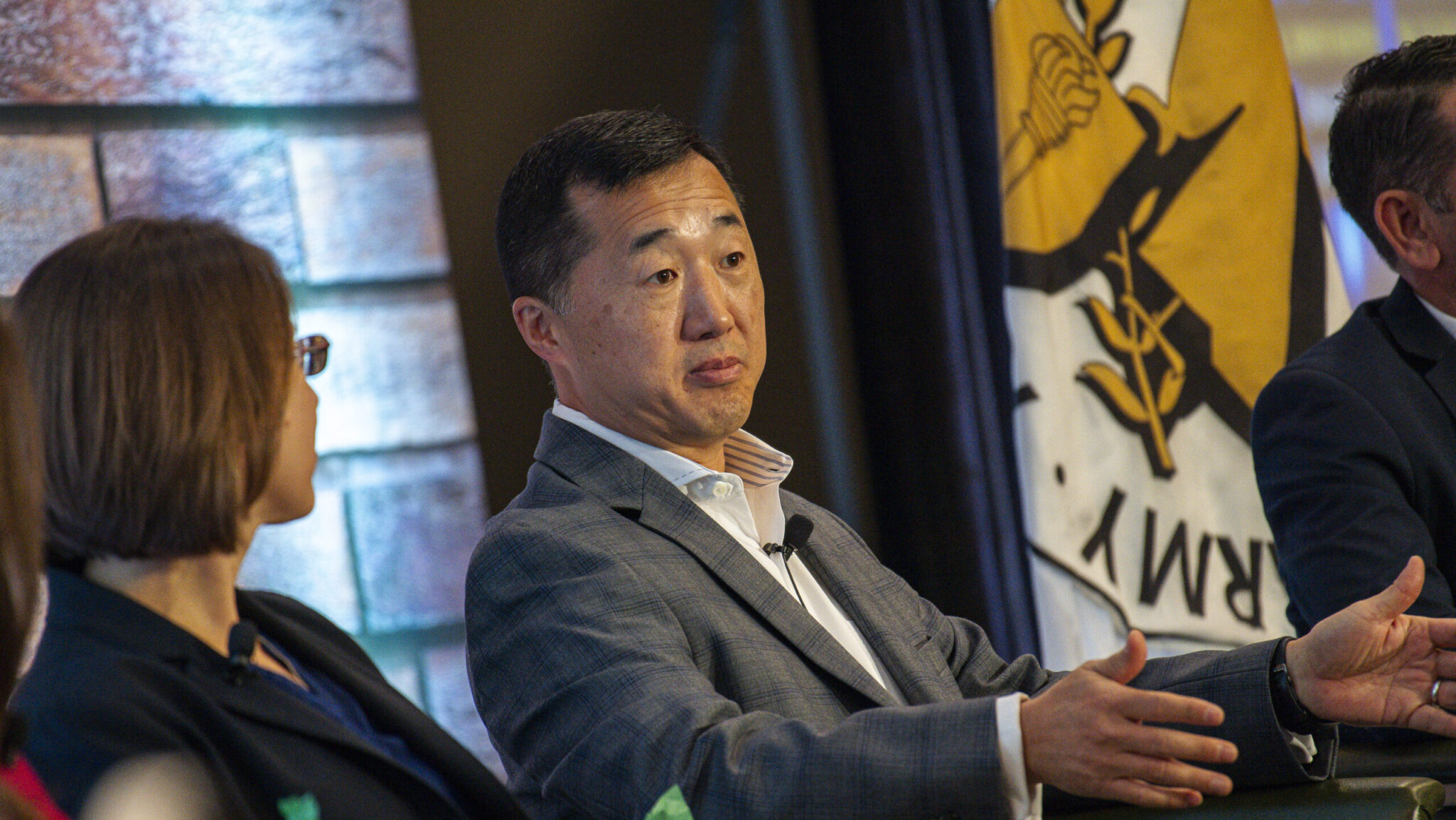
Young Bang, the principal civilian deputy to Army acquisition chief Doug Bush, highlighted the rapid evolution of software development, particularly in AI. “Once you create the algorithm, you can quickly extend and retrain it,” he emphasized, noting that in some cases, algorithms can be trained overnight. “Some of these may take a bit longer—perhaps a week,” he added.
The capacity to update AI systems within days is a much quicker timeline than the existing Software Acquisition Pathway, which was established in 2020 to expedite software development by integrating best practices from the private sector. The SWP was part of a broader reform package initiated in late 2019 by then-Under Secretary for Acquisition Ellen Lord.
“There’s significant value in the Software Pathway,” Bang stated. “However, one of its requirements is that a Minimum Viable Capability Release (MVCR) must be completed within a year. We aim to deliver capabilities at a faster pace.”
Bang confirmed that discussions are ongoing with OSD Acquisition and Sustainment (A&S) to explore the feasibility of introducing a sub-path specifically for AI within the existing Software Pathway. “We’re still working out the details,” he noted.
Deborah Rosenblum, acting deputy to DoD acquisition chief Bill LaPlante, acknowledged the topic’s complexity and stated, “We’re not considering a new pathway… We believe the Software Pathway’s flexible design can facilitate the expedited approach we need.” While she did not outright dismiss Bang’s idea of a “sub-pathway,” she stressed the current pathway’s agility.
John Tenaglia, a contracting expert and senior aide, also indicated that mixing various accelerated procurement authorities is permissible. “In practice, different procurement methods can be hybridized,” he explained.
Bang reinforced the potential for hybrid models, citing the Army’s XM-30 program to replace the M2 Bradley troop carrier as an example, which utilizes SWP for software and Mid-Tier Acquisition (MTA) for the vehicle itself. This allows for more rapid software updates, independent of the slower hardware development cycles. He emphasized a desire for even greater flexibility than the current system permits.
“I’m focused on redefining the status quo,” Bang proclaimed. “Let’s innovate, let’s combine MTA with the Software Pathway, and collaborate with OSD to expedite AI development.”