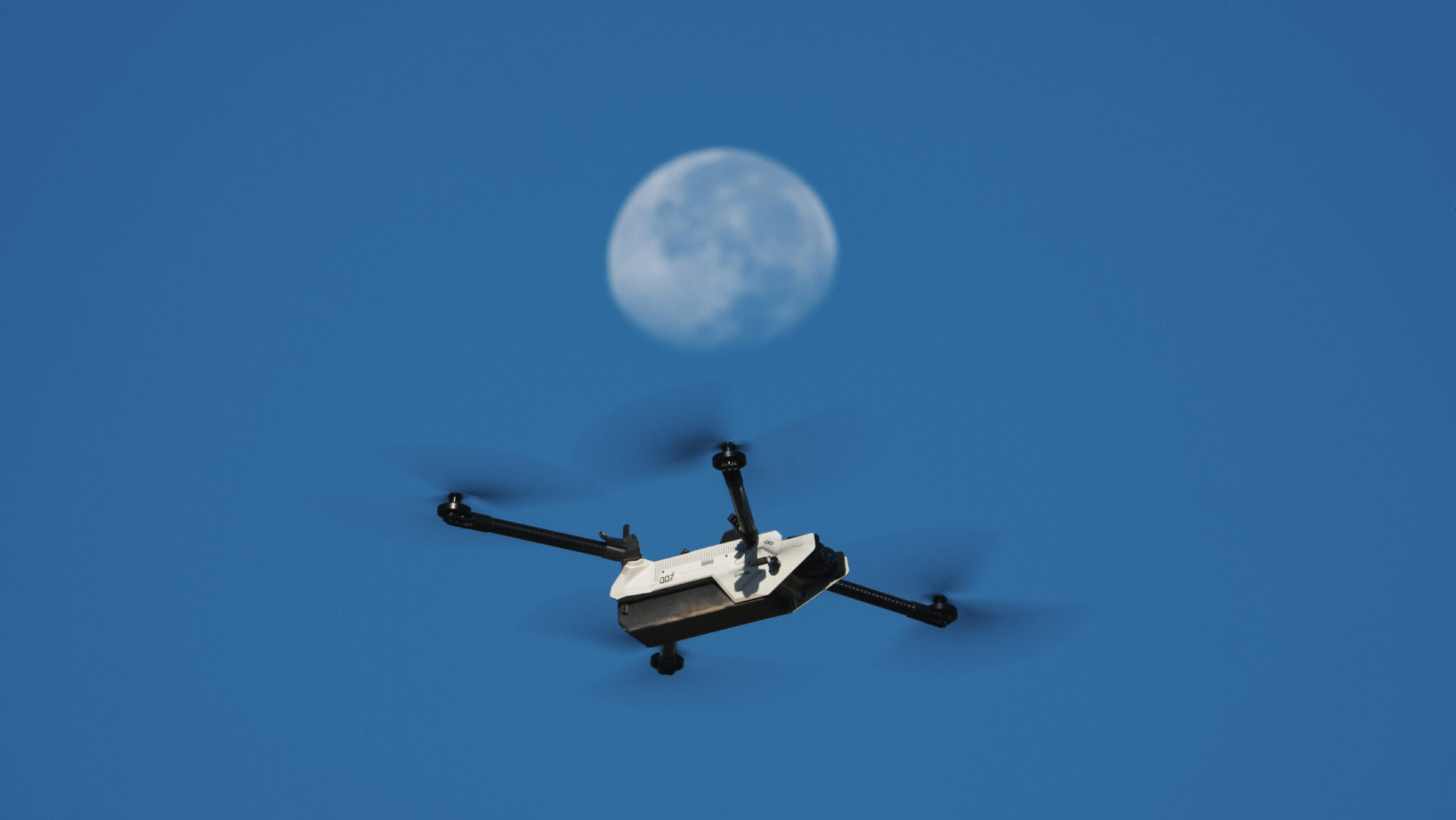
Today, defense tech startup Anduril Industries announced the launch of its latest product, the „Bolt,” a vertical takeoff and landing quadcopter designed for a range of military applications. This lightweight, portable drone is already on order with the Marine Corps and is set to enhance the capabilities of modern military operations.
The Bolt weighs between 12 to 15 pounds based on its configuration, allowing for hand-launch capabilities and a flight range of approximately 20 kilometers with an endurance exceeding 40 minutes. The base model is designed for intelligence, surveillance, reconnaissance, and search and rescue missions, while the armed variant, known as the Bolt-M, can carry an explosive payload of up to three pounds.
“We’re not just kind of rolling this out of the lab for the first time,” said Anduril Chief Strategy Officer Chris Brose during a media briefing prior to the announcement. “This has been something that customers have seen and evaluated and tested and used,” underscoring that the product has undergone rigorous assessment prior to its introduction.
The Bolt is part of the Marine Corps’s Organic Precision Fires-Light (OPF-L) program and is among several systems currently under evaluation. Brose stated that the Bolt will undergo testing over the next six months, which will inform potential acquisition and fielding decisions slated for fiscal year 2025.
Regardless of the OPF-L program’s outcome, Anduril anticipates that other global military organizations and programs will align with the Bolt-M, suggesting a significant increase in relevant opportunities in the coming years. Pricing for typical Bolt configurations is estimated to be in the low tens of thousands of dollars, but this varies based on specific payloads and configurations.
In light of the rise of inexpensive, commercially derived first-person drones in contemporary conflict, Anduril has highlighted the Bolt’s capability to meet urgent military needs through its advanced Lattice software. The Bolt quadcopter can operate autonomously and manually in GPS-denied environments, offering customizable engagement options.
When configured for data collection, the Bolt can share real-time information across Anduril’s platforms and those of third-party vendors, enhancing situational awareness in the battlefield. Notably, if an operator using the armed Bolt-M version chooses to engage a target, the drone can autonomously navigate to the target even if it loses connection with the operator. The Bolt-M also features a return-to-base function if the operator opts not to proceed with an attack.
“What we are doing with Lattice is delivering as much autonomy across that entire kill chain to put that human being on the loop so that they can make better decisions faster,” Brose emphasized. This involves the processing and integration of sensor data from various sources, enhancing the orchestration of unmanned systems, whether developed by Anduril or other manufacturers.
With the introduction of the Bolt, Anduril Industries aims to solidify its role as a key player in modern defense technology, offering innovative solutions that enhance the operational capabilities of U.S. military forces and addressing the evolving landscape of warfare.