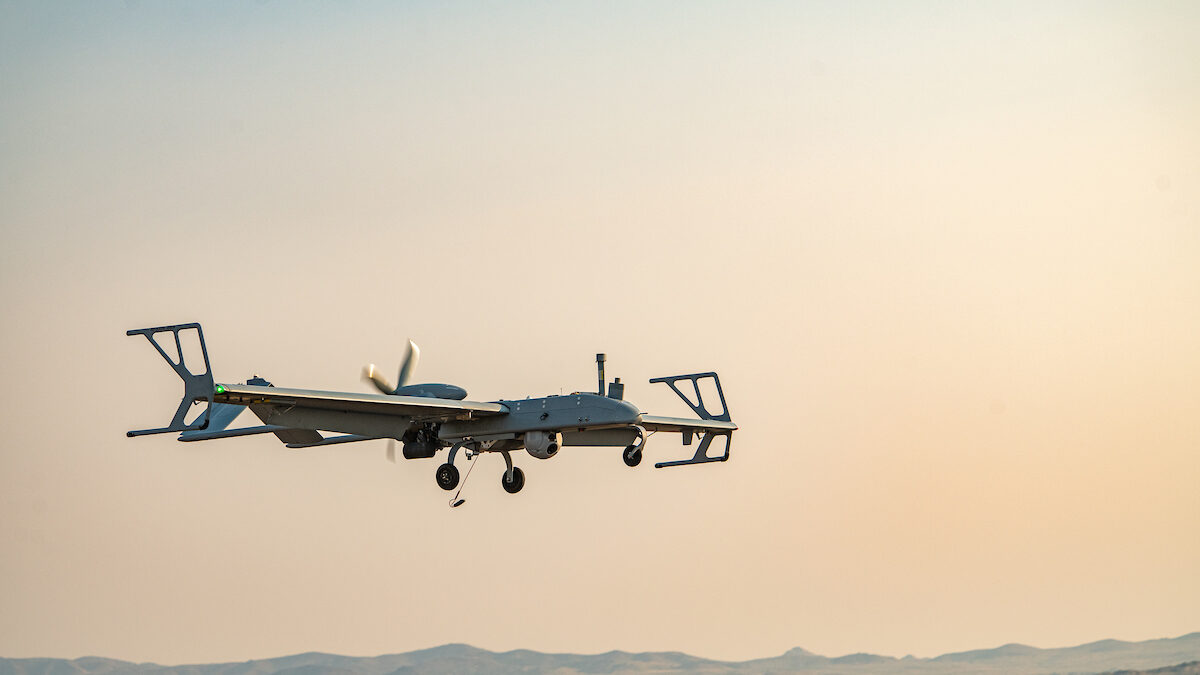
The US Army’s recent decision to retire its entire RQ-7B Shadow drone fleet has left a significant capability gap for soldiers who relied on these drones for crucial reconnaissance and surveillance operations. In response to this gap, the Army is looking towards commercially available drones as a stopgap solution while it develops a new platform expected to be operational by late 2027, according to Col. Nick Ryan, director of the Army Capability Manager for Unmanned Aircraft Systems.
“There’s a gap where our units have no assets and no capability to train with right now, to learn with, to build TTPs [tactics, techniques, and procedures] with,” Ryan explained in an interview with Breaking Defense ahead of the Association of the US Army conference. The Army announced the divestiture of the Shadow drones in early February as part of a broader aviation restructuring plan. By the end of September, all Shadows had been removed from active units, according to Ryan.
The Army’s long-term strategy involves fielding a new Future Tactical Uncrewed Aircraft System (FTUAS) at the brigade level. Currently, two companies—Griffon Aerospace and Textron Systems—are vying for this contract. If the timeline remains on track, a contract winner is anticipated to be announced later this fiscal year, leading to the delivery of the new drones towards the end of fiscal 2027.
This timeline poses a considerable challenge for soldiers who urgently need interim capabilities. Ryan noted that there have been numerous operational need statements from various units, including Multi-Domain Task Forces in both the Indo-Pacific and European theaters.
To bridge this capability gap, the Army is looking to utilize the Defense Innovation Unit’s (DIU) Blue UAS List, which was created to help military services quickly identify and select commercial systems that are free of Chinese components. If a drone is listed as approved, army units can purchase it directly.
However, when the Army reviewed the Blue UAS List earlier this year, none of the drones met the specific operational needs created by the retirement of the Shadow fleet. In response, Ryan and his team have been collaborating with the DIU to refresh the list.
Ryan indicated that it is unlikely for larger systems, like those equivalent to the Shadow (Group 3 drones), to be included on the DIU Blue List, as these larger systems typically exceed a price point of around $350,000. Instead, they are focusing on potential options in the Group 2 category, which weigh less than 55 pounds and are capable of flying for over four hours at ranges exceeding six miles. These drones would ideally be equipped to operate in both day and night conditions and possess the capability for laser designation.
“This is just enough to fill the gap for the time being, allowing units to have something to train with, which is better than the nothing they have right now,” Ryan stated.
Additionally, Ryan mentioned that the Army is keen to incorporate first-person view drones for squad and platoon levels.
After the DIU issued a call for a refresh of the Blue UAS List, they received 360 proposals from 220 companies for both platforms and supporting technologies. The list has now been narrowed down to 36 flying platforms from approximately 15 vendors, with testing scheduled for early November at the Marine Corps’ 29 Palms facility in Southern California. After flight testing, the drones will undergo a thorough inspection of their components, and companies will have the opportunity to make necessary modifications.
By early December, Emeneker, the DIU Blue UAS program manager, anticipates that drones successfully passing inspection will start appearing on the updated Blue List, with ongoing additions on a rolling basis. By the end of February, drones not selected for service use will be removed from the list.
“We intend to list options as quickly as possible; we don’t want to keep end users waiting, nor do we want to delay the companies,” Emeneker affirmed.
Meanwhile, officials from Army Aviation and Missile Command, along with Army Combat Capabilities Development Command, are working on securing airworthiness releases. This proactive approach aims to ensure that as soon as suitable drones are officially added to the list—whether as a replacement for the Shadow mission or as first-person view drones—the Army can quickly recommend them to the units.
“If we can facilitate the availability of more systems that are NDAA-compliant and that the Army is interested in acquiring—and if Congress allocates the necessary funds—then the units will undoubtedly begin pursuing these options,” Ryan concluded.