The partnership between American defense contractor L3Harris and Brazil’s Embraer to introduce the C-390 Millenium to the U.S. market has come to an end, as confirmed by Bosco da Costa Jr., CEO of Embraer’s defense division.
“It’s fair to say that the L3 partnership is not there anymore for the agile tanker,” da Costa stated in an interview with Breaking Defense. “They decided not to move on [it] because of other priorities.”
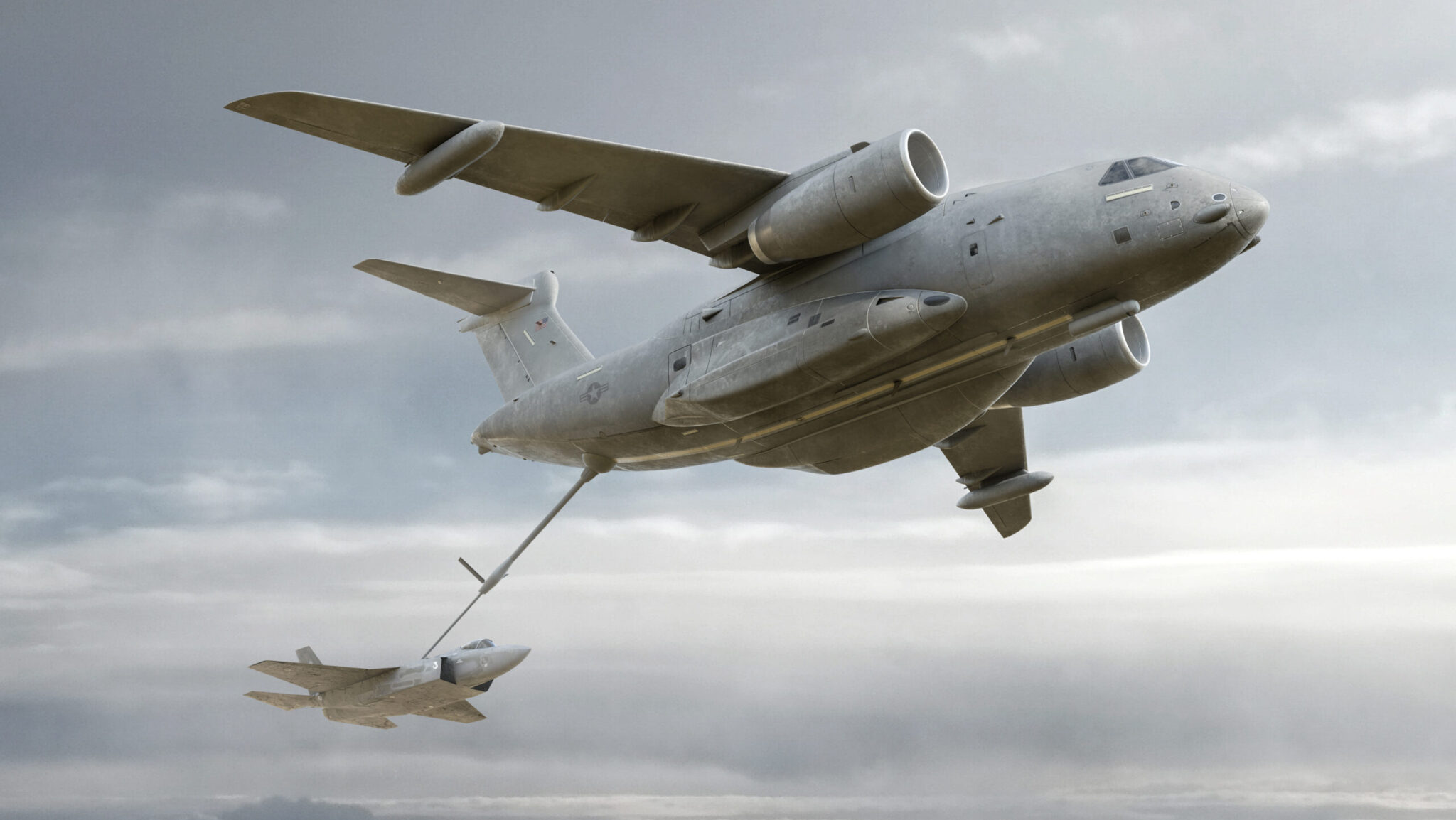
Initially unveiled in 2022 alongside L3Harris CEO Chris Kubasik, the partnership aimed to position L3Harris as the prime contractor for the C-390 program, intending to supply U.S. mission systems, including a purpose-designed refueling boom that would reconfigure the Millennium as the KC-390 for American operations. However, in the time since, interest from L3Harris appears to have dwindled, leading to the partnership’s expiration.
Da Costa noted that while L3Harris is still supportive of the business case and interested in acting as a major supplier, the company ultimately chose not to proceed due to other various priorities. L3Harris declined to comment on the matter.
Despite the setback, Embraer remains “completely serious” about its commitment to becoming a significant player in the U.S. defense market. Da Costa highlighted the company’s willingness to act as a prime contractor, collaborate with other firms, or even pursue mergers and acquisitions (M&A). This includes potentially moving forward independently on the Next Generation Air Refueling System (NGAS).
In response to a recent request about NGAS, Embraer is exploring “several other types of business structures” and is engaging in discussions with major U.S. defense companies for possible partnerships. “We are looking for someone that could add value to our case, bringing capabilities that Embraer doesn’t have,” he explained.
When the initial partnership with L3Harris was announced, the U.S. Air Force was still working on a three-pronged refueling strategy named KC-X, KC-Y, and KC-Z. However, this approach has since shifted in favor of a limited acquisition of off-the-shelf tankers to replace aging KC-135s, followed by the NGAS program. This change, referred to as the KC-135 Tanker Recapitalization program, is now predominantly perceived as a competition between Boeing and Airbus. Nevertheless, the Air Force’s evolving tanker strategy has opened opportunities for Embraer in the short term, as stated by Frederico Lemos, the company’s defense chief commercial officer.
“We are looking at the recap program,” Lemos revealed, adding that there may be room for the C-390 within this procurement initiative.
Tim Walton, a senior fellow at the Hudson Institute, remarked that while the C-390 is a highly capable multi-role aircraft, it faces challenges in appealing to the U.S. Air Force. Walton pointed out that on the airlift front, the C-390 would be competing with the established C-130J produced by Lockheed Martin, which benefits from existing infrastructure and training pipelines. On the refueling side, the C-390’s fuel capacity is relatively lower than that of the KC-46 and other potential options for NGAS, along with having a larger radar signature.
“For the Air Force to consider the C-390 or KC-390 for the KC-135 Tanker Recapitalization Program, it would likely need to revise the performance parameters it is pursuing,” Walton noted. Although the C-390 has multi-role capabilities, “I do not think it would offload enough fuel at relevant radii to meet desired performance parameters.”
Still, Walton acknowledged opportunities for the C-390 as Embraer markets it in the U.S.: “That said, the C-390 could address niche mobility missions and complement the Air Force’s C-130s and C-17s,” he added.
Embraer already has a significant presence in the U.S. market, with da Costa mentioning that the C-390 aligns with the Buy America Act. However, the company seeks to expand its footprint further, potentially establishing a domestic final assembly line for the aircraft.
In preparation for the KC-135 recapitalization and NGAS initiatives, da Costa emphasized that Embraer is readying the C-390 to meet U.S. requirements promptly. This includes developing plans to equip the Millennium with a refueling boom, which has been deemed “feasible” based on preliminary studies, although no production of the boom system has commenced.
“What we are trying to fill is a gap that the U.S. Air Force has now with a plane that is ready,” da Costa stated. “So that’s what we are trying to pitch, in a sense, to fill the gap now and to add capabilities right away.”