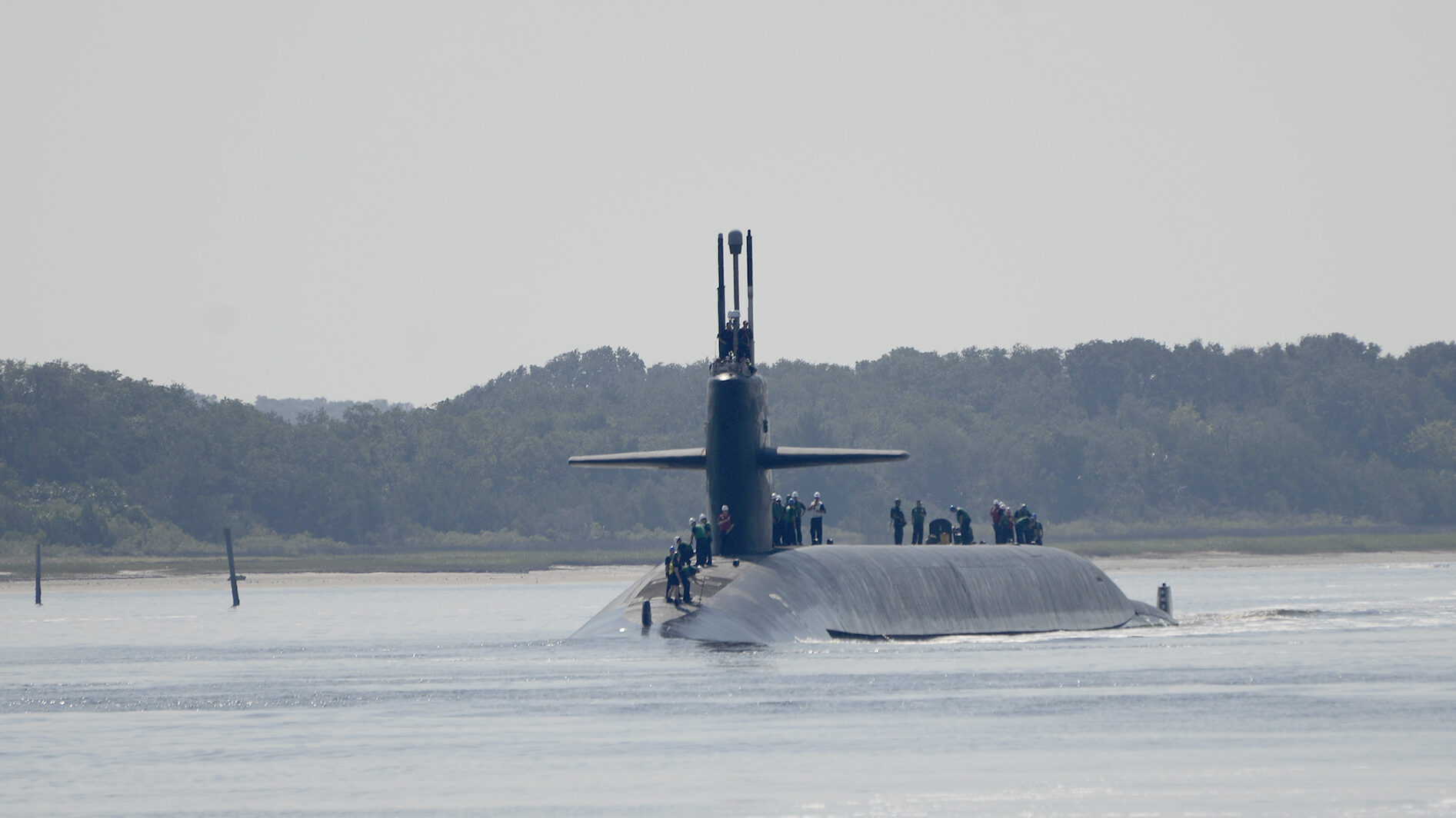
A project aimed at upgrading government facilities for managing spent fuel from nuclear-powered US Navy warships is experiencing budget overruns exceeding $2 billion and a delay of three years, as reported by independent government auditors.
The Spent Fuel Handling Recapitalization Project (SFHP) is set to enhance facilities at the Idaho National Laboratory. Managed by Naval Reactors—a joint initiative of the Navy and the Department of Energy under the leadership of a four-star Navy admiral—the site has been utilized for preparing the disposal of spent fuel, which is the hazardous waste produced by nuclear-powered vessels.
At the request of lawmakers, the Government Accountability Office (GAO) evaluated Naval Reactors’ plans for this recapitalization and discovered significant deviations from the initial cost estimate of $1.69 billion and the expected completion date in the third quarter of 2025.
Since September 2018, Naval Reactors has faced numerous challenges in executing the project, including rising construction costs and instances of construction work failing to meet the stringent quality assurance standards required for nuclear facilities. Consequently, the costs and scheduling have been revised multiple times.
The current projections indicate total expenditures of $3 billion and a new completion date set for 2028, with updated estimates being developed as of August 2024. A Navy spokesperson was not available for comment regarding these issues.
In a statement responding to GAO’s audit, Jill Hruby, Undersecretary of Energy for Nuclear Security, acknowledged the project’s financial and scheduling difficulties. She noted that factors such as the COVID-19 pandemic, fluctuating market conditions, and subpar performance by construction subcontractors have significantly contributed to these challenges. Hruby emphasized the need for improved management to uphold the standards of the Naval Nuclear Propulsion Program.
The GAO has recommended that Naval Reactors adopt best practices for creating reliable cost estimates, commission an independent and objective analysis to determine the root causes of the current issues, and implement measures to ensure that any future cost overruns automatically prompt such analyses. Naval Reactors has agreed to all of these recommendations.