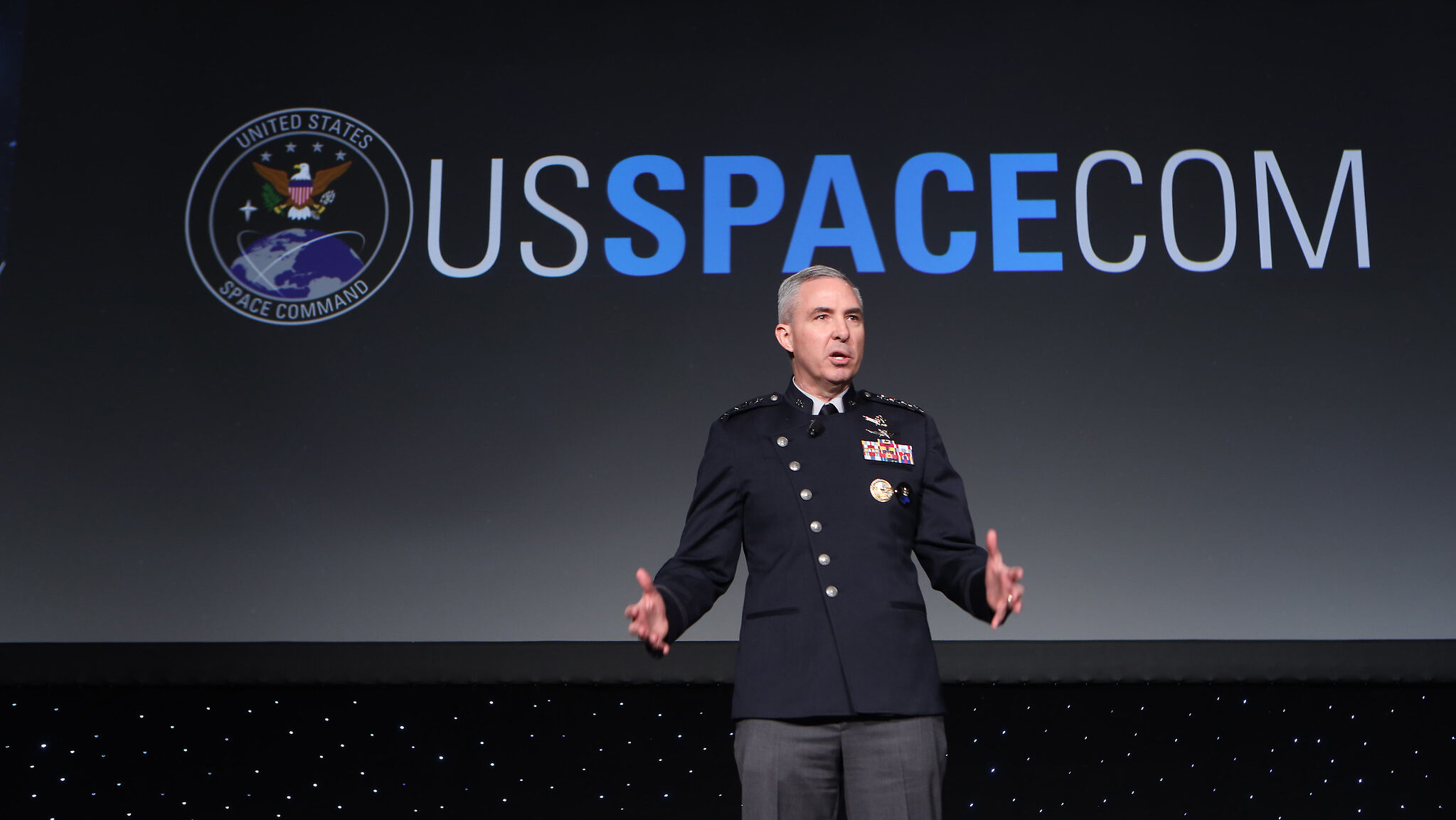
US Space Command is collaborating with the Space Force to establish when companies in the new Commercial Augmentation Space Reserve (CASR) would be called upon for service, as highlighted by SPACECOM Commander Gen. Stephen Whiting.
“We’re enthusiastic about the Space Force’s advancements on CASR, which is set to launch next year and continue into 2026. We are working alongside the Space Force to outline the circumstances under which we would activate CASR to augment our capabilities,” he stated at the Spacepower 2024 conference in Orlando, Florida.
Later, Whiting articulated that this initiative draws inspiration from the Civil Reserve Air Fleet (CRAF), managed by US Transportation Command (TRANSCOM), which mobilizes commercial airlines for military logistics when necessary.
“Various trigger points exist based on potential threat scenarios or global events that allow TRANSCOM to activate appropriate levels of the CRAF to provide aircraft for the US Air Force’s mobility, transporting personnel and equipment,” he explained.
With the Space Force contracting CASR, Whiting envisions scenarios where increased satellite communications, enhanced space domain awareness, or other space-related capabilities like intelligence, surveillance, and reconnaissance (ISR) are required during crises. “In instances of global distress, I foresee that the contracts established by the Space Force for CASR will enable us to approach them and say, ‘There’s an emerging situation; we need additional capacity and wish to activate the initial phase of CASR,’” he indicated.
This activation would provide supplemental capabilities to leverage for operations, with potential further enhancements as situations unfold.
Col. Richard Kniseley, head of the Space Force’s Commercial Space Office, mentioned in October that the service aims to issue its first CASR contracts by early next year. However, he clarified that these initial agreements would serve as basic models and would not address complex issues, such as compensating participants whose satellites might be damaged in conflict.
Whiting informed attendees that SPACECOM updated its commercial integration strategy last month. The previous version, released in 2022, was more aspirational, offering a broad vision for engaging commercial vendors within the national security space community. The new iteration, however, is honed in on “the real, core US Space Command tasks.”
He outlined three critical components of the updated strategy. The first is for SPACECOM to “identify and advocate” for commercial capabilities, which involves understanding the industry’s offerings and promoting relevant capabilities to military services.
“Next, we aim to incorporate and operationalize” these commercial capabilities. With the development of CASR by the Space Force, it is essential to determine the activation triggers and mechanisms to effectively utilize the additional capacity across various mission domains.
Lastly, Whiting emphasized the need to “inform and protect” commercial partners, which is the fundamental purpose of the Commercial Integration Cell located at Vandenberg Space Force Base, California, where military and industry operators exchange vital threat information.