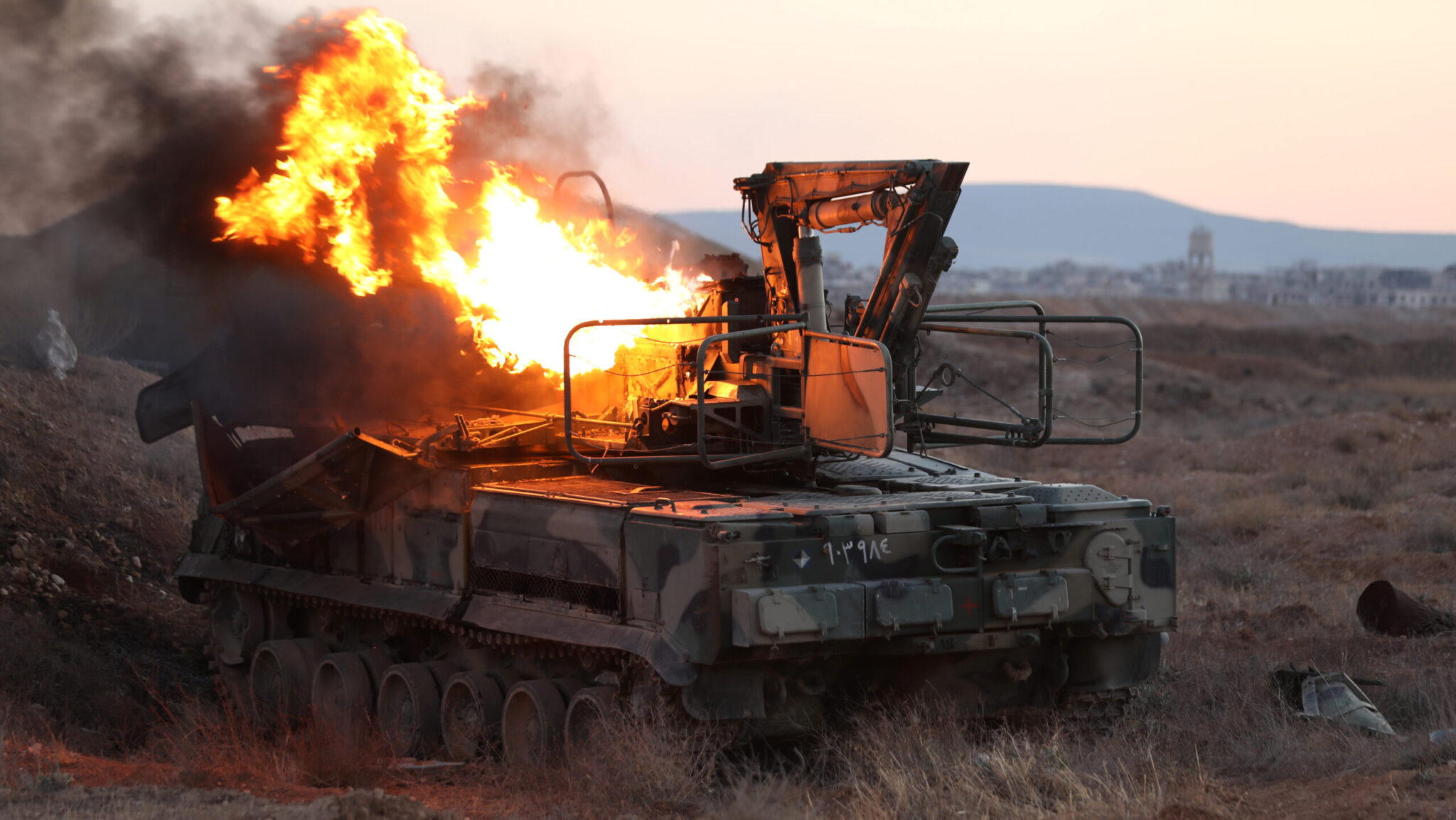
The Israel Defense Forces (IDF) have conducted over 350 airstrikes in Syria since December 7, as Israel aims to dismantle the military arsenal of the Assad regime before it can potentially be seized by rebel forces that have recently taken control of the country.
Dubbed Operation Arrow of Bashan, these strikes have involved assaults from land, sea, and air. An IDF statement reported the destruction of various military assets, including Scud missiles, cruise missiles, UAVs, fighter jets, attack helicopters, and numerous military infrastructures.
Israeli Prime Minister Benjamin Netanyahu stated on December 10, “I approved the Air Force bombing of strategic military capabilities left by the Syrian military so that they will not fall into the hands of the jihadists. We have no intention of interfering in Syria’s internal affairs; however, we do intend to do what is necessary for our security.” He likened these precision airstrikes to Britain’s historical efforts to neutralize French naval power after France’s fall to the Nazis in the 1940s.
The Israeli Navy also targeted two naval facilities in Syria, engaging fifteen naval vessels and destroying numerous sea-to-sea missiles that posed threats to both civilian and military maritime operations in the region. The airstrikes focused on anti-aircraft batteries, airfields, and weapons production sites across multiple cities, including Damascus, Homs, and Latakia. Israeli ground forces targeted 130 locations, including weapons depots and military positions.
The ongoing turmoil within Syria, particularly with the reported collapse of the Assad regime, prompted Israel to take decisive action to mitigate threats from its northern neighbor. The Alma Research and Education Center pointed out that in the aftermath of this collapse, the risk of various groups acquiring advanced military hardware—including chemical weapons—poses a “clear and immediate danger.”
Ksenia Svetlova, a former member of Knesset and Executive Director of the NGO Ropes, emphasized Israel’s apprehension regarding the potential of military assets falling into “the wrong hands.” She remarked, “When Israel pounds Syrian military objectives, this is because of the fear it might fall into those hands—there are many wrong hands in Syria.”
Yaakov Katz, an expert on Israeli military strategy, noted the substantial stockpile of strategic weapons accumulated by Syria over decades, which includes ballistic missiles and chemical weapons. He echoed concerns regarding the possible misallocation of these assets, particularly in light of the ongoing instability.
Visual evidence, including photos and online footage, of the targeted sites has surfaced, though the nighttime timing of the strikes has made it challenging to confirm Israeli involvement amid other potential incidents.
Richard Kemp, a former commander of British forces in Afghanistan, described the strikes as a “strategic masterstroke by Israel,” asserting it to be one of the most intensive bombing campaigns in Israel’s history, aimed at demolishing key components of the Syrian military apparatus.
Interestingly, following the strikes, there has been a notable silence from Syria’s new leadership, led by the Hayat Tahrir al-Sham (HTS) faction and its leader Mohammed el Jolani. Critics, including Syrian activists, have voiced concerns over this silence, interpreting it as tacit approval or collaboration with Israel, a notion that Svetlova disputes.
In contrast, countries like Iran, Hezbollah, Turkey, and Qatar have condemned the Israeli strikes, reiterating the complexities of the geopolitical landscape in the region and the potential ramifications of these military actions.