Congress is pressing the Pentagon for more detailed information about the necessary authorities and technologies to safeguard military bases against potential drone incursions, following a series of high-profile incidents that have raised concerns regarding adversaries exploiting vulnerabilities in U.S. base security.
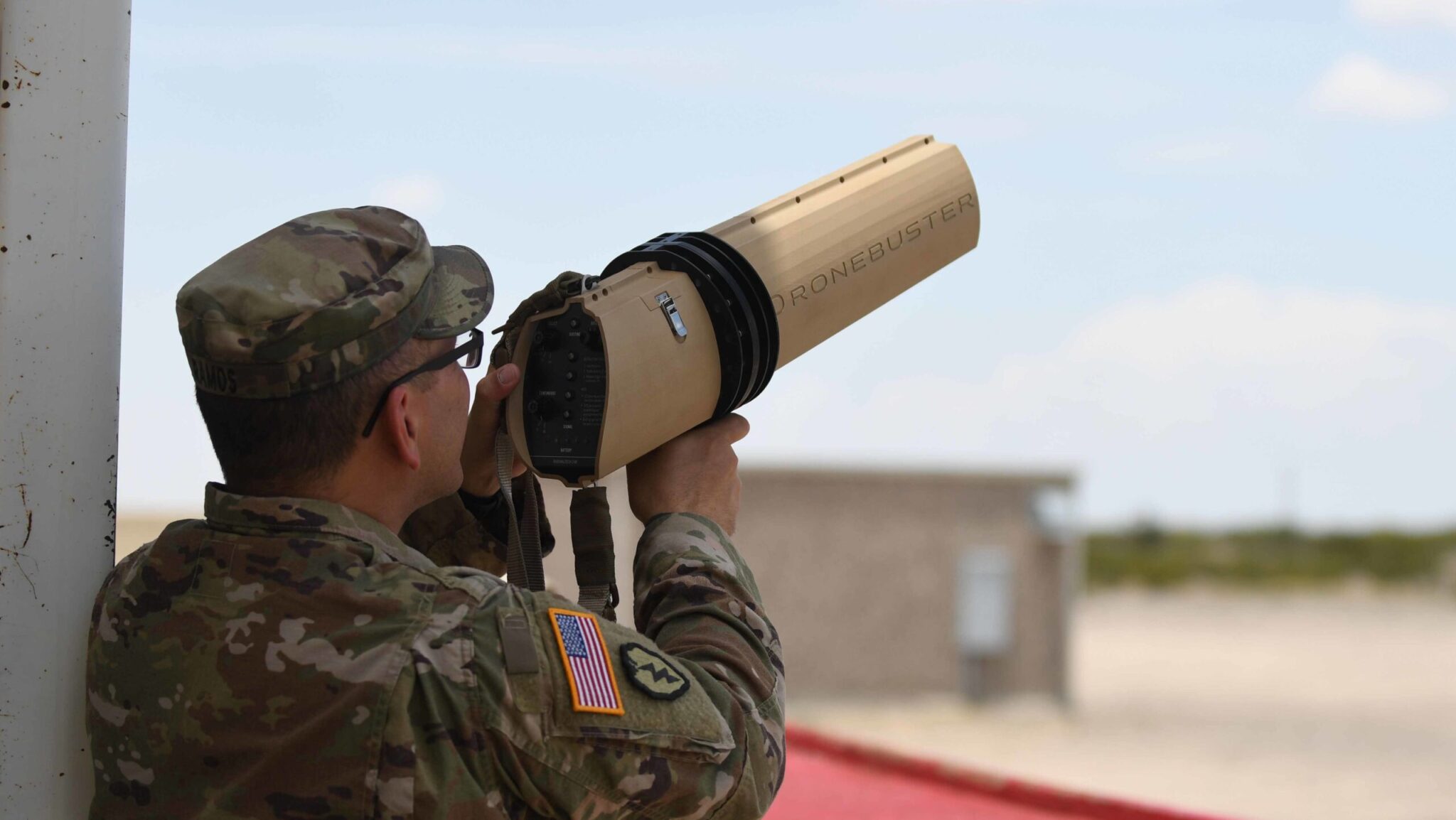
The compromise version of the fiscal 2025 National Defense Authorization Act (NDAA), released recently, incorporates several provisions aimed at bolstering the military’s response to possible drone threats, including the establishment of a comprehensive counter-drone strategy.
Among the key mandates is the requirement for the Department of Defense to assess its existing counter-Unmanned Aerial System (UAS) capabilities. The bill also calls for recommendations to revise policies that currently necessitate coordination with other federal agencies for certain drone-related responses.
Additionally, the legislation compels the Pentagon to develop and maintain a c-UAS threat library, which will catalog all drone incursions at military installations and provide information on available counter-drone solutions.
The explanatory statement accompanying the NDAA noted, “We agree that U.S. troops have the inherent right of self-defense, including from UAS attacks, wherever they may be.” However, the bill’s conference version did not include a Senate provision that would have mandated the Pentagon to expedite the testing, demonstration, and validation of technologies needed to support the counter-drone strategy.
This announcement comes shortly after Defense Secretary Lloyd Austin approved a classified strategy for countering unmanned systems on December 2. While the details of the strategy remain undisclosed, it reportedly outlines a roadmap for both immediate and long-term solutions to mitigate drone threats.
“A critical portion of our efforts, particularly in the near-term, comes from improving our defenses, with an emphasis on detection as well as active and passive defenses,” noted an unclassified fact sheet released in conjunction with the strategy. “The Department will ensure our forces and priority installations have protection.”
US Northern Command (NORTHCOM) officials reported that the Pentagon has recorded hundreds of drone incursions over military installations in recent years. Some notable incidents include several incursions at Joint Base Langley-Eustis in Virginia in December 2023, involving multiple drones of varying sizes and configurations, which led to the temporary relocation of F-22 stealth fighters stationed there.
Another reported instance involved incursions at Plant 42 in Palmdale, California—an Air Force facility where contractors like Lockheed Martin and Northrop Grumman are engaged in developing and producing experimental aircraft. Though security at Plant 42 is managed by the installation, Edwards Air Force Base, located 20 miles northeast, oversees its base security.
An Air Force spokesperson confirmed that multiple UAS activities had been observed over Plant 42 in recent months, prompting collaboration with the Federal Aviation Administration (FAA) to impose temporary flight restrictions around the site. Brig. Gen. Doug Wickert, commander of Edwards’ 412th Test Wing, noted that while drone incursions have been limited to Plant 42, he felt supported by NORTHCOM in coordinating counter-drone efforts across the military.
Wickert acknowledged the challenge of dealing with drone incursions, explaining that although he has the necessary authorities to direct security actions, coordination with external organizations like the FAA is often required.
Senator Mark Kelly (D-Ariz.) highlighted the complexities surrounding drone incursions, distinguishing between hobbyists who may unintentionally fly their drones near military installations and adversaries potentially conducting surveillance. “Some of it is hobbyists who lose control of their drone or decide to do something stupid and fly it over a military base… But some of it, I’m pretty sure, is our adversaries. Why wouldn’t they?” he remarked during the Reagan National Defense Forum.
The ongoing discussions underscore the urgency for effective counter-drone strategies to safeguard national security and military operations in an increasingly complex threat environment.