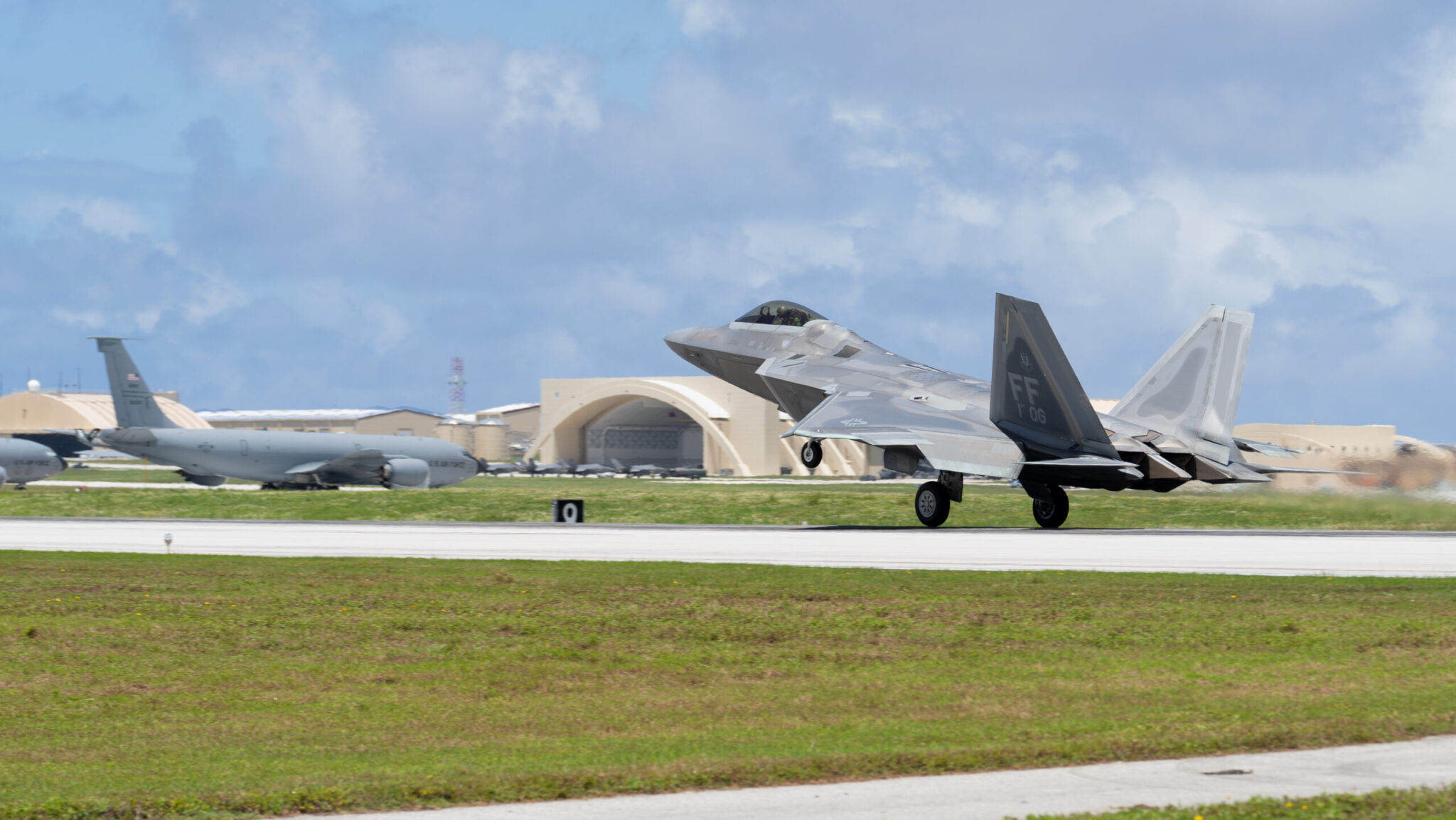
A recent report reveals that half of the Department of the Air Force’s (DAF) installation infrastructure—including critical components like airfields, munitions storage facilities, and more—is currently classified as being in a moderate or high-risk condition. The findings were released in the DAF’s Installation Infrastructure Action Plan (I2AP), which outlines a 15-year strategy to reverse the trend of deteriorating facilities, projected to worsen without decisive action.
The I2AP emphasizes the need for installations to be resilient against a variety of threats, both natural and man-made, indicating that these sites “can no longer be considered a sanctuary” as the Pentagon adapts to the increasing military capabilities of China.
Assistant Secretary of the Air Force for Energy, Installations, and Environment, Ravi Chaudhary, acknowledged the neglect of installations over the past decade. He characterized the I2AP as “the most comprehensive and focused initiative” aimed at preparing DAF installations for the challenges of great power competition.
The report categorizes installation infrastructure into four groups, revealing troubling assessments. While the first category, primary and secondary airfields, shows relatively better conditions—over 25 percent are rated as either degraded or failing—the outlook worsens for “mission critical facilities.” This category, which includes fuel storage and fire rescue stations, indicates that more than half of its infrastructure is in a degraded or failing state.
Similarly, “mission generation facilities,” encompassing munitions storage and aircraft maintenance capabilities, reflect the same concerning status. The report highlights that the DAF’s 640 munitions storage facilities are, on average, 47 years old, and many are ill-equipped to support advanced munitions or unable to be modified to meet new requirements.
The most alarming findings concern utilities, where nearly 75 percent are classified as either degraded or failing. The utilities supporting Pacific Air Forces (PACAF), which would be critical in a conflict with China, are reported as “severely degraded.” Approximately 70 percent of PACAF utilities are at “serious risk,” a situation aggravated by a highly corrosive environment and a shortage of skilled labor.
The I2AP outlines three key objectives to confront these challenges:
- Aligning Infrastructure with Modern Missions: This includes upgrading communications systems and improving facilities like dormitories and child development centers.
- Right-Sizing Infrastructure: This objective focuses on resizing the infrastructure post-Gulf War, exploring cost savings through public-private partnerships, and ensuring adequate facilities to support space launch and test operations.
- Enhancing Resilience: The goal here is to fortify installations against vulnerabilities from potential adversary attacks, energy shortages, and natural disasters. This includes promoting the use of microgrids for localized energy generation and enhancing defenses against cyber threats.
The implementation of the I2AP will be overseen by the Air Force Materiel Command under an Infrastructure Council.
As Chaudhary prepares to transition in January, he stressed that the need for improved military installations transcends political considerations. He underscored that the focus remains on warfighting capabilities and ensuring that airmen and guardians receive the necessary resources for their missions.