Introduction
As militaries worldwide accelerate their adoption of drone warfare, Aeronautics, an Israeli defense firm, sees a burgeoning market for tactical unmanned aerial vehicles (UAVs) that strike a balance between affordability and capability. Aeronautics CEO Dan Slasky highlighted this trend during an interview with Breaking Defense, noting the evolving requirements of modern combat.
Landscape of Modern Warfare
Slasky emphasized the significant role that UAVs play in contemporary conflict zones, including the Middle East and Ukraine. These conflicts have underscored that being cost-effective is only one aspect of a successful drone. Modern UAVs must be resilient against electronic warfare, equipped with varied sensors for different missions, and increasingly, they are expected to possess vertical takeoff capabilities.
Survivability and Efficiency
The CEO explained that UAVs designed to withstand the rigors of the battlefield are the most effective. According to Slasky, “In the dollar-to-mission ratio, it is more cost-effective to have a system that is robust and can withstand jamming or countermeasures.” As such, there is a growing demand for drones equipped with synthetic aperture radar (SAR), which enhances surveillance by allowing operators to see through clouds and foliage.
Innovations in UAV Technology
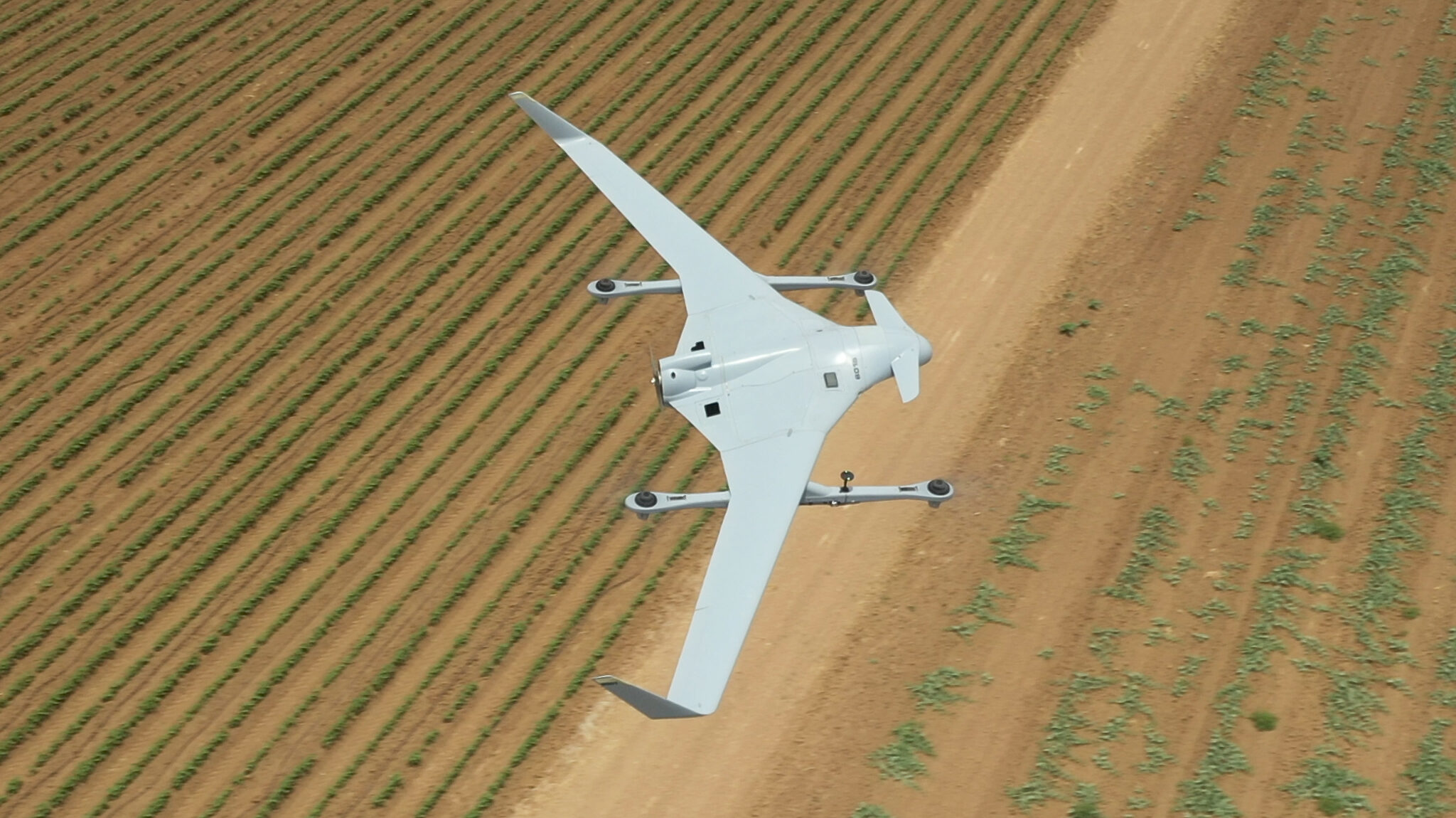
Aeronautics is pushing boundaries with its UAVs by integrating SAR technology for improved intelligence, surveillance, and reconnaissance (ISR) capabilities. The firm is also focusing on vertical takeoff and landing (VTOL) capabilities, which enhance operational flexibility, especially in army and navy missions requiring precision landing.
Product Offering and Market Position
Aeronautics, a subsidiary of Rafael Advanced Defense Systems, produces the Orbiter family of tactical UAVs. This range includes the 29-pound Orbiter 1K and the more robust Orbiter 5, which weighs up to 165 pounds. The Orbiter 5, introduced at a 2023 defense show in Paris, is positioned as a competitor to larger, more expensive systems. Slasky contended that the Orbiter 5 can perform up to “80 percent” of the tasks handled by traditional medium-altitude, long-endurance (MALE) systems, showcasing its operational versatility.
Competitive Landscape
Aeronautics faces competition from major Israeli firms like IAI, as well as various international and American companies vying for a share of the tactical unmanned munition market. Although Aeronautics does not publicly disclose pricing, a previous report indicated that Croatia purchased six Orbiter 3 drones for $5.7 million, while Finland acquired up to 180 for $31 million.
Proven Combat Experience
One advantage that Israeli companies like Aeronautics have is their operational experience in combat situations. Slasky noted, “There are a lot of UAV companies out there, but not many have proven and positive feedback from the battlefield,” which positions them favorably against competitors.
Challenges and Market Dynamics
Despite the promising market conditions, Slasky recognized challenges such as France’s ban on Israeli firms from participating in major defense expos, which has hindered business opportunities for Aeronautics. „We had a whole line-up of meetings set up, and customers wanted to meet us,” he remarked about the impact of the cancellation.
Conclusion
The tactical UAV market is evolving rapidly, driven by the increasing demands of modern warfare. Aeronautics is strategically positioning itself with innovative technology and proven combat capabilities to thrive in this competitive landscape. While challenges persist, the ongoing interest in more capable, cost-effective UAVs suggests a bright future for the industry.