In a March briefing discussing the service’s fiscal year 2025 budget, Air Force Secretary Frank Kendall issued a caution: although the spending limits imposed by the Fiscal Responsibility Act are set to expire by FY26, leaders will still face “tough choices” regarding major priorities that year.
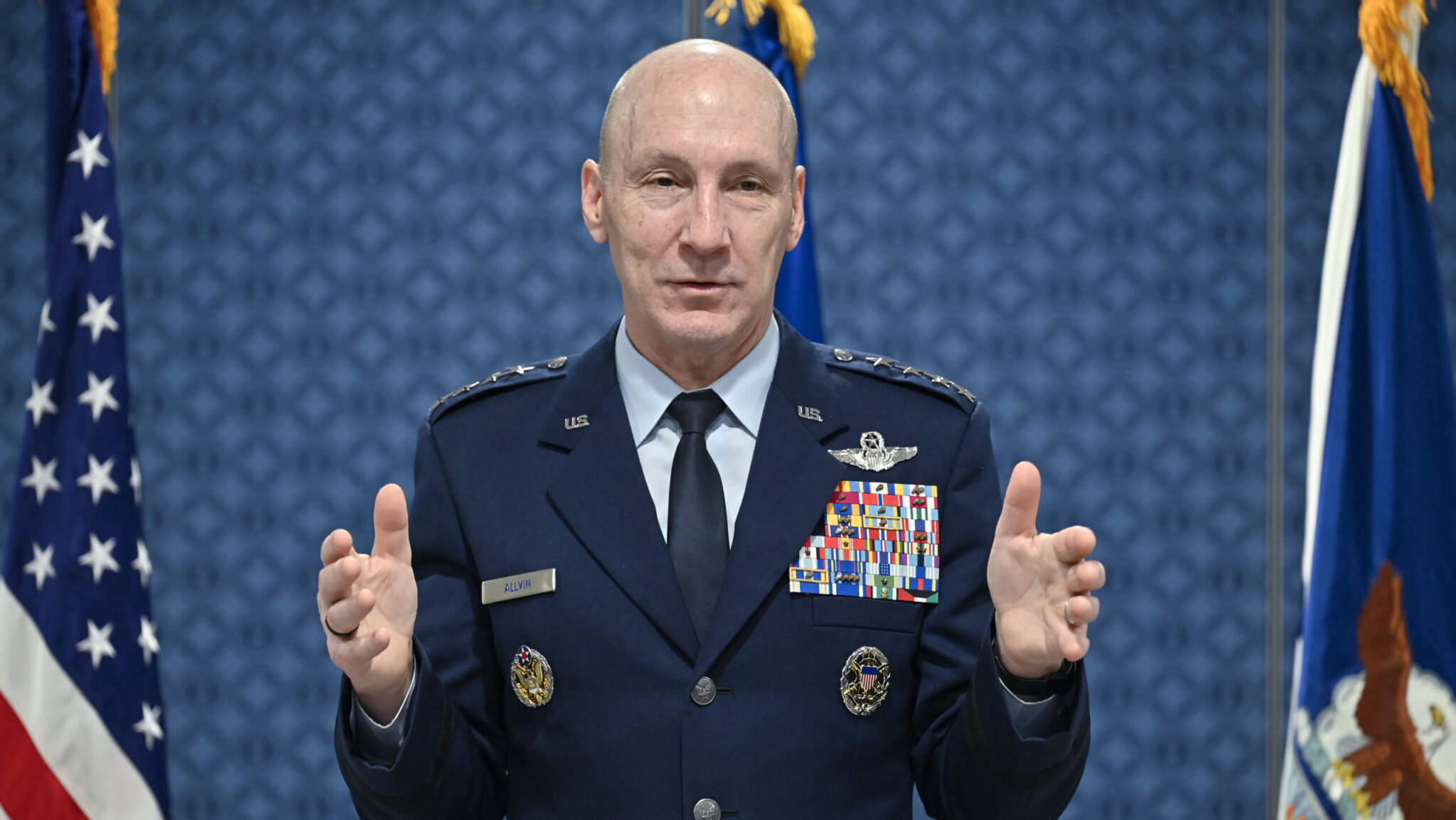
As the FY26 budget approaches, it now lies in the hands of the incoming Trump administration. Together with the current Chief of Staff, Gen. David Allvin, Kendall’s successor—yet to be announced—will navigate a path forward for a service grappling with a dwindling fighter force, urgent modernization demands, and a complete overhaul aimed at countering China.
Kendall recently highlighted the challenges the new administration will face, particularly voicing concerns that the service’s plans for a next-generation tanker may not be financially viable. Similar funding restrictions affect the future of a next-generation fighter, whose outcome will be determined by the incoming Trump team—a crucial program supported by the Air Force’s internal assessments. Other essential initiatives also require financial backing in the forthcoming FY26 budget, particularly two components of the nuclear triad. With ongoing successful flight tests, there are expectations to increase production of the B-21 Raider, developed by Northrop Grumman, while work on the new Sentinel ICBM—also a Northrop project—must continue following a congressionally mandated review confirming the necessity of this costly program.
Exacerbating the Air Force’s challenges, the FY25 budget has yet to receive approval from lawmakers, likely delaying until March at the earliest. Trump-appointed officials and lawmakers will need to finalize the FY25 budget and concurrently develop FY26 spending plans, leading one senior outgoing Pentagon official to anticipate that the FY26 budget may not be ready until April or May.
The influence of the new leadership in Washington on the Air Force remains uncertain. However, two significant upcoming milestones may be perceived differently by the new power players, particularly Elon Musk and Vivek Ramaswamy, who are co-leading a planned commission to reduce government spending.
A prominent example is the Collaborative Combat Aircraft (CCA) program, which is set for its maiden flights next year. Ramaswamy has advocated for increased investment in uncrewed systems rather than diversifying expenditures for new fighter jets. A successful CCA program could bolster arguments to reduce the manned fighter fleet, although officials are currently resisting a full shift to unmanned combat. As Gen. Allvin articulated at the Reagan Forum, his vision centers around manned-unmanned teamwork.
Similarly, upgraded variants of Lockheed Martin’s F-35 might finally be greenlit for combat in 2025. While this achievement would likely be celebrated, significant delays in upgrades could reinforce criticisms from figures like Musk, who has referred to military officials as “idiots” for their continued investment in the stealth fighter.
Ultimately, Congress holds the final decision-making power regarding Pentagon programs. Despite incumbent Biden administration officials stating their efforts toward a higher topline for the hypothetical 2026 budget compared to what was previously established under the Fiscal Responsibility Act, it remains uncertain whether congressional conservatives—who initially supported the act—will back substantial increases in defense spending.
Nevertheless, advocates for a larger Air Force budget will still find allies in the new GOP majority on Capitol Hill. A vital proponent for an increased Pentagon budget will likely be Kentucky Republican Sen. Mitch McConnell, poised to chair the Senate subcommittee that oversees defense allocations. Incoming Senate Armed Services Chair Roger Wicker, R-Miss., has also urged for “full-scale rebuilding of the shrinking US Air Force,” with a specific focus on advancing the Next Generation Air Dominance program.
During a December 10 virtual discussion hosted by the Center for Strategic and International Studies, outgoing Air Force acquisition chief Andrew Hunter outlined two primary challenges awaiting the next administration: securing adequate resources and ensuring effective integration of systems in an emerging era of connected warfare.
“If the Fiscal Responsibility Act shapes the resource posture of the nation, we will not be able to fulfill the national defense strategy,” Hunter remarked on the budgetary obstacles. Addressing the integration mission, he expressed optimism: “I think we’ve got people who can hit it out of the park,” although he cautioned, “[y]ou’re still going to have to swing at the pitch and make contact.”