As lawmakers return to Capitol Hill in September, they face the daunting task of passing a full-year spending bill for fiscal year 2026, amidst disagreements on the defense budget topline and the lingering possibility of another continuing resolution (CR).
FY25 Fallout: A Year Under CR
The failure to pass FY25 appropriations led to a full-year CR, marking the first time the Defense Department was funded under such an extension for an entire year. This year’s budget process has been even more tumultuous, raising concerns about a repeat scenario.
One Big Beautiful Bill and Pentagon’s Delayed Budget
Lawmakers have been preoccupied with reconciliation legislation, known as the One Big Beautiful Bill, which includes an extra $150 billion for defense. Meanwhile, the Pentagon’s FY26 budget request has been delayed, further complicating the process.
Short-Term CR and Topline Disagreements
With government funding set to expire on Oct. 1, Congress will first need to pass a short-term CR. The House and Senate then face the challenge of reconciling their appropriations bills, with the House adhering to the Pentagon’s $848 billion request and the Senate pushing for a $22 billion increase.
NDAA Debate and the Likelihood of a Full-Year CR
Neither chamber has yet taken its version of the National Defense Authorization Act (NDAA) to the floor, but the Senate is slated to start debate on its NDAA as soon as lawmakers return in September.
Some experts believe the differences in the various defense bills might not ultimately matter. According to Byron Callan of Capital Alpha Partners, the most probable outcome for FY26 discretionary spending is „a full-year continuing resolution similar to what occurred in FY25.”
Key Issues in the Defense Budget Debate
Here’s a breakdown of how the Pentagon and each congressional defense committee are approaching 12 major issues this budget season:
- Defense Budget Topline: Differing numbers among committees make comparisons difficult. The reconciliation bill added $150 billion in mandatory funds, while the Senate is advocating for a topline funding bump of upwards of $22 billion.
- F-35 Joint Strike Fighter: Disagreements exist on the number of aircraft to purchase, with the House defense appropriations adding funds for a total of 69 F-35s, while Senate defense appropriations funds the 47 F-35s requested in the budget.
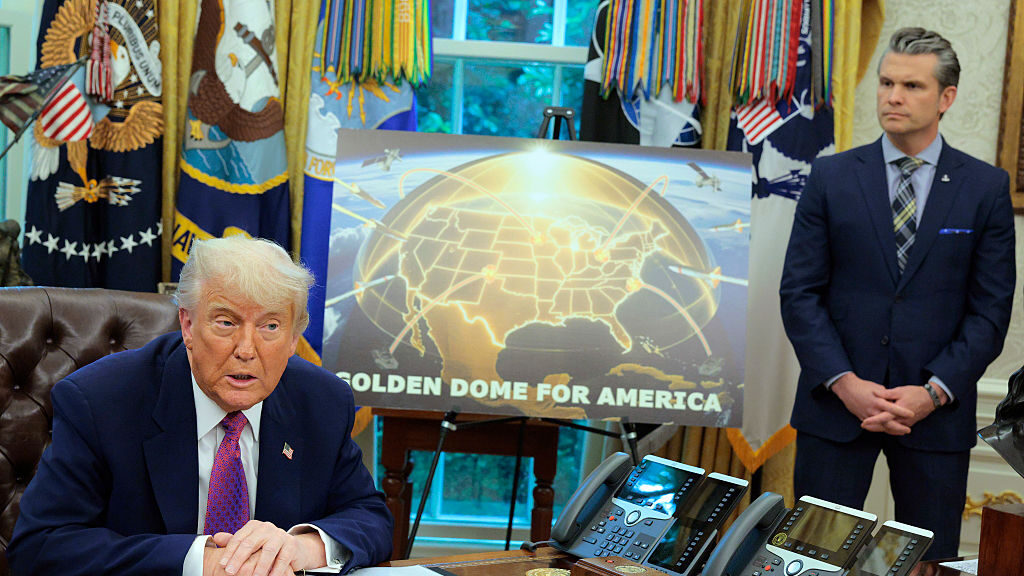
- Golden Dome: A national missile defense policy that modifies the next-generation missile shield for the US homeland, where Congress is requiring yearly reports on Golden Dome.
- F-15EX: The House defense appropriations adds $345 million for the procurement of three F–15EX aircraft.
- E-7 Wedgetail: Program cancellation opposed by Congress, with both House and Senate committees adding funds to continue development.
- A-10 Retirement: The Air Force’s plan to retire the A-10 is being met with resistance, with the SASC mandating that the Air Force retain 103 A-10s in its inventory.
- F/A-XX: The House and Senate added funds to continue F/A-XX development.
- E-2D: The Senate defense appropriations cancels the procurement of four aircraft.
- Landing Ship Medium: The House defense appropriations adds $225 million for one ship.
- Joint Light Tactical Vehicle: The House adds $345 million for 863 JLTVs for the Army, and $169 million for 224 JLTVs for the Marine Corps.
- Improved Turbine Engine Program: The House adds $175 million for the Improved Turbine Engine Program (ITEP).
- Ukraine: The House appropriators did not include money for Ukraine in the spending bill, while the Senate adds $800 million for USAI