The U.S. Navy and RTX’s Raytheon have successfully completed the first live test of the SPY-6(V)4 radar at the Pacific Missile Range Facility in Hawaii, marking a significant milestone in advancing the capabilities of the Navy’s fleet.
Upgrading Detection and Tracking Capabilities
According to Barbara Borgonovi, president of Naval Power at Raytheon, the SPY-6(V)4 radar will enable existing U.S. Navy Flight IIA Destroyers to significantly upgrade their detection and tracking capabilities, allowing sailors to more effectively monitor and respond to potential threats in real-time.
Tracking Ballistic, Hypersonic and Cruise Missiles
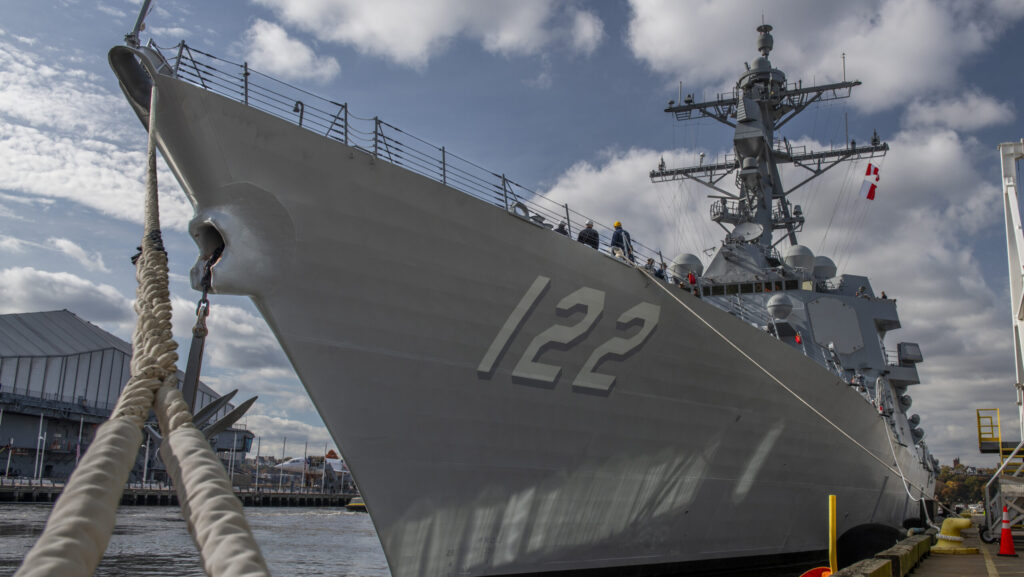
Raytheon is the prime contractor for the SPY-6 family of radars, with the Navy planning to install four different variants across its fleet. The SPY-6(V)4 is specifically designed to be equipped on the Navy’s Flight IIA Arleigh Burke-class destroyers. It is capable of tracking ballistic, hypersonic, and cruise missiles, as well as anti-surface and anti-air threats.
Successful Open Water Tests
During multiple tests over open water, the radar successfully tracked air and surface targets under various conditions. Raytheon said that these tests demonstrated the radar’s advanced tracking capabilities across different mission scenarios and validated years of modeling and simulation work. Additionally, the tests yielded the first live data set for the (V)4 configuration, which will help refine the system for future testing and eventual shipboard deployment.
$3.2 Billion Contract for SPY-6 Radars
In 2022, the Navy awarded Raytheon a $3.2 billion contract for the hardware production and sustainment of all four variants of SPY-6 to be delivered to 31 Navy ships over the next five years.