A new bilateral defense agreement, signed today between Germany and the UK, establishes a framework for the two nations to develop advanced deep-strike weapons, unmanned aerial systems for naval operations, and other drones capable of operating alongside fighter jets.
Described by the UK Ministry of Defence (MoD) as a “first-of-its-kind” pact, the Trinity House Agreement was formally signed in London by German Defence Minister Boris Pistorius and UK Defence Secretary John Healey.
This agreement builds on a joint declaration made in July aimed at enhancing defense cooperation and represents a pivotal shift in the UK’s relationship with Germany and European security at large. According to the MoD, the pact will bolster national security and stimulate economic growth in light of rising Russian aggression and other security threats.
The deal includes commitments to launch several “ground-breaking defense projects” across various domains, notably efforts to create new extended deep strike weapons with improved range and precision. One highlighted example is MBDA’s Storm Shadow long-range air-launched cruise missile.
In a related joint communiqué, it was noted that the two nations still need to develop “common requirements and military doctrine” for future long-range systems.
Though no specific funding details were disclosed, the Trinity House Agreement stipulates that both countries will share “all costs and benefits” related to the projects, unless alternative arrangements are specified.
This collaborative venture on long-range weaponry complements the UK’s participation in the European Long-range Strike Approach (ELSA) program, a multinational initiative involving Germany, France, Italy, and Poland.
Minister Pistorius emphasized the importance of strengthening NATO’s eastern flank and addressing critical capability gaps, particularly in long-range strike systems.
In terms of drone capabilities, both countries have agreed to pursue and develop maritime unmanned aerial systems (UAS) that can operate in coordination with existing fighter jets, similar to the US Air Force’s Collaborative Combat Aircraft initiative. Both nations utilize the Eurofighter Typhoon, while the UK operates Lockheed Martin F-35B jets and Germany is set to receive its first F-35A aircraft.
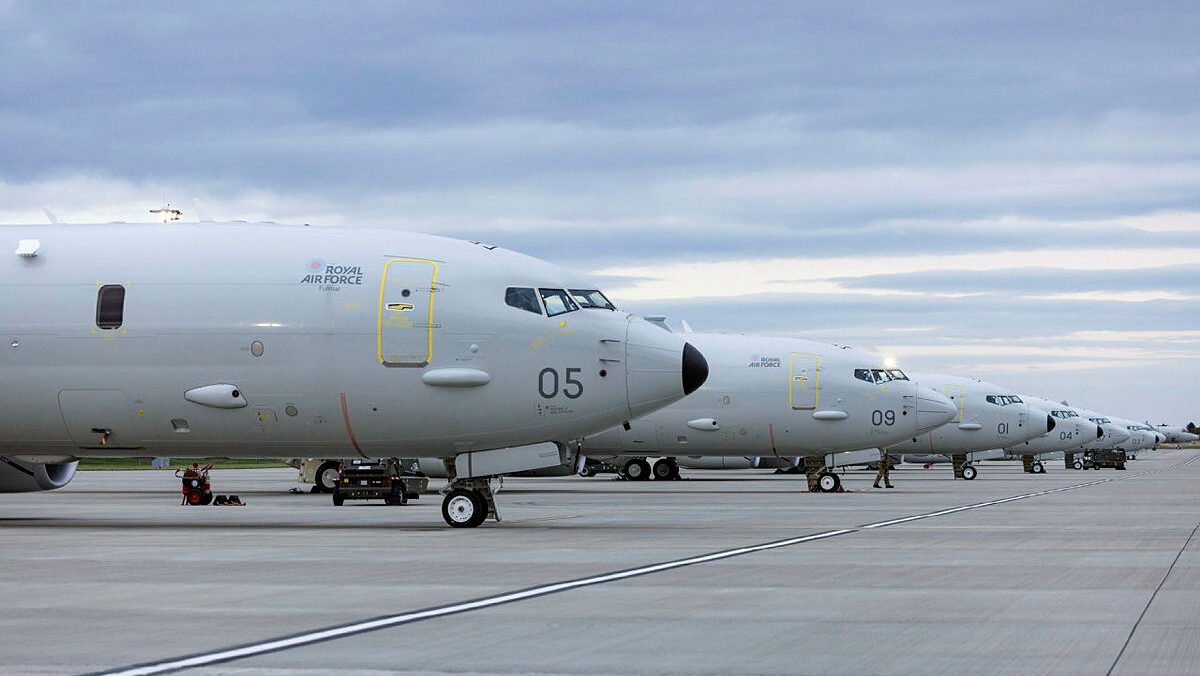
Additionally, German P-8A Poseidon maritime patrol aircraft will “periodically operate” from RAF Lossiemouth in Scotland as a measure to secure the North Atlantic amidst Russian threats. Germany is expected to receive its first submarine-hunting aircraft next year.
The agreement also facilitates the local manufacture of artillery gun barrels for the UK for the first time in a decade, with Germany’s Rheinmetall establishing a new production facility using British steel from Sheffield Forgemasters.
Furthermore, the pact signifies a long-term commitment to land industrial collaboration, particularly in the manufacturing of Boxer armored vehicles. The UK rejoined this program in 2019, committing £2.8 billion (approximately $3.6 billion) and ordering 623 vehicles to be integrated into new Armored Brigade Combat Teams alongside Ajax armored fighting vehicles and Challenger 3 main battle tanks.