



















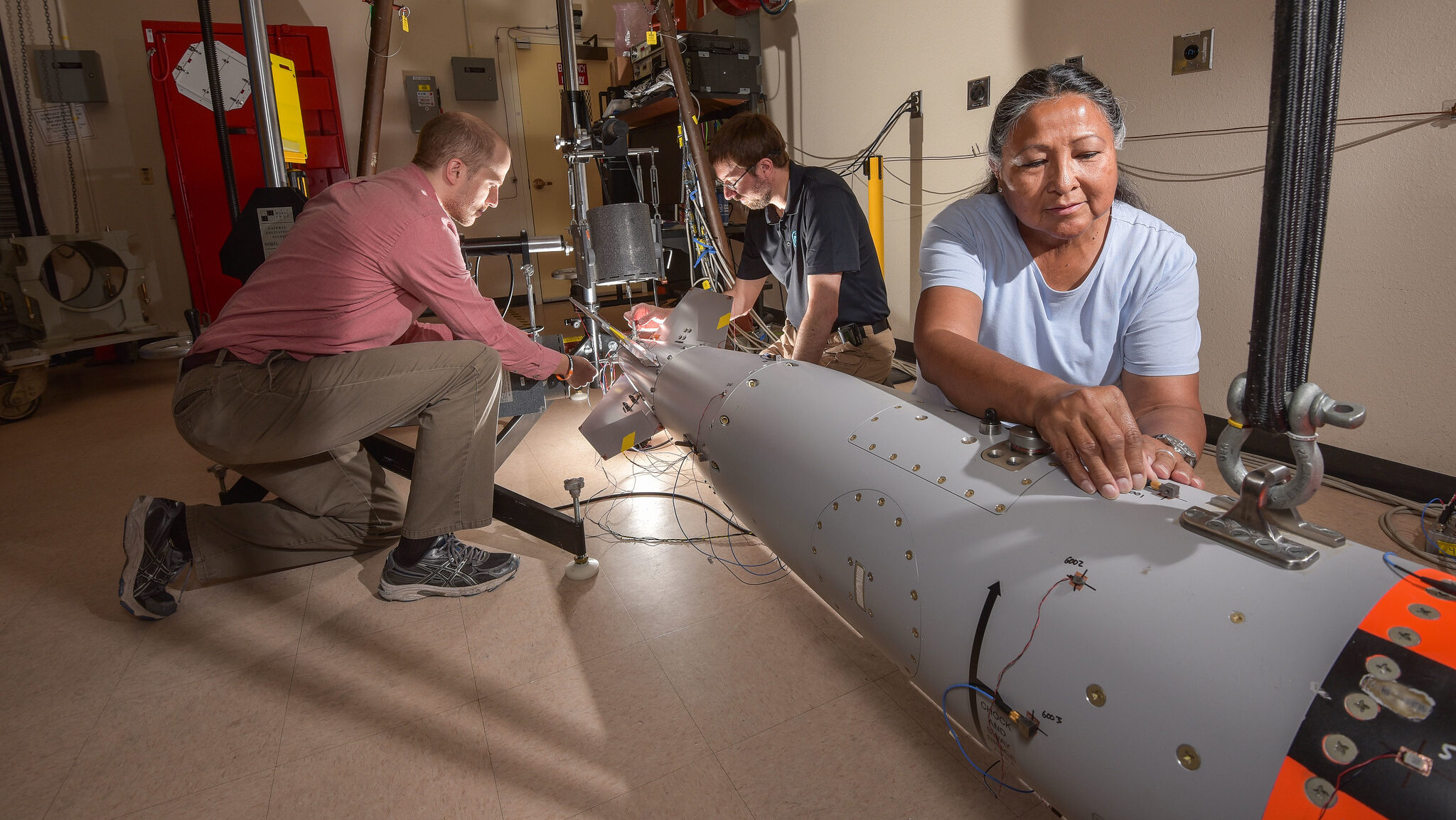
Seventeen years after beginning design and development, the National Nuclear Security Administration (NNSA) has announced the completion of the B61-12 nuclear warhead.
The last production unit of the upgraded warhead was finalized on December 18, roughly three years after production formally commenced on America’s updated nuclear gravity bomb. An October 2024 report from the agency estimated the total program cost at around $9 billion.
“Completing the B61-12 on schedule is the latest example of what we’ve been saying for several years now: NNSA is delivering capabilities at the pace and scale needed by our Department of Defense partners and our deterrence requirements,” stated NNSA Administrator Jill Hruby in the announcement.
Oversight and Modernization
While the Department of Defense oversees the delivery systems for nuclear weapons, the modernization of nuclear warheads is managed by the NNSA, a semi-independent branch of the Department of Energy.
The B61-12 life-extension program consolidated the older B61-3, -4, -7, and -10 variants while incorporating newer technologies. Technically, the B61-12 is not considered a “new” nuclear weapon that increases the stockpile; instead, the U.S. is repurposing warheads from older bombs and placing them into new housings.
Certification Across Various Aircraft
In 2020, the F-15E became the first jet certified to carry the B61-12, and in March, Breaking Defense reported that the weapon has also received certification for the F-35A. The October 2024 NNSA report confirmed that it has been certified to fly on the B-2, F-16, and German Air Force PA-200 Tornado jets, with ongoing efforts to achieve certification on the Italian Air Force’s Tornados and the U.S. Air Force’s B-21 bomber.
Transition to B61-13 Production
Notably, the agency announcement indicated that with the “production of the B61-12 LEP now complete, NNSA will transition to producing the B61-13 bomb.” The B61-13, announced in October 2023, is designed to achieve a higher yield, reportedly in the range of a 360 kiloton blast, representing a significant enhancement over the 50 kiloton B61-12.
A first production unit of the B61-13 is scheduled for fiscal year 2026, according to the announcement.


