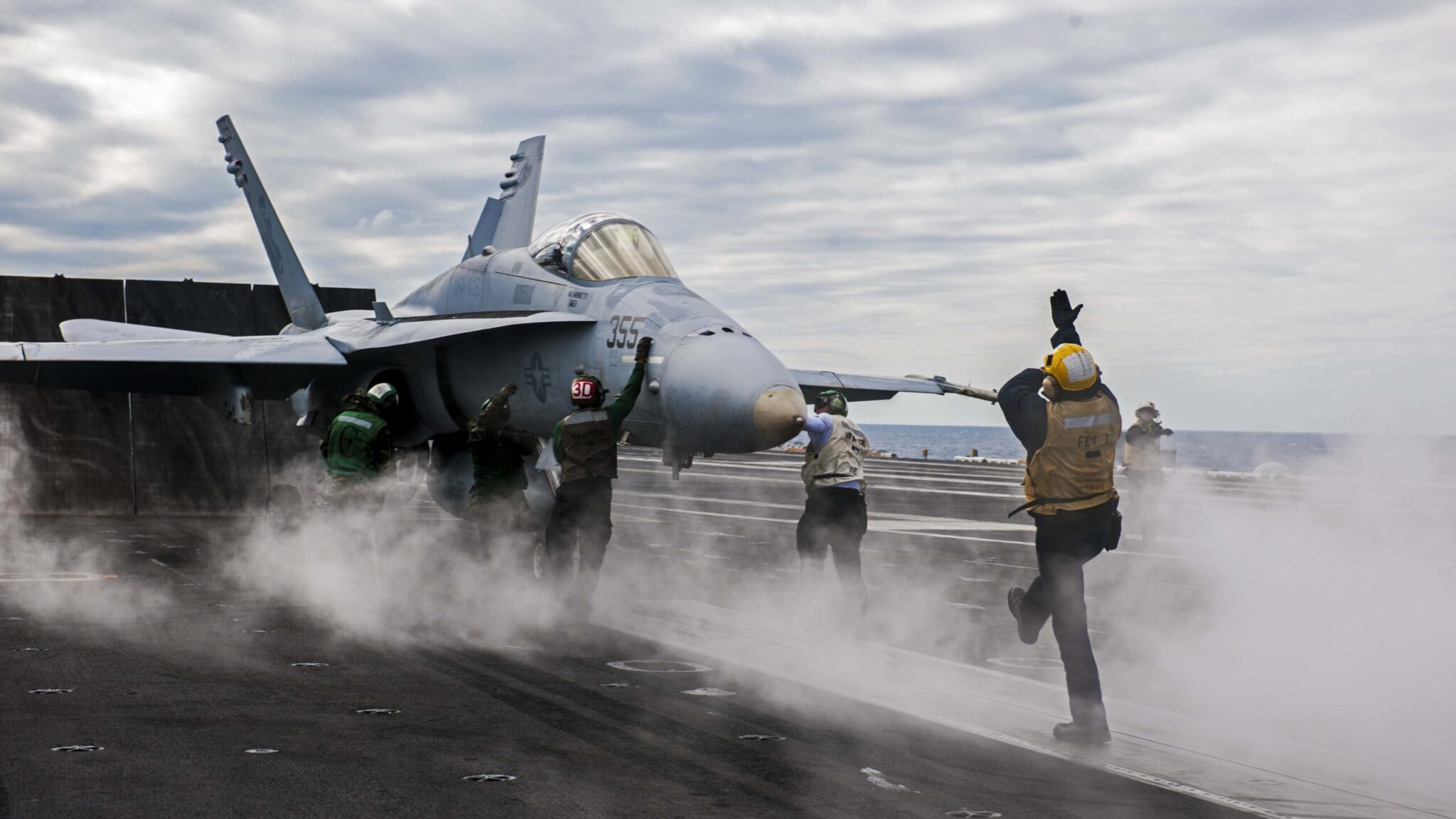
The competition for the Navy’s next-generation fighter jet intensifies as Lockheed Martin exits the race, leaving Northrop Grumman and Boeing to vie for the coveted contract.
I. Lockheed Martin’s Exit: A Major Shift in the F/A-XX Competition
Lockheed Martin, a dominant player in the fifth-generation fighter market, has withdrawn its bid for the Navy’s F/A-XX sixth-generation fighter program. Sources indicate that Lockheed’s proposal failed to meet the Navy’s requirements, leaving Northrop Grumman and Boeing as the remaining contenders. This unexpected development significantly alters the dynamics of the competition, marking a notable shift in the landscape of next-generation fighter development.
II. A High-Stakes Showdown: Northrop Grumman vs. Boeing
The elimination of Lockheed Martin leaves a head-to-head competition between Northrop Grumman and Boeing. For Northrop Grumman, securing the F/A-XX contract would represent its first fighter jet contract since the iconic F-14 Tomcat. For Boeing, winning is crucial to the future of its fighter jet arm, especially considering significant investments made in its St. Louis facility in anticipation of this major contract award. The outcome will dramatically reshape the landscape of naval aviation.
III. The F/A-XX Program: Secrecy and Strategic Importance
Details about the F/A-XX program remain scarce, emphasizing the high level of secrecy surrounding the project. The Navy has stressed that the aircraft will complement the F-35, serving as an air superiority fighter aboard Navy warships, distinct in design and engine from the Air Force’s parallel sixth-generation fighter effort. The program aims to maintain naval air dominance in contested environments, expanding operational reach and capacity, and will include collaboration with the Air Force and Marine Corps on advanced technologies such as autonomous combat drones.
IV. Budgetary Constraints and Program Delays
The Navy’s fiscal 2025 budget request reflects the budgetary pressures facing the F/A-XX program. Approximately $1 billion in research and development funding has been deferred, prioritizing other readiness initiatives due to the constraints of the Fiscal Responsibility Act. Despite these delays, the Navy remains committed to awarding an F/A-XX contract this year. This commitment contrasts with the Air Force’s approach to its own sixth-generation fighter program, which has been temporarily paused pending review by the Trump administration.
V. A Pivotal Decision: Shaping the Future of Naval Aviation
The F/A-XX program represents one of the most significant aircraft competitions undertaken by the Navy in recent decades. The decision on which company will secure this contract will profoundly influence the future of naval aviation. The winner will be instrumental in defining the technological capabilities and strategic direction of the Navy’s air power for the decades to come. The outcome will likely reshape the balance of power in the defense industry, particularly within the arena of next-generation fighter jet technology.