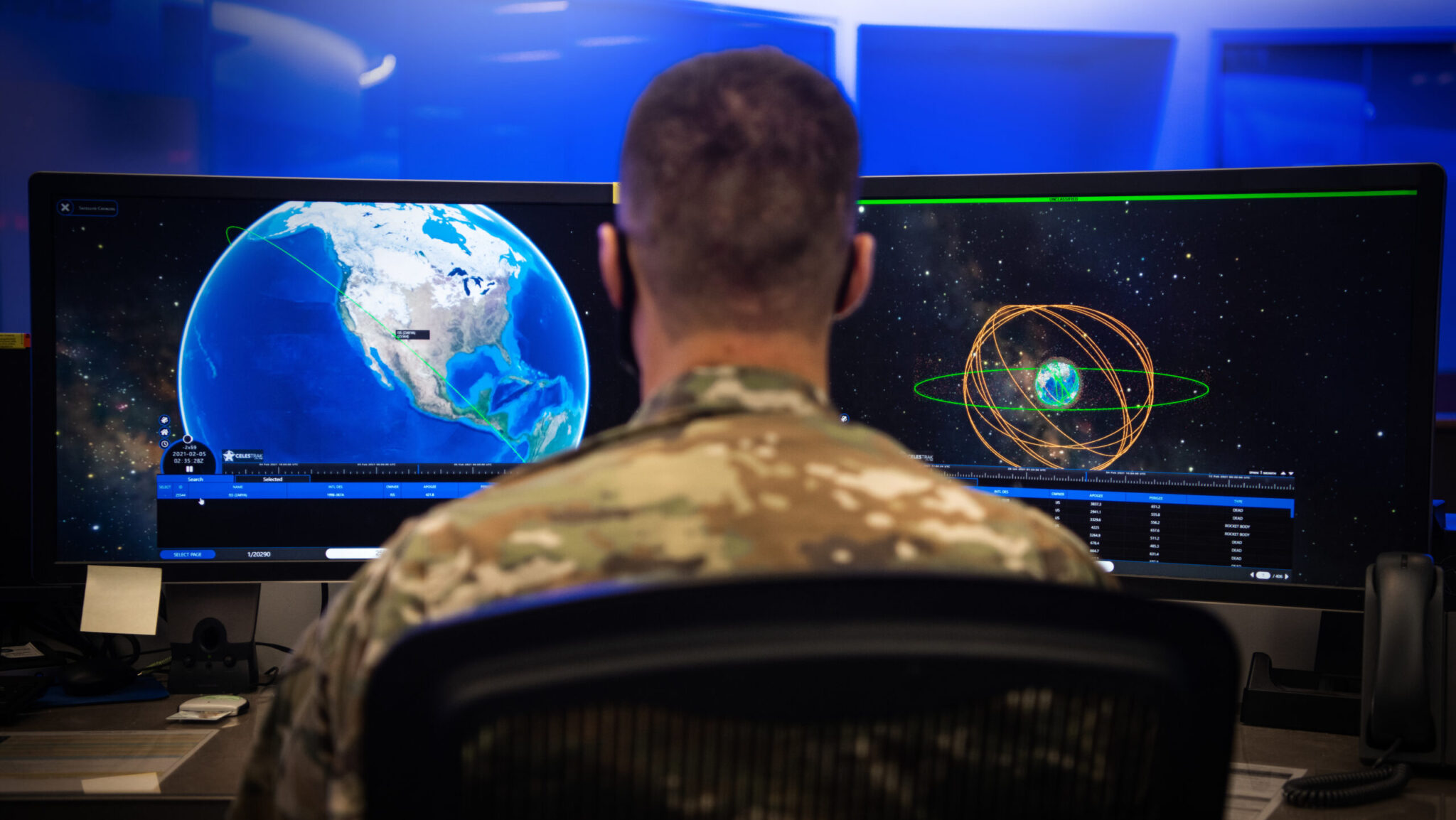
The Department of Commerce is set to launch an initial version of its new system for alerting space operators to potential collisions on September 30, following a formal agreement with the Defense Department regarding data transfer from military assets monitoring space.
Adopting a “crawl, walk, run” strategy, the Commerce Department is progressing with the Traffic Coordination System for Space (TraCSS), as explained by Sandy Magnus, chief engineer at the Office of Space Commerce (OSC), during the ASCEND conference in Las Vegas on July 31.
The upcoming “Phase 1.0” will involve a select group of “beta users” and will utilize a limited subset of the space monitoring and tracking data sources that will eventually contribute to the TraCSS database. Magnus provided these insights during a conversation with Barbara Golf, the executive agent for space domain awareness at Space Systems Command.
OSC is gradually moving towards managing space situational awareness (SSA) for both U.S. and foreign commercial and civil satellite operators. This transition will free the Pentagon from this resource-intensive mission, allowing it to focus on threats posed by adversary space activities. However, this transition has been complicated by the Department of Defense’s (DoD) security concerns regarding how data collected from military radar and telescopes will be shared with TraCSS and non-military participants.
Golf highlighted the complexity of establishing data transfer protocols, stating, “We are working through some pretty detailed documentation” regarding the requirements to share data, which has been rigorously reviewed and approved by multiple high-ranking officials.
Another agreement is being formulated that outlines the roles and responsibilities of the DoD and Commerce teams, stressing the necessity of addressing security concerns about what can be visualized and shared with TraCSS and its users.
Resolving these security issues is crucial, Golf elaborated, to ensure that when TraCSS is operational, it will not be constrained by the military’s restrictions on sharing classified information gathered from advanced space monitoring sensors.
Credit was given to Travis Langster, who previously supervised the transition for the Pentagon Office of Space Policy, for helping keep the teams focused on realistic goals amid the complexities of the project. Langster, who has a background with the commercial space-tracking firm COMSPOC, has recently taken a position in a Pentagon acquisition office.
Magnus and Golf noted that for the foreseeable future, the DoD and Commerce space tracking systems will operate concurrently until TraCSS can demonstrate comparable capabilities to those of the military. The public can access SpaceTrack.org, the DoD’s platform for publishing the general locations of space objects, although it does not encompass all U.S. or allied military and intelligence satellites in its catalog.