A Riveting Arrival
„Here we go!” shouts the air crew chief, waving his arms as he tries to capture the attention of the gathered reporters and sailors aboard the US Navy’s C-2A Greyhound transport plane as it descends for landing. In an instant, everyone is thrust back into their seats as the aircraft’s tailhook successfully snags a wire on the flight deck, instantly stopping the plane through the wonders of electromagnetism.
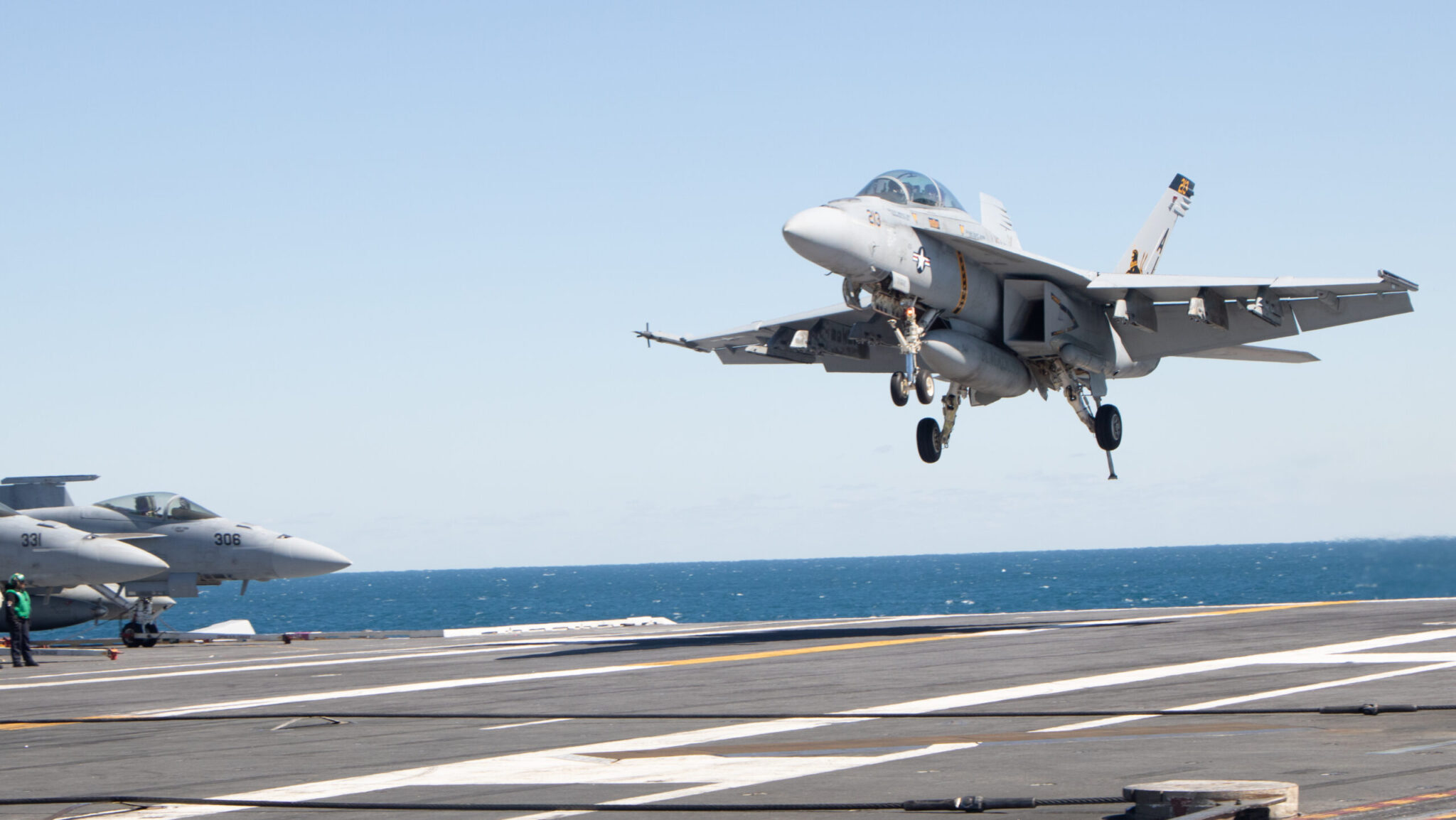
As the cabin door swings open, a breathtaking view of the aircraft carrier greets everyone, displaying sleek F/A-18 Super Hornets and sailors clad in brightly colored jerseys. After the Greyhound taxis to a halt, passengers disembark, following a sailor in a white jersey, indicating his role in maintaining safety on the flight deck.
The USS Gerald R. Ford in Action
Currently navigating the Atlantic, not far from Naval Station Norfolk, the USS Gerald R. Ford (CVN-78) is the most advanced operational aircraft carrier in the US Navy. On this bright but chilly March day, a small group of reporters witnesses the crew engage in their Composite Unit Training Exercise (COMPTUEX), a vital rehearsal every carrier strike group must complete before deployment, ensuring readiness for a wide range of missions.
Capt. Rick Burgess, the commanding officer of the Ford, briefs the reporters inside the carrier’s hangar, flanked by two imposing Super Hornets behind him. „Everyone is onboard, building relationships and that crucial synchronicity—this is the heart of COMPTUEX. We’re here to rehearse, and we’re committed to getting it right,” he emphasizes.
COMPTUEX is essential for preparing carrier strike groups for operations in global hotspots, including the Middle East, Mediterranean, and Pacific regions. Currently, the strike group anticipates a summer deployment to the Mediterranean, but plans remain adaptable given the dynamic situation in the Middle East.
Strategic Flexibility
Carrier strike groups can be configured in various ways, depending on Navy assets and mission requirements from the Pentagon. The Ford serves as the flagship of Carrier Strike Group 12, under the command of Rear Adm. Paul Lanzilotta, a veteran naval aviator and former commanding officer of the Ford.
„We prepare for everything from humanitarian assistance to major combat operations,” Lanzilotta states confidently. „Our aim is to be ready for any mission the Pentagon assigns.”
Carrier Air Wing 8 is also aboard, led by Capt. David Dartez, equipped with a full spectrum of naval airpower, including Super Hornets and Growlers. However, the carrier variant of the F-35 Joint Strike Fighter remains absent, pending necessary operational integration.
Dartez points out that the Navy’s recent operations in the Red Sea, where ships faced missile and drone threats from Houthi rebels in Yemen, have prompted updates to the current training curriculum for COMPTUEX. „We’ve adjusted training to address the threats posed by unmanned aircraft,” he explains. „While I can’t disclose specific tactics, it’s crucial to recognize that these threats are small, elusive, and require intensive focus.”
Training Collaborations
Nearby, six Arleigh Burke-class destroyers conduct their own training activities. Four destroyers belong to Destroyer Squadron 2, commanded by Capt. Mark Lawrence. Notably, the Roosevelt (DDG-80), usually stationed in Rota, Spain, has joined for COMPTUEX, alongside the Winston S. Churchill (DDG-81), which assumes the significant role of air and missile defense commander—a new milestone for a destroyer.
Lawrence underscores Churchill’s important role in air and missile defense. „This transition is substantial, requiring adjustments to the ship’s systems,” he notes. Adm. Daryl Caudle, commander of US Fleet Forces, highlights this evolution in fleet operations as a progressive step forward.
Canine Companions
While officers engage with reporters, a unique visitor arrives: Capt. Sage, a five-year-old Labrador retriever who became part of the Ford’s crew during a previous deployment. Unfazed by the chaotic ambiance of the flight deck, Capt. Sage has been trained to detect stress levels in sailors, offering support and companionship.
Her title reflects a Navy tradition of assigning ranks to animals that contribute to military efforts, further solidifying her role aboard the carrier.