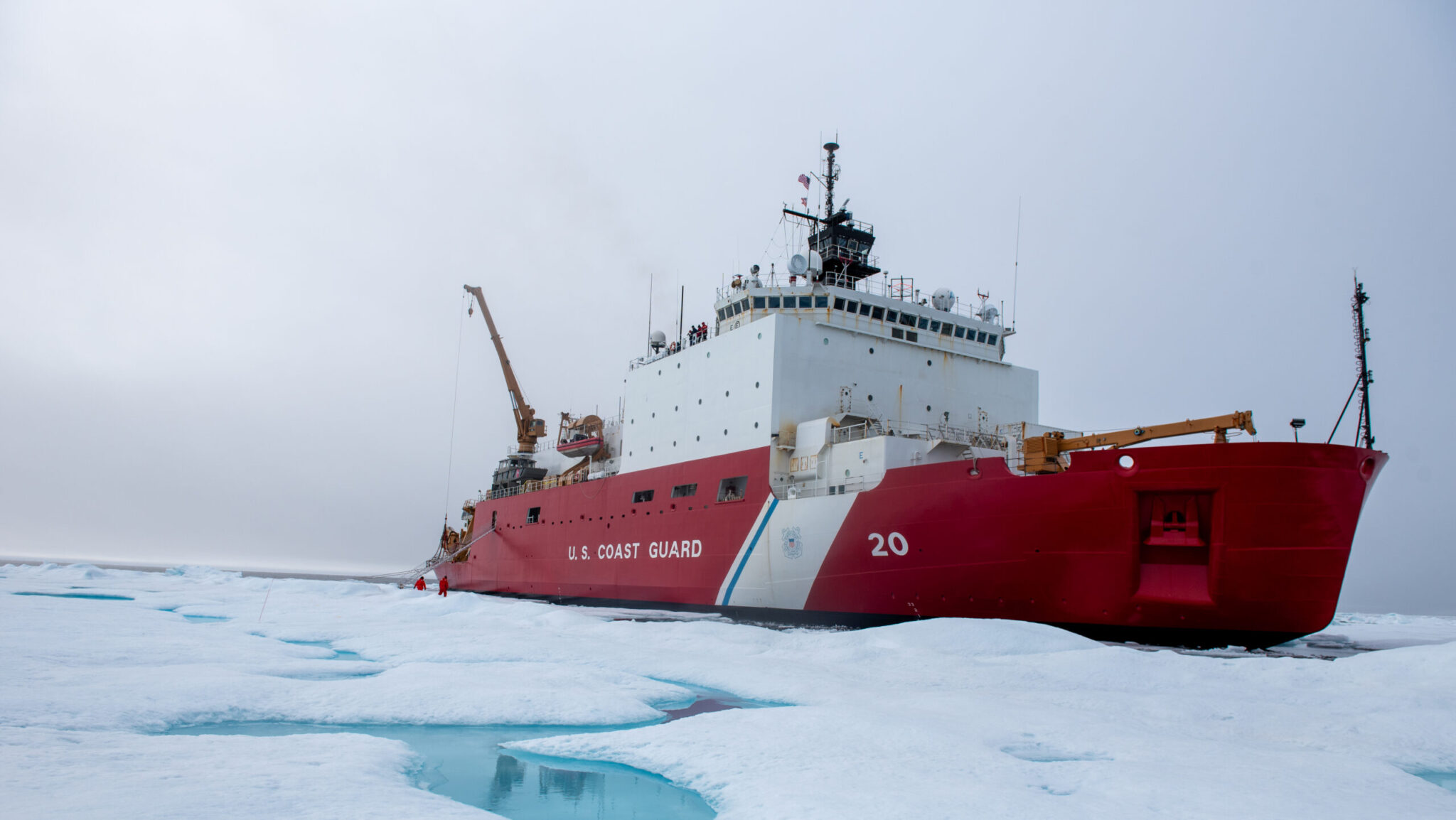
A Call for More Icebreakers
While President Donald Trump’s ambitious pledge for dozens of new icebreakers generates excitement, current analyses suggest that eight or nine heavy icebreakers would sufficiently meet immediate needs, according to Vice Adm. Thomas Allan, the Coast Guard’s acting deputy commandant for operations. Speaking at the Sea Air Space conference, Allan acknowledged the enthusiasm surrounding increased icebreaker capabilities but underscored that strategic studies support a more measured fleet expansion.
“I will tell you that when you look at what the strategic studies have said for the Coast Guard, I kind of go back to that eight or nine [number],” Allan stated, reflecting on findings from a 2023 analysis. He specified the need for at least three heavy icebreakers and an additional three medium-capable polar icebreakers to fulfill operational requirements.
Current Capabilities and Future Plans
As it stands, the U.S. operates a solitary heavy polar icebreaker, one medium icebreaker, a recently acquired commercial polar vessel, and several smaller icebreaking craft, including tugboats. The Coast Guard, in collaboration with the Navy, is working to restore its heavy icebreaker fleet through the Polar Security Cutter program, which aims to deliver four to five new vessels. An Arctic Security Cutter initiative is also underway to potentially add another four or five medium polar icebreakers to the fleet.
Trump’s proposal in January for around 40 “big” icebreakers coincided with comments expressing a desire for Canada’s statehood, leading to questions about the feasibility and funding for such a large-scale acquisition. “We’re going to order about 40 Coast Guard big icebreakers. Big ones,” Trump noted during a speech, underscoring this vision with a call to action regarding Arctic defense amidst competition with Russia, which he claimed operates around 40 icebreakers.
Mixed Responses and Industry Insights
Responses to Trump’s statements from the White House have been limited, with National Security Council spokesperson Brian Hughes emphasizing that the administration is keen on revitalizing America’s maritime presence in the Arctic. “President Trump’s statement sends a clear signal to industry and the world that America is serious about maintaining a presence in the Arctic to secure our economic and national security,” Hughes asserted.
While Vice Adm. Allan did not clarify on any recent discussions with the White House, he did suggest that the 40-ship figure could be reached by including various types of vessels within the broader icebreaker fleet, including smaller craft suitable for continental operations. “Adding aspirational numbers of new hulls along with larger heavy icebreakers, you get to that 40 number pretty quick,” he stated, advocating for a robust American presence in the Arctic and Antarctic.
Bipartisan Support with Uncertain Future
The push for enhanced icebreaker capabilities has enjoyed bipartisan support as the U.S. seeks to compete with Russia and China in accessing newly opened maritime routes. In July, President Joe Biden signed the ICE Pact, fostering cooperation on icebreaker production among the U.S., Canada, and Finland. However, growing tensions between Ottawa and Washington cast doubt on the future of this collaboration.
During the same panel, Ben Bordelon, president and CEO of Bollinger Shipyards, expressed uncertainty regarding the practical implications of the ICE Pact. “Honestly, I’m not exactly sure what that means all the time,” he admitted, calling for clarity to ensure tangible benefits from the agreement.
As discussions about the future of the Coast Guard’s icebreaker fleet unfold, it is evident that a careful balance must be struck between ambitious aspirations for new vessels and the strategic realities guiding their deployment. In a rapidly changing Arctic landscape, maintaining an effective icebreaker fleet remains a critical priority for U.S. national security and maritime readiness.