Reevaluating Programs Amid Broader Transformation
The U.S. Army is currently assessing significant modifications to its multi-domain sensing missions, including potential program reductions, as part of a broader transformation initiative. At the same time, the service is gearing up to demonstrate a groundbreaking, longer-range launched effect next year, according to multiple military officials.
Transformation Underway: Reevaluating Programs and Requirements
Laurence Mixon, from the Program Executive Office for Intelligence, Electronic Warfare, and Sensors, emphasized that the Army’s transformation is not signaling a crisis but necessitates a thorough review of ongoing programs and specifications. Speaking at the AAAA conference in Nashville, he stated, “With this Army Transformation Initiative, the sky is not falling, but we are going to have to — on the acquisition side, material development side – relook at our programs and our requirements.”
While he refrained from specifying which programs might be affected, Mixon underscored a clear shift away from efforts that no longer demonstrate promise. “There’s nothing … that we can say specifically on a program that’s going away or changing,” he clarified. “But I will tell you, there is no longer an appetite to reinforce failure.”
Force Structure Changes and Program Cancellations
Earlier this month, Army leadership unveiled sweeping adjustments to force structure, including the cancellation of major platforms such as the Grey Eagle drone and the M10 Booker light tank. Army Chief of Staff Gen. Randy George anticipates further program cancellations, signaling a strategic move toward efficiency.
Despite these cuts, the Army has yet to announce reductions to key intelligence, surveillance, and reconnaissance (ISR) programs. However, Mixon hinted that one undisclosed program, particularly within electronic warfare (EW), might be discontinued or redirected. “We just have not seen the performance, and we think we can do better on another path,” he explained.
HADES Program: Potential Changes in the Pipeline
The future of the High Accuracy Detection and Exploitation System (HADES) remains uncertain, though officials indicate the program is progressing positively. Andrew Evans, director of the Army’s ISR Task Force, noted that the critical question is now about the number of systems needed, rather than the necessity of the system itself. “It will not be whether we require it at all … until warfighters cease their demand for ISR,” he said.
The Army has already selected Sierra Nevada Corporation (SNC) to integrate HADES capabilities onto the Bombardier Global 6500 jet, aiming for initial deployment by 2026 or early 2027. Depending on budget and threat assessments, the service might procure over a dozen aircraft, acquiring them incrementally.
Innovating with Longer-Range Launched Effects
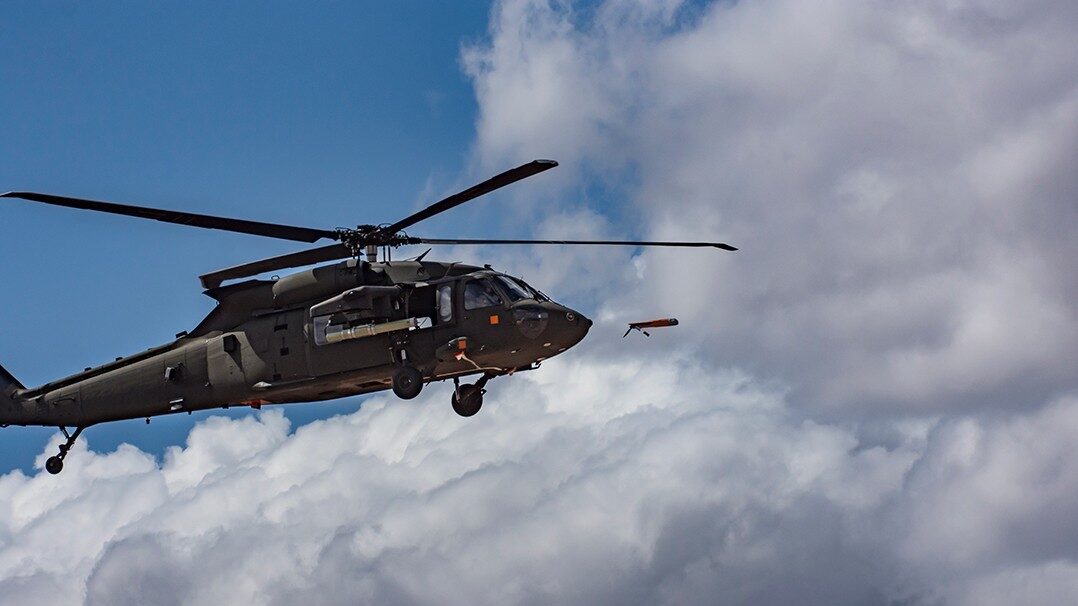
Looking ahead, the Army plans to showcase a demo of a longer-range launched effect in 2024, which could significantly enhance HADES’ operational scope. Launched effects are small drones shot from a platform during flight to collect intelligence or strike targets from standoff distances.
The service envisions expanding its arsenal across three primary ranges—short, medium, and long—and is now working on a fourth, ultra-long-range category capable of reaching 1,000 miles. After engaging industry partners, the Army aims to conduct a demonstration in 2026 by deploying potential options from a commercial jet. Data from this test will shape future procurement strategies for extended-range capabilities.
Implications for Future Battlefields
If successful, this 1,000-mile-range technology could revolutionize the Army’s ISR and strike operations, enabling platforms like HADES, high-altitude balloons, and ground vehicles to operate farther from adversaries, enhancing safety and operational effectiveness in complex multi-domain environments.