The Pentagon is proposing a complete overhaul of its amphibious force generation model, aiming for a larger fleet and extended operational cycles to meet escalating global demands.
In a decisive move to secure the future of American power projection, the Department of the Navy is recommending a fundamental shift in how its amphibious ships are maintained, trained, and deployed. Driven by findings from the newly established Amphibious Force Readiness Board (AFRB), this strategic pivot aims to resolve chronic readiness issues and ensure that the Marine Corps remains a formidable deterrent on the global stage.
The 56-Month Blueprint: Quality Over Speed in Force Readiness
The Navy is prepared to move away from the traditional 36-month Optimized Fleet Response Plan (OFRP) in favor of a more comprehensive 56-month model. This expanded timeline is designed to provide a more sustainable rhythm, allowing each vessel to complete two distinct workup cycles and two full integrated training phases, resulting in two deployments per ship cycle.
Military leadership argues that moving beyond the 36-month constraint will „kill the overhead” of transition phases that previously drained resources without significantly contributing to combat readiness. This new approach promises to deliver ships that are not only better maintained but also manned by crews with higher levels of integrated tactical experience.
Beyond the Mandate: The Push for a 40-Ship Amphibious Backbone
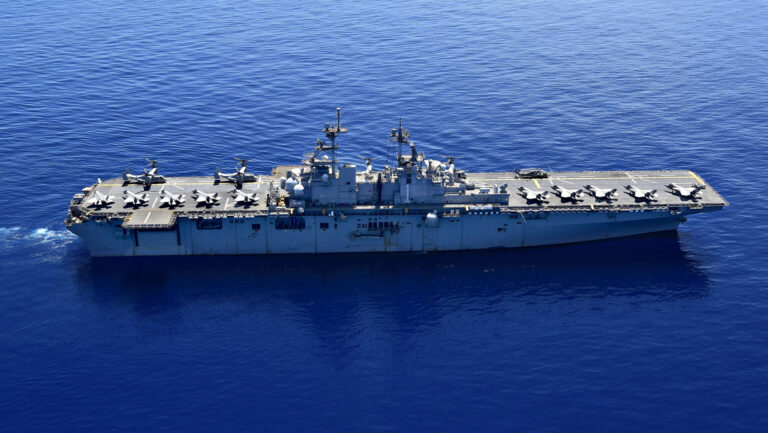
Central to this new vision is a bold request to expand the amphibious fleet to 40 ships, a significant increase from the 31-ship minimum currently mandated by Congress. Defense officials emphasize that a 40-ship fleet is the „correct number” required to sustain a persistent global presence of three Amphibious Ready Groups and Marine Expeditionary Units (ARG-MEUs).
The move comes at a time when combatant commanders are requesting more amphibious presence than the current fleet can provide. With the existing force structure described as „unsustainable” under current demand, the push for 40 ships represents a long-term commitment to maintaining a persistent maritime shield in contested regions.
Confronting the Readiness Crisis: Rebuilding a Decaying Arsenal
The urgency of this transition is underscored by the sobering condition of the current fleet. Recent oversight reports have flagged nearly half of the Navy’s amphibious vessels as being in „poor condition,” plagued by maintenance cancellations and a critical shortage of spare parts.
To address these systemic failures, the Navy’s plan integrates optimized maintenance schedules and life-extension programs for existing hulls alongside new procurement. By synchronizing industrial capacity with a more realistic operational tempo, the Department of the Navy aims to transform a strained force into a resilient, high-readiness fleet capable of meeting the challenges of the mid-21st century.