In its pursuit to modernize pilot training for future combat aircraft, Japan’s Air Self-Defense Force is actively exploring new trainer aircraft options, including joint development projects and international partnerships.
Recapitalizing Training Fleet: From Turboprops to Jets
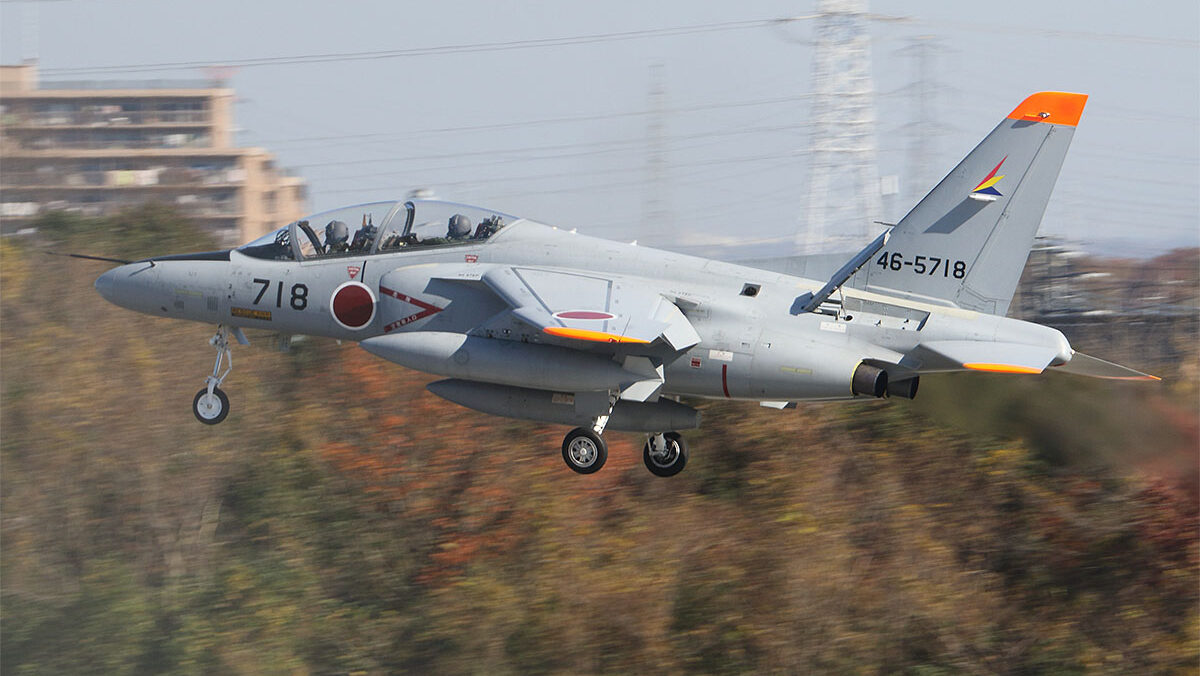
The Japan Air Self-Defense Force (JASDF) is currently undertaking a major update of its training aircraft fleet. Earlier this year, JASDF announced the selection of the Textron T-6 turboprop trainer, a proven platform to enhance basic pilot training. Now, the focus is shifting towards finding a suitable jet trainer to replace the aging Kawasaki T-4 multirole aircraft, integral to advanced pilot training.
Industry sources at the DSEI Japan expo in Tokyo reveal that Japan is conducting a comprehensive survey of potential aircraft and training solutions available on the international market. This effort appears to include collaborative development alongside the United States, following an announcement during the US-Japan leaders’ summit in April 2024 to jointly develop a next-generation trainer aircraft.
A Collaborative Future: Japan-US Jet Trainer Development
Japan’s ongoing search for a new jet trainer has attracted the attention of global aerospace companies eager to participate. Mitsubishi Heavy Industries (MHI) showcased a scale model of its T-X jet trainer concept at DSEI Japan, signaling interest and readiness. Meanwhile, Boeing is prepared to offer its T-7A Red Hawk trainer, which is currently serving as the United States Air Force’s primary jet trainer.
John Suding, Boeing’s Executive Director for Defense and Government Services in East Asia, noted that the T-7A’s training capabilities are well-aligned with Japan’s needs, especially given the similar profiles of their fighter fleets, including F-35s and upgraded F-15s.
“The T-7A’s training mission for the U.S. Air Force shares many similarities with Japan’s requirements, especially for pilots flying advanced aircraft,” Suding explained. “This presents an excellent opportunity for joint development and interoperability.”
Leveraging International Training Expertise: Italy’s M-346 and Beyond
Italy’s Leonardo displayed a cockpit simulator of its M-346 Block 20 trainer at DSEI Japan. Notably, JASDF pilots have been training with the M-346 at Italy’s International Flight Training School (IFTS), which emphasizes Phase IV Advanced/Lead-in Fighter Training (LIFT). Since 2022, nine JASDF pilots have completed training at IFTS, with plans to increase this number to ten annually.
The IFTS, a joint venture between the Italian Air Force and Leonardo, serves pilots from multiple nations, including Qatar and Singapore. This international cooperation underscores Japan’s strategic approach toward pilot training modernization, seeking to leverage global expertise and advanced simulation technologies.
CAE’s Virtual Reality Solutions: Enhancing Future Training Modalities
American aviation training leader CAE has also played a key role in Japan’s evolving training strategy. The company partnered with Leonardo to develop aircraft simulators and demonstrated its Virtual Reality (VR)-based training at Hofu-kita Air Base in 2023. The VR systems provide immersive training experiences for pilot cadets conducting basic training on the Subaru T-7 turboprop.
Gary Eves, CAE’s Principal Technology Officer, highlighted the success of these initiatives: “The JASDF was highly impressed with our VR capabilities, and we are continuing to collaborate to support their long-term training needs.” He emphasized that CAE’s integrated ground-based virtual training can adapt to any chosen aircraft, offering flexibility and cost-effective options to meet future requirements.
“We are fully agnostic regarding the aircraft platform chosen by JASDF and will support whatever solution aligns best with their strategic vision,” Eves stated.
Looking Ahead: Towards a Modernized, Interoperable Training Paradigm
As JASDF advances its modernization efforts, the emphasis remains on flexibility, international collaboration, and technological innovation. The prospect of a joint U.S.-Japan trainer aircraft underscores the strategic shift toward interoperability and shared training standards.
With multiple options on the table—from indigenous concepts to foreign offerings—and extensive ongoing international cooperation, Japan’s future pilot training will be more advanced, integrated, and aligned with next-generation combat aircraft.
The nation’s focus on exemplary pilot preparation ensures that JASDF remains ready to face evolving threats in an increasingly complex geopolitical landscape.