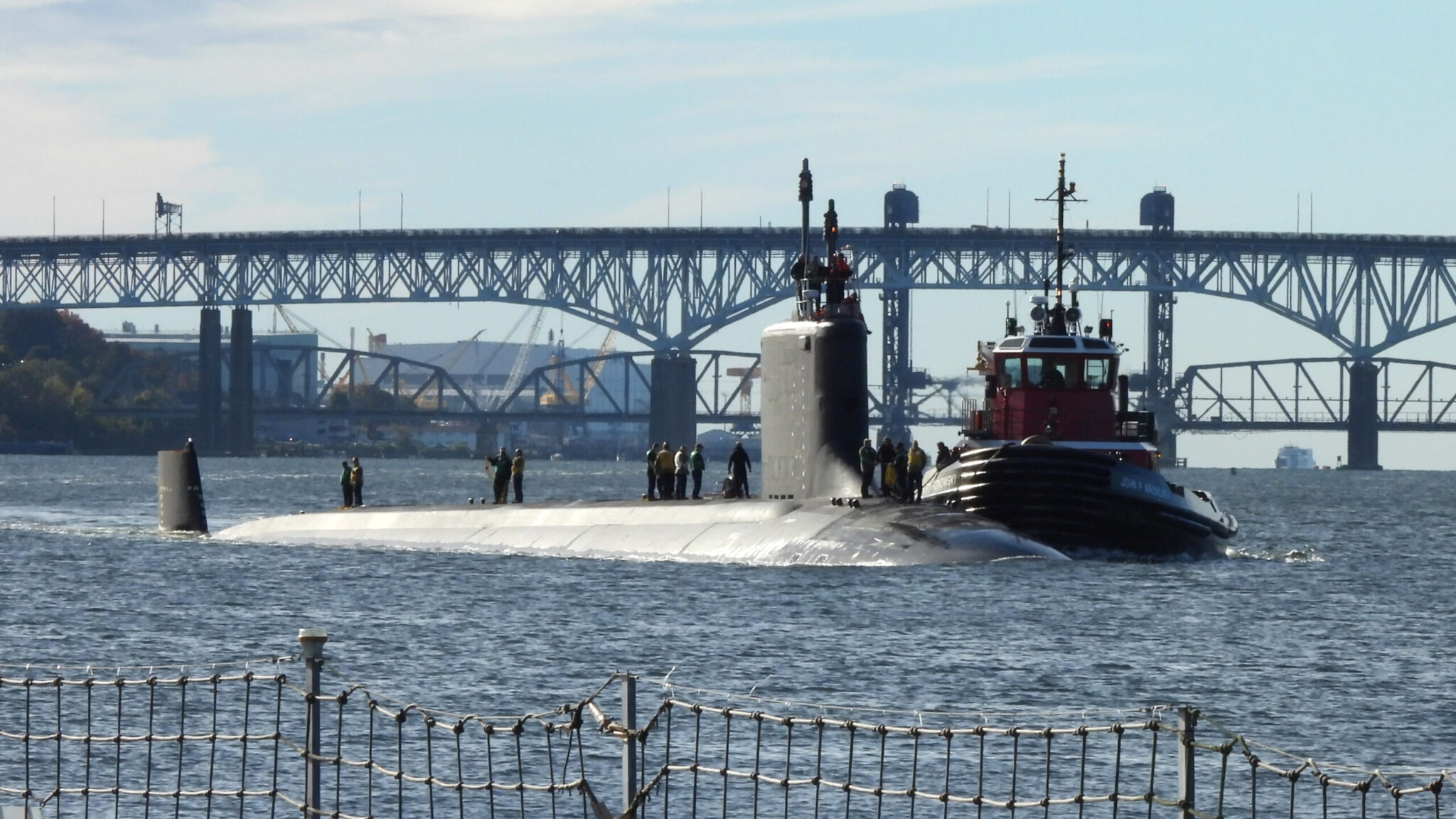
Billions in Funding Boost Workforce and Supply Chain Resiliency, but Shipbuilding Pace Remains Slow
This week, a senior Navy official sought to assure Congress that the more than $9 billion allocated since 2018 to bolster the submarine industrial base has yielded positive results—primarily in workforce development, supply chain resilience, yard modernization, and strategic outsourcing. However, he acknowledged these improvements have yet to translate into increased submarine production rates.
Workforce and Infrastructure Improvements Underpin Future Growth
Brett Seidle, the Navy’s acting acquisition executive, emphasized that the investments have made tangible differences at shipyards: “Those efforts have been about workforce, hiring and retention, supply chain resiliency, modernization of the yards, strategic outsourcing, and infrastructure issues.” Yet, he cautioned that “building these ships takes a long time,” and the impact isn’t immediately visible on the production line.
Slow Cadence Jeopardizes Strategic Commitments
Rep. Rob Wittman (R-Va.) expressed frustration, calling it “disappointing” that despite the substantial investments, the Navy’s Virginia-class submarine production remains at approximately 1.1 submarines annually. He warned that unless the production cadence improves, the Navy’s obligations under the AUKUS security pact—an alliance between the U.S., U.K., and Australia—are at risk.
Necessary Production Rate to Meet Strategic Goals
To support current commitments and the AUKUS agreement, officials say the Navy’s ideal submarine production rate should be “2+1”—two Virginia-class submarines and one Columbia-class submarine each year. Fully supporting U.S. obligations to Australia would require increasing Virginia-class output to about 2.33 per year.
Impact of COVID-19 and Future Outlook
While contractors like General Dynamics and Huntington Ingalls Industries (HII) have previously come close to achieving a 2-boat-per-year rate, disruptions caused by the COVID-19 pandemic hampered progress. The Navy now projects reaching the 2-ship-per-year goal by 2028.
Budget and Production Expectations for FY26
Wittman pressed Seidle on whether the FY26 budget would mirror the previous administration’s approach—namely, funding only one Virginia-class submarine—under the assumption that higher production wasn’t feasible. Seidle avoided specifics but indicated that “expectations for FY26 are not to have the same pressure” as FY25, suggesting a more accommodating budget may be on the horizon.
Summary
Despite significant investments aimed at revitalizing the submarine industrial base, the Navy remains behind its target production cadence. Officials remain optimistic that ongoing efforts and fiscal planning will eventually lead to increased submarine outputs, crucial for meeting both strategic commitments and technological resilience.